Maasai Mara (Masai Mara) guide 2027: fees, seasons, gates and what to watch out for
Maasai Mara and Masai Mara are the same place. The reserve's official name uses "Maasai", after the people who live here, and many maps and booking sites still write "Masai".
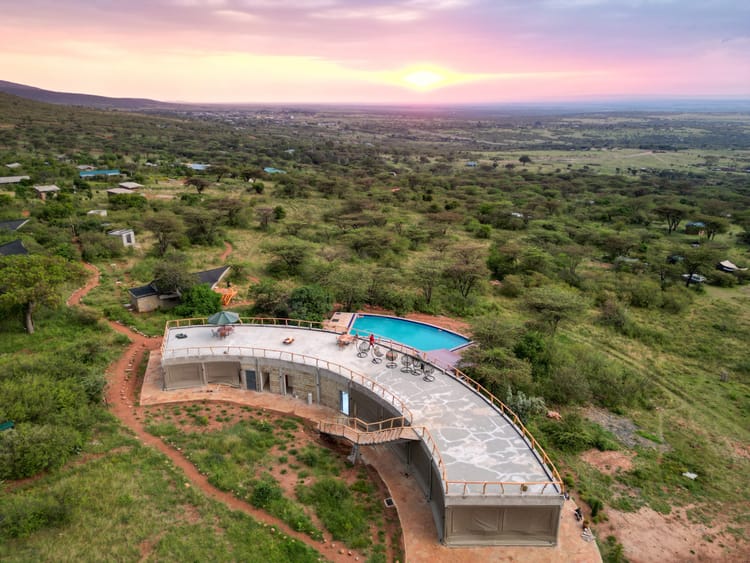
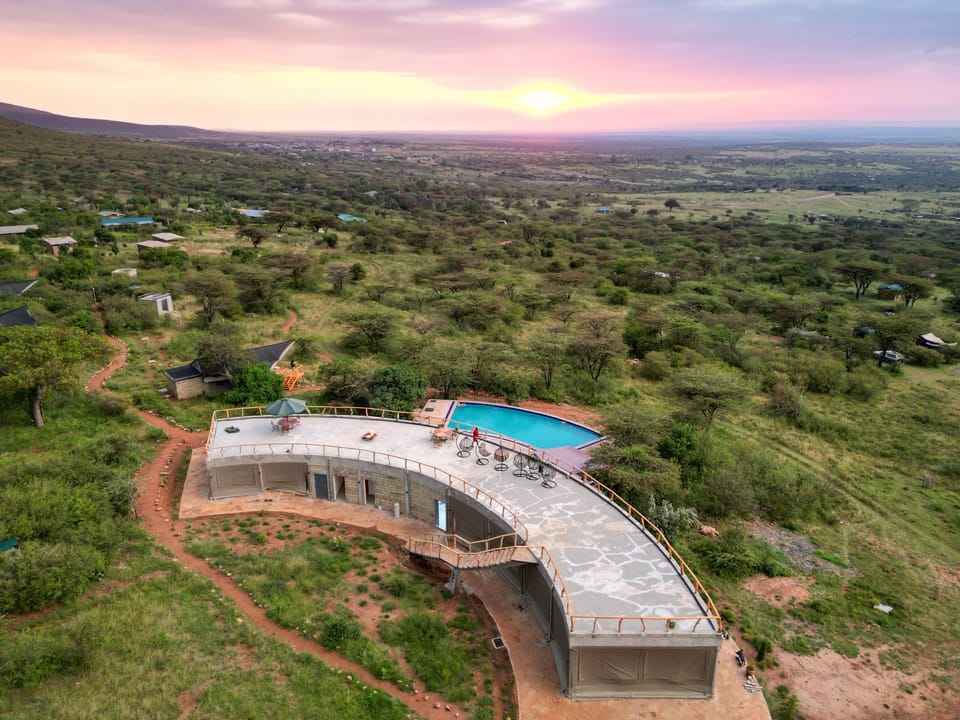
I'm NJ, and I've been coming to the Maasai Mara for over 15 years now. Thirteen of those were as a tourist, and the last couple have been as the founder of Mara Hilltop, a lodge on a hill 2.5 km outside Sekenani Gate. So I've started living here and calling the Mara my home, which is something I never expected I'd be able to say.
Most of this guide answers questions guests send us before they book. Fees in Kenya change, so check the official page linked in each section before you pay.
The Mara at a glance
| Maasai Mara National Reserve | |
|---|---|
| Size | About 1,510 km², in south-west Kenya on the Tanzania border |
| Park fee (non-resident adult, per day) | USD 100 from January to June, USD 200 from July to December |
| Park day | 6:00 to 18:00 |
| Main gate | Sekenani, at the end of the tarmac road from Narok |
| From Nairobi | About 250 km and 4–5 hours by road, or about an hour's flight from Wilson Airport |
| Migration | Usually July to October |
| Before you fly | Kenya eTA (from USD 30) and Kenya's mandatory travel health insurance |
Jump to
- The Mara in one minute: reserve, Triangle, conservancies
- When to go, month by month
- Getting there: road, flights and the gates
- Park and conservancy fees
- Game drives: what to book and the rules
- Where to stay, by area and budget
- What 3 nights costs: backpacker to luxury
- Entry, health, money, phone signal, packing
- What to watch out for
- Maasai culture, done respectfully
- FAQ
The Mara in one minute: reserve, Triangle, conservancies
The Maasai Mara National Reserve covers about 1,510 km² of south-west Kenya, on the border with Tanzania's Serengeti (Wikipedia). It's split like this:
| Part | Who runs it | Size | What's different |
|---|---|---|---|
| Narok side (most of the reserve, east of the Mara River) | Narok County Government | about 1,000 km² | Most visitors enter here, through Sekenani or Talek. Guided game drives only. |
| Mara Triangle (west of the Mara River) | Mara Conservancy, on behalf of the county | about 510 km² | Its own gates and tickets. |
| Conservancies (around the reserve, mostly north and east) | Maasai landowners leasing land to tourism partners | 24 conservancies in the association | Not part of the reserve. Camps limit vehicles, and walking and night drives are allowed. |
Conservancies: Maasai Mara Wildlife Conservancies Association.
None of it is fenced, so animals move freely between the reserve and the conservancies. How that plays out for your fees and activities is in inside vs outside the Maasai Mara.
The Mara and the Serengeti
The Maasai Mara and the Serengeti are one big ecosystem. The part in Kenya is called the Maasai Mara, the part in Tanzania is called the Serengeti, and the herds move between the two across an unfenced border. The Serengeti National Park alone covers about 14,750 km², roughly ten times the size of the reserve (Wikipedia).
From my experience, and a lot of people who've done both will tell you the same, the density of animals feels a lot higher in the Mara. I'm not sure why, but it's true. In the Serengeti you often have to drive a lot further to find the action, while in the Mara there's always something around the corner, and you can pack a lot into one day.
When to go, month by month
For the Great Migration and river crossings, go between July and October. For half the park fee ($100 a day instead of $200), go between January and June. January and February can still be busy, and March to May has the fewest vehicles but the most rain. Fees are below.
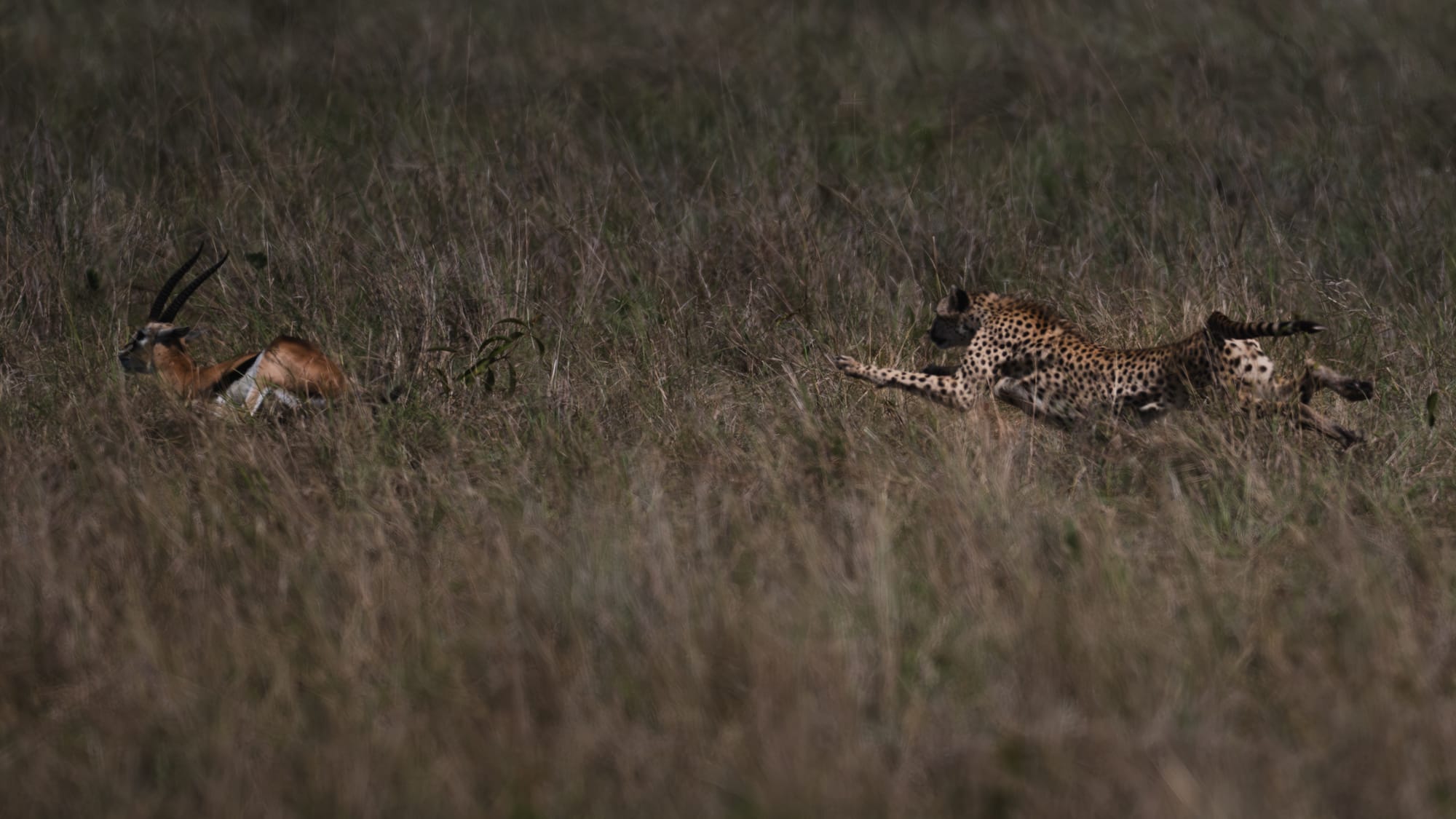
Lions, elephants, buffalo, giraffes, hippos and hyenas live here all year, so every month has game.
| Month | Migration | Weather | Crowds | Park fee (non-resident adult/day) |
|---|---|---|---|---|
| January | Herds in the southern Serengeti | Mostly dry, warm | Can be busy, lots of lion activity, including mating | $100 |
| February | Calving in the Serengeti | Mostly dry | Can be busy, lots of lion activity, including mating | $100 |
| March | In the Serengeti | Long rains start | Very quiet | $100 |
| April | In the Serengeti | Long rains, heaviest | Very quiet, many camps on low rates | $100 |
| May | Herds moving north | Long rains ease late in the month | Quiet | $100 |
| June | Herds in the western Serengeti. A few early arrivals some years | Drying, green | Picking up | $100 |
| July | Herds usually arrive in the Mara, lately mid to late July | Dry, cool mornings | Busy | $200 |
| August | Herds in the Mara, river crossings most often | Dry | Busiest | $200 |
| September | Herds in the Mara, crossings continue | Dry | Busy | $200 |
| October | Herds start heading back south | Dry, short rains can start late | Easing | $200 |
| November | Mostly gone | Short rains, afternoon showers | Quiet | $200 |
| December | Gone | Short rains end, dry by Christmas | Busy over the holidays | $200 |
Migration timing: Wikipedia ("typically reaches the Masai Mara between July and October") and our migration guide. Rains: our green season guide (long rains March to May, short rains November to December).
Planning for 2027
Kenya's next general election is on Tuesday 10 August 2027 (The Standard), right in the middle of migration season. The Mara is a long way from the cities, but if you're travelling around that date, give yourself some slack for the Nairobi part of the trip, like the drive between the two airports or a night in town, or fly in from Wilson so you skip the long road.
River crossings and your chances
No one can guarantee a river crossing. Herds gather on the bank of the Mara River and can wait hours, or up to about two days, before one animal goes in and the rest follow (our migration guide).
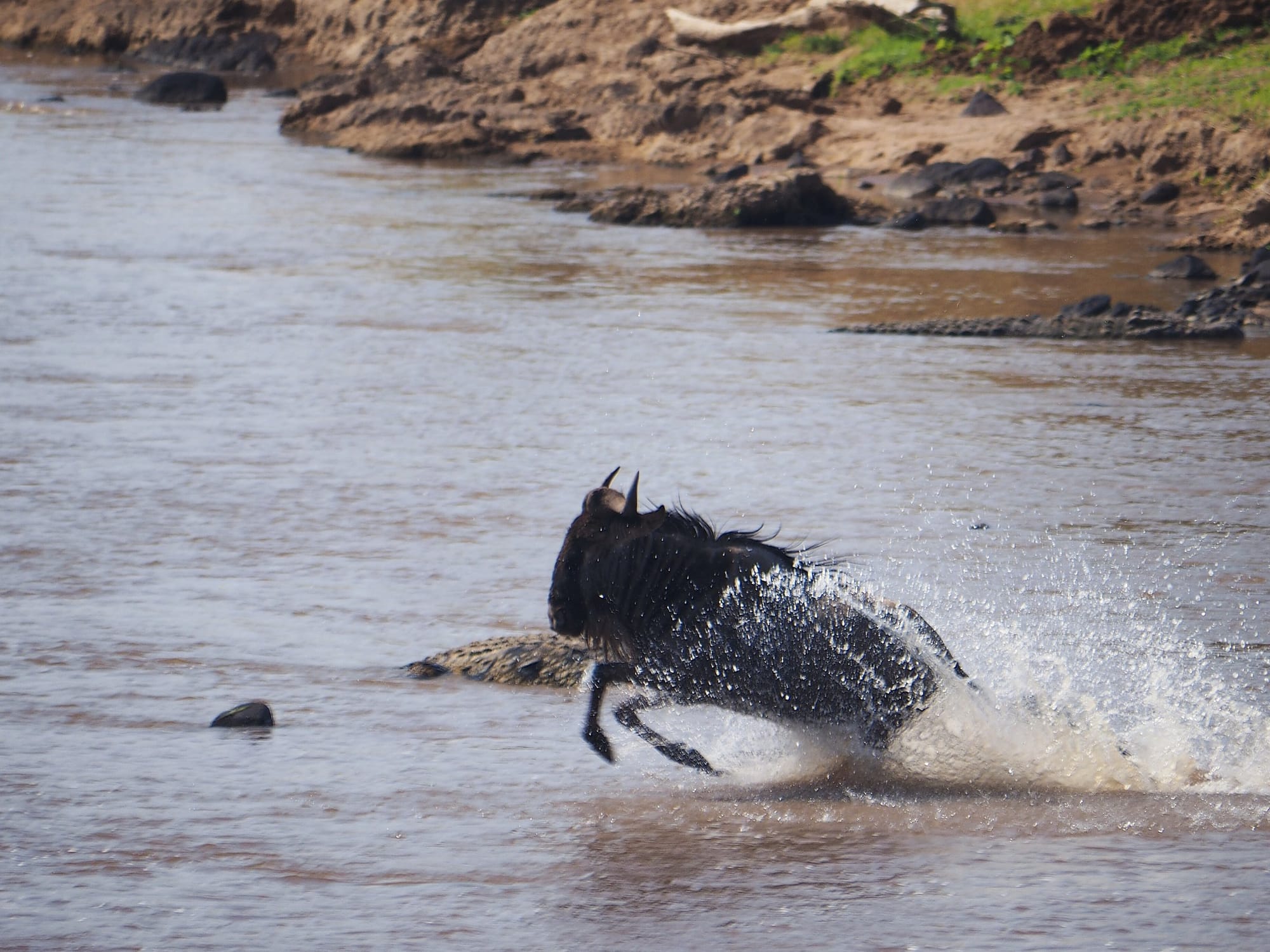
Your chances go up if you're in the Mara between July and October, spend at least two full days at the river (about an hour's drive from Sekenani), and have a driver who's in radio contact with other drivers.
If you can only come outside July to October, you'll miss the herds but still see the resident animals, pay half the park fee from January to June, and share sightings with fewer vehicles. The green season guide has the details.
Getting there: road, flights and the gates
The Maasai Mara is about 4 to 5 hours by road from Nairobi to Sekenani Gate, or about 1 hour by scheduled flight from Nairobi's Wilson Airport. By road it costs from about $15–25 per person on the bus and matatu to about $250 one way, or $460 return, for a private transfer. That price is per car, and a car fits 5–6 people, so your group splits it. Flights are about $130–250 per person each way, depending on the airline and the date (The Kenya Times). Every option, with bus stages, departure times and what each leg costs, is in our Nairobi to Maasai Mara transport guide.
By road from Nairobi
The road is tarmac all the way to Sekenani Gate, about 250 km. Talek Gate is further, about 5.5 to 6.5 hours, and the last stretch is dirt. Inside the reserve, all tracks are dirt and can turn to mud in the rains.
The UK government advises against driving at night outside cities and against buying safaris from touts (GOV.UK). Leave Nairobi in the morning so you arrive in daylight.
By air
Scheduled flights to the Mara leave from Wilson Airport in Nairobi, not from the international airport (JKIA). To get from JKIA to Wilson, I'd just use Uber. It's convenient, reliable, quite cheap and safe at any time of day. Bolt works well too. Just leave a bit of extra time for the drive.
Safarilink lists four daily departures to the Mara, each about an hour, and the plane stops at whichever airstrips have passengers (Safarilink). Airkenya also flies daily (Airkenya). You can also fly between the Mara and Amboseli or Diani on the coast with Airvan, which makes it easy to add a second park or a beach stay. Airstrips include Keekorok, Ol Kiombo, Musiara, Serena, Kichwa Tembo, Olare, Mara North and Ngerende (Airkenya, Maasai Mara page). Your camp tells you which one to book. Our guests usually fly into Keekorok, one of the busiest airstrips, and we pick you up there for $90 per car. If you come straight to the lodge instead of going on a game drive, you don't pay the park fee that day.
Bags are limited to 15 kg per person in soft bags, hand luggage included (Safarilink baggage, Airkenya baggage). Hard suitcases can be refused. Many people drive in and fly out, which gives them one look at the Rift Valley and saves half a day on the way home.
The gates
Most visitors enter through Sekenani Gate, the main gate on the tarmac road from Narok.
| Gate | Where | Good for |
|---|---|---|
| Sekenani | East, the main gate from Narok | Tarmac all the way. Most camps on the eastern side. |
| Oloolaimutia (also spelled Ololaimutiek) | East, near Sekenani | Budget and mid-range camps |
| Talek | North-east, on the Talek River | Camps along the Talek River. Dirt road for the last stretch |
| Musiara | North | Northern camps around the Governors' area and Musiara Marsh |
| Oloololo | North-west, Mara Triangle | The Triangle and the Oloololo escarpment camps |
Sources: masaimara.travel for Musiara, our where-to-stay guide for Sekenani, Talek and Oloolaimutia.
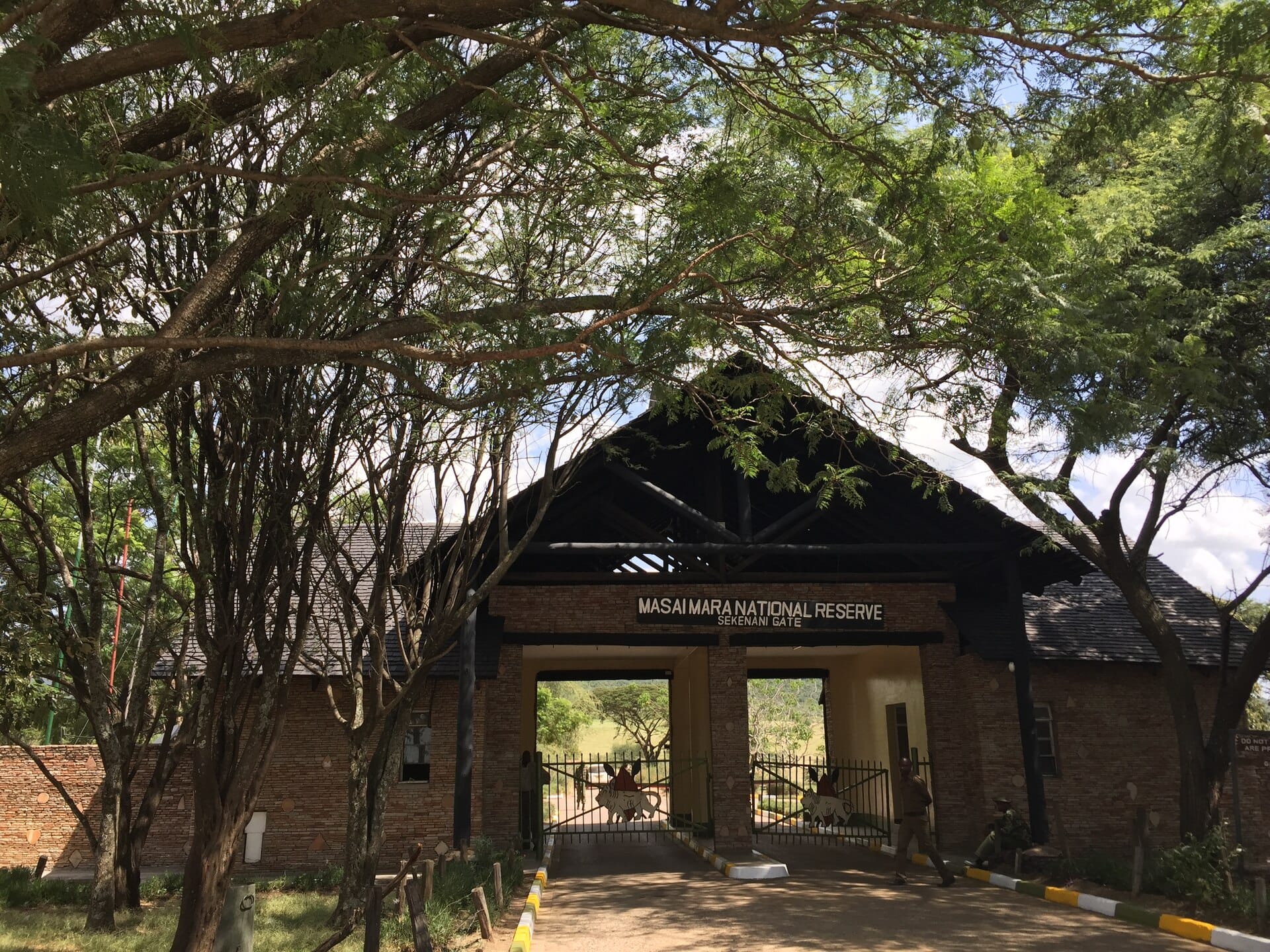
Sekenani and the other Narok-side gates open at 6:00, and a park day runs until 18:00 (Narok County Finance Act 2023).
Park and conservancy fees
As of November 2026, the Maasai Mara park fee for a non-resident adult is USD 100 per day from January to June and USD 200 per day from July to December. Children aged 9 to 17 pay USD 50, and children 8 and under are free (Narok County Finance Act 2023). Our park fees guide works through what that means for a whole trip.
Narok County usually announces changes around the new year or in July. No 2027 changes had been announced as of 19 November 2026, and we'll update this page when the 2027 tables are published.
Reserve entry fees (as of November 2026, Narok County Finance Act)
All fees are per person, per day, at Sekenani and the other Narok-side gates, from the First Schedule of the Narok County Finance Act 2023. The Mara Triangle charges the same (official fee table, opened 19 November 2026).
| Visitor | 1 Jan – 30 Jun | 1 Jul – 31 Dec |
|---|---|---|
| Non-resident adult | USD 100 | USD 200 |
| Non-resident child, 9–17 | USD 50 | USD 50 |
| Child, 0–8 | Free | Free |
| Kenyan citizen adult | KSh 1,500 | KSh 3,000 |
| Kenyan citizen child, 9–17 | KSh 300 | KSh 500 |
| East African resident adult | KSh 2,500 | KSh 5,000 |
| East African resident child, 9–17 | KSh 1,000 | KSh 2,000 |
How the ticket works:
- A ticket covers one day, from 6:00 to 18:00, whatever time you enter, and it doesn't carry over to the next morning (Narok County Finance Act 2023).
- You pay only on days you go into the reserve. If you stay outside it, your arrival day and rest days cost nothing in park fees.
- If you stay at a lodge inside the reserve, you pay for every day you're there, including the day you arrive. On your last morning, leave the reserve by 10:00, or you pay for another day.
- Resident rates need proof at the gate: a Kenyan ID, or a passport with a work permit or residence visa. A driving licence isn't accepted, and without proof you pay the non-resident rate (Mara Triangle).
- Vehicle fees are charged on top for each car entering, in shillings. Your driver or operator usually handles this. At Mara Hilltop the vehicle fee is already in our game-drive price, and each guest's park fee is paid separately.
How you pay
At Sekenani and the other Narok-side gates, tickets are sold by the county's agent. Sekenani takes cash or card, but only Visa and Mastercard. American Express and Discover aren't accepted. The Mara Triangle, on the west side, takes only M-Pesa and card.
The reserve is run by Narok County, not the Kenya Wildlife Service (Narok management plan), so a KWS ticket bought on eCitizen won't get you in. Buy your ticket at the gate or through your camp.
If you're staying in the Mara Triangle and drive in through Sekenani, don't pay at Sekenani. Ask for a transit pass and pay when you enter the Triangle at Purungat Bridge, or you'll pay twice (Mara Triangle).
Conservancy fees
Conservancy fees are separate from reserve fees and are usually built into the camp's nightly rate, so you don't pay them at a gate. At Mara Hilltop the conservancy fee is in the room rate, so there's nothing extra to pay for staying here. Activities inside a neighbouring conservancy, like a night drive, carry that conservancy's own entry fee. If you stay in a conservancy or just outside the reserve, you pay the reserve fee only on days you drive in. Our post on staying inside vs outside the Maasai Mara works through what that saves a family over a few nights.
Game drives: what to book and the rules
A full-day game drive in a private Land Cruiser from a camp near Sekenani costs about $270–350 per vehicle, and a half day about $170–200, plus the park fee for each person (marahilltop.com). Our price already includes the vehicle's own entry fee. A vehicle seats 6 or 7, so a group splits the vehicle cost.
Half day or full day
Book a full day if you want the Mara River or the migration. A half day covers the plains near your gate.
| Half day | Full day | |
|---|---|---|
| Hours | Morning or afternoon | Early morning to about 18:00 |
| Reaches | The plains near your gate | Far corners of the reserve, the Mara River |
| Food | Back at camp | Lunch out in the reserve |
| Park fee | Full day's ticket | Full day's ticket |
| Best for | Kids, tired people, a short stay | Big cats, the migration, the river |
The park ticket costs the same for a half day as a full one, so a full day gets more out of a $200 ticket. From Sekenani the Mara River is about an hour's drive if you head straight there, but herds can wait on the bank for hours before they cross. So for the river we always suggest one full day over two half days. We wrote more on full day vs half day game drives. Our first safari post covers what a day in the vehicle feels like.
Solo travellers can sometimes share a vehicle with other guests, for about $60–150 a seat depending on how many share. That depends on who else is booked and can't be guaranteed.
What you'll see
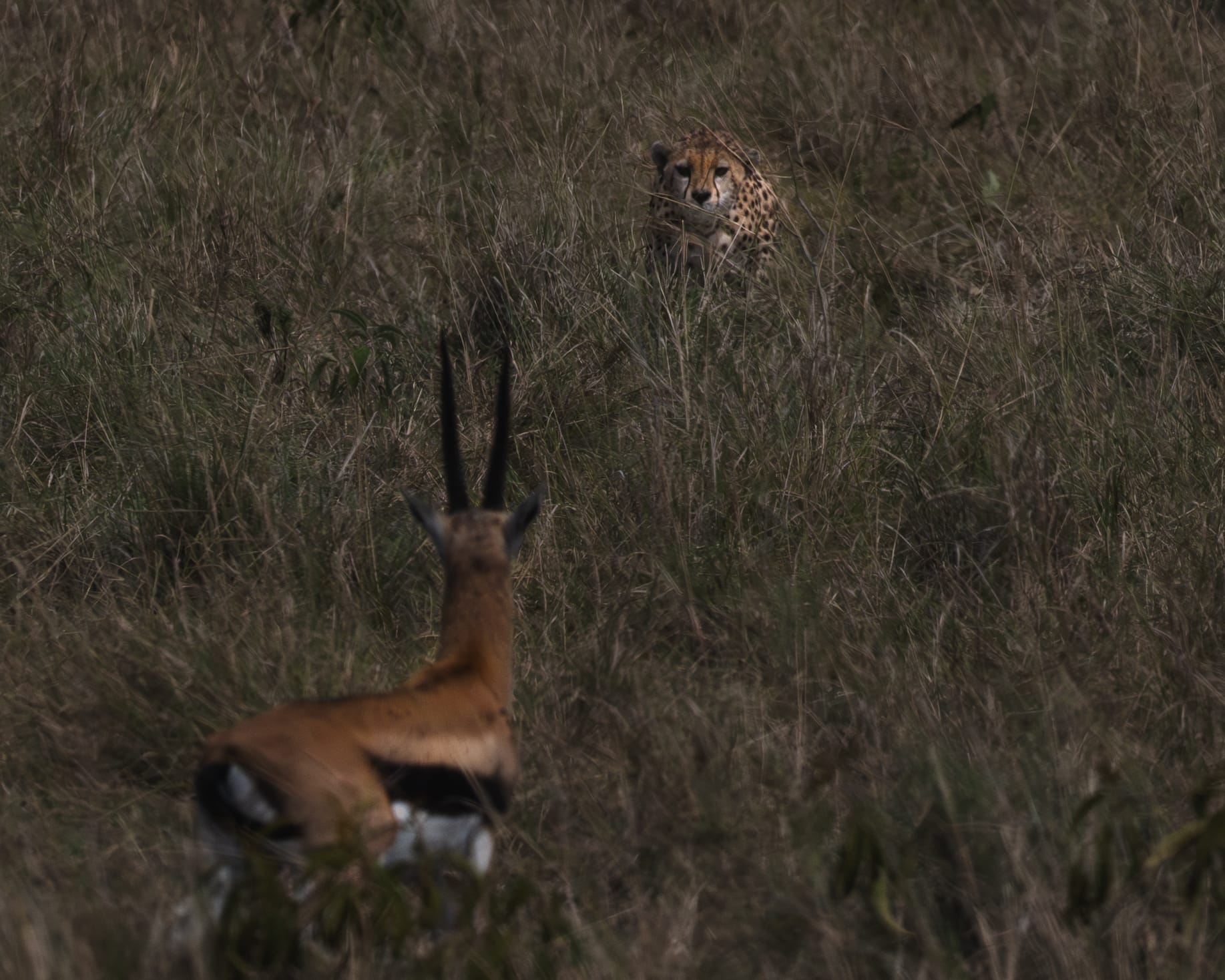
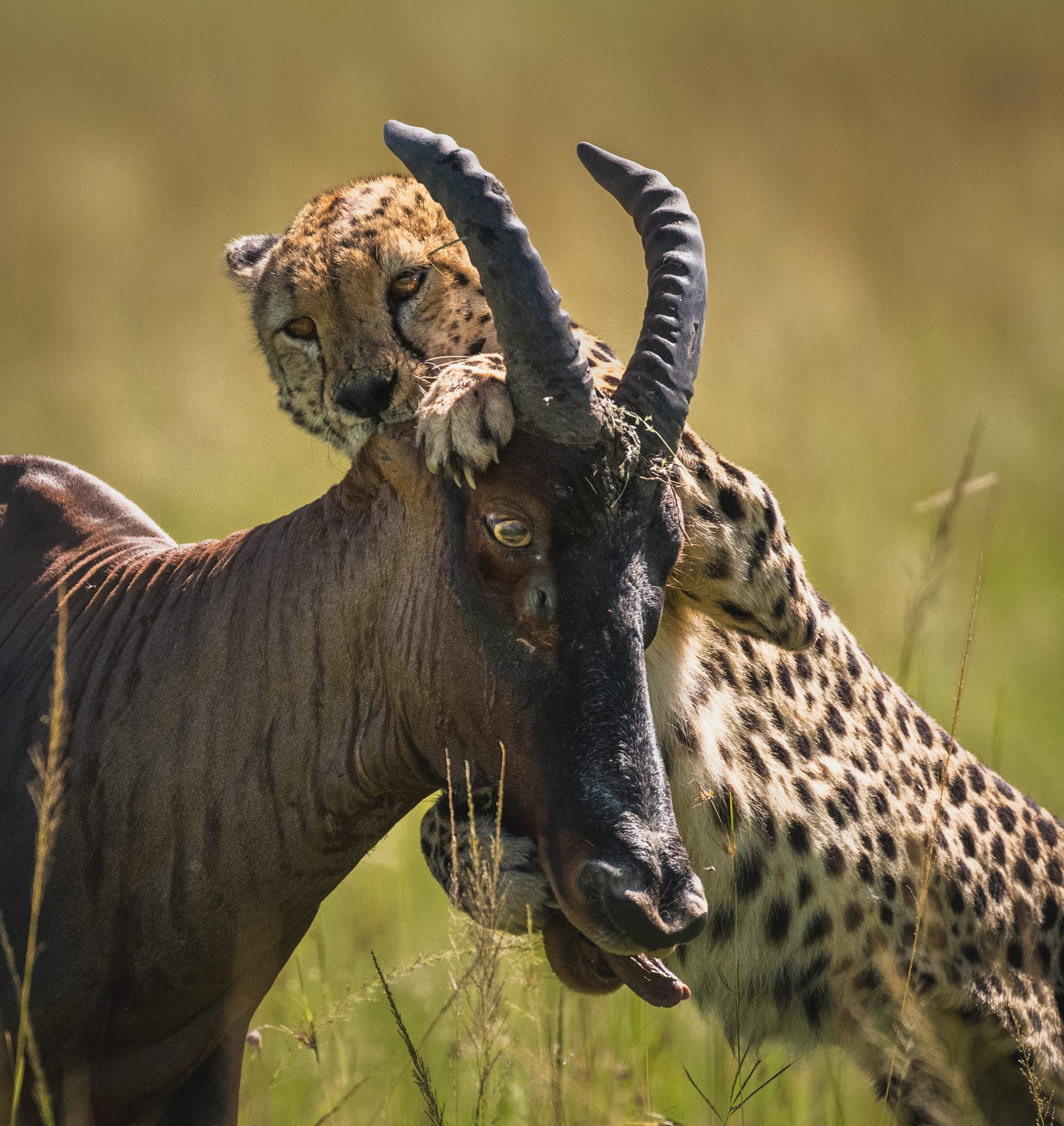
All of the Big Five live in the Mara: lion, leopard, elephant, buffalo and rhino. Lions, elephants and buffalo are seen on most days. Leopards are shy and seen less often, and rhinos are rare and hard to find.
Can you self-drive?
Not on the Narok side, where Sekenani and Talek are. Game drives there are guided only, since Narok County stopped private vehicles from doing game drives in 2024 (Eastleigh Voice). Self-drive is only allowed in the Mara Triangle, the western part.
The rules at a sighting
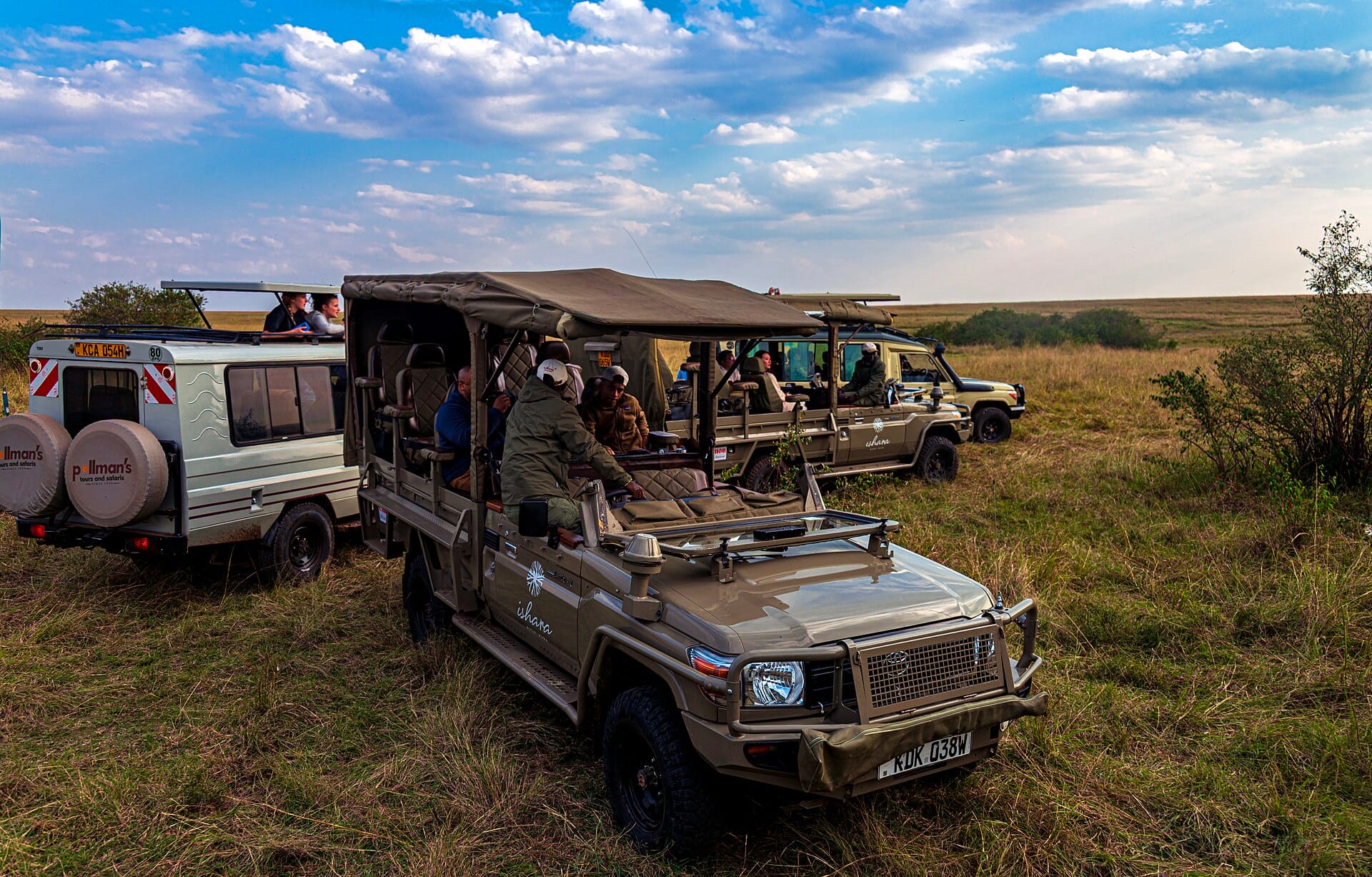
Many of these rules are about crowding: the reserve's own management plan recorded more than 150 vehicles at a single river crossing (Travel And Tour World, Sept 2026).
- Off-road driving is banned, with one exception: in the reserve's quieter Low Use Zone, drivers may leave the track to approach big cats (lion, leopard, cheetah) on open ground, and must come back the way they went. Around the Mara River and in the busy High Use Zone, off-road driving isn't allowed at all (Narok management plan 2023–2032).
- Stay at least 25 metres from the animals.
- When more than five vehicles are waiting at a sighting, others wait 100 metres back, and viewing time is limited to 15 minutes when others are waiting (Narok management plan).
- No game drives at night in the reserve. Night drives and bush walks happen in the conservancies.
- Stay in the vehicle unless you're at a marked spot or with an armed ranger.
- Drones need approval from Kenya's civil aviation authority (GOV.UK) and the reserve has its own rules, so get written permission from the reserve management before you bring one.
Where to stay, by area and budget
You can stay just outside the reserve near Sekenani, Oloolaimutia or Talek gates, where there's everything from budget camps at about $60–90 a night to premium lodges, and park fees apply only on game-drive days. Lodges inside the reserve cost about $450–900 a night for two, and the top end can run to $1,200 or more. Inside, you pay park fees for every day you stay.
Inside the national reserve, game drives are pretty much the only activity, because you can't go out on foot (apart from the ranger-led walk along the Mara River) or drive after dark. Outside the reserve, lodges like ours offer nature walks, hikes and motorcycle adventures, and night drives in the neighbouring conservancies, which is a big advantage. Even if you're staying inside, I'd recommend a day or two outside the reserve just for these activities. They're really worth it.
The one I'd single out is the motorcycle adventure. You ride with a Maasai rider, so you don't need any riding experience, through the Mara and out to remote Maasai villages, past beautiful valleys and landscapes. It's something you'll never forget.
Our post on why staying outside the park might be what you want covers that trade-off, and our where to stay in the Maasai Mara guide names camps in each area. The short version:
| Area | What it's like | Typical price | Park fees |
|---|---|---|---|
| Sekenani (east, outside the main gate) | Tarmac all the way, next to the main gate. Walks and night drives in the neighbouring conservancies | Mid-range to premium | Only on days you drive in |
| Oloolaimutia (east, near Sekenani) | Budget and mid-range camps | Budget camps from about $60–90 a night | Only on days you drive in |
| Talek (north-east) | Camps along the Talek River. Dirt road for the last stretch | Mid-range to upper | Depends on whether the camp is inside or outside the boundary |
| Inside the reserve | Lodges like Keekorok, no gate to pass each morning | About $450–900 a night per room for two, up to $1,200+ at the top end | Every day you stay |
| Northern conservancies (Mara North, Naboisho, Olare Motorogi) | Few vehicles, walks and night drives, all-inclusive | From about $750 per person a night | Only if you go into the reserve |
| Mara Triangle and the Oloololo escarpment (west) | West of the Mara River, with its own gates and tickets | Mid-range to luxury | Triangle fee on park days |
Prices from our where-to-stay guide, July 2026.
Talek isn't closer to the action
Sekenani, the main gate into the Maasai Mara, is also one of the easiest areas to get to. There's a common misconception that the Talek area is closer to nature or to the action than Sekenani, but that's not true. Once you're in the park, the game drive is no different whether you're staying near Talek, Sekenani or Oloolaimutia, because the wildlife is everywhere. There's often just as much going on in the conservancies, too, since there's no fence and the animals move freely. Talek is a little closer to the Mara River, but even from Sekenani the river is only about an hour's drive if you head straight there.
A few names
- Around Sekenani: Mara Hilltop (that's us) and Mara Enkaji, plus mid-range stays like Sentrim Mara and Drunken Elephant. Mara Sopa, also mid-range, is near Oloolaimutia Gate.
- In the conservancies, Olare Mara Kempinski is a 12-tent camp in the Olare Motorogi Conservancy, and one of the best-known premium stays there.
- Amani Mara Camp, in the conservancies north of the reserve, is one I've visited and liked.
- Smaller places nearby: Olimba Mara Camp, a small tented eco-camp on the Talek River, reached through the Talek area and about 10 minutes from the reserve's Mara Simba barrier, and Sekenani Camp, a tented camp on the edge of the reserve near Sekenani Gate.
At Mara Hilltop we have luxury tents as well as standard rooms and tents. Live prices are on the booking page.
Our post on why the Mara deserves more than two days makes the case for staying longer.
A 3-night itinerary, day by day
This is what I usually suggest to guests staying three nights with us, just outside the reserve.
- Day 1, arrival: You get in, settle, and do something outside the park, like the nature walk and a Maasai village visit. The village visit is a cultural experience you shouldn't skip. No park fee today.
- Day 2, full-day game drive: You start early, around 6 to 6:30. Through the day you stop at different places inside the park, and the driver finds a good spot for lunch.
- Day 3, second full-day game drive: On this day or the one before, you also do the Mara River walk with a ranger. The driver knows you're doing two full days, so they plan the sightings and the parts of the park around that. If you've seen a lot but you're still missing a leopard, they try extra hard to find you one.
- Day 4, departure: Breakfast and back to Nairobi. No park fee today.
What 3 nights costs: backpacker to luxury
Three nights in the Maasai Mara from July to December costs roughly $470–670 per person on a backpacker budget (one day in the reserve, on a shared seat if one is free), $1,290–1,580 mid-range, and from about $2,700 at a luxury conservancy camp, including park fees and transport from Nairobi. From January to June, when the park fee is $100, it costs $100–300 less.
The table is per person, sharing, with two days in the reserve unless noted. Not included: flights to Kenya, the eTA, the mandatory travel insurance (about $44–52), and airstrip pickups if you fly.
| Backpacker | Mid-range | Lodge inside the reserve | Luxury conservancy | |
|---|---|---|---|---|
| Getting there and back from Nairobi | Bus and matatu, about $30–50 | Private transfer, $460 return per car, split by two: about $230 | Return flight, about $260–500 | Return flight, about $260–500 |
| Room and meals, 3 nights | Dorm or budget camp, about $180–270 | About $390–600 | About $675–1,350 | From about $2,250 (all-inclusive) |
| Park fees | 1 day: $200 | 2 days: $400 | 3 days: $600 (4 if you leave after 10:00 on the last day) | 1 day if you go in: $200 |
| Game drives | Shared seat on one full day, about $60–150 depending on how many share, if one is available | Private vehicle split by two, 2 full days, about $270–350 | Often charged extra | Included |
| Rough total | about $470–670 | about $1,290–1,580 | about $1,550–2,450 plus drives | from about $2,700 |
If no shared seat is free, a solo backpacker pays for the whole vehicle, and the total becomes about $680–870.
Prices come from the sources above, our cost breakdown and where-to-stay guide.
Other costs people forget:
- Drinks are usually not part of "full board".
- Driver tips: KSh 2,000–5,000 (about $15–40) a day per vehicle, not per guest, is common for a good driver, never required.
- Hot-air balloon at sunrise: about $500 per person.
- Kenya's eTA and the new mandatory travel insurance, below.
If you'd like help putting the days together (transfers, drives, a second park), the RafikiGo trip planner from our sister company builds a Kenya itinerary on real prices, and we also wrote about planning a Kenya safari without an agency.
Entry, health, money, phone signal, packing
eTA and the new travel insurance
- Most visitors need an Electronic Travel Authorisation (eTA) before flying, from the official site etakenya.go.ke only. Fees start at $30, plus $100 if you want the expedited, same-day option. The site says processing usually takes up to 72 hours and can take longer, and it recommends applying at least two weeks ahead. In my experience it's often much quicker, within a day. Children and infants need their own (eTA FAQ).
- Some nationalities are exempt for 60 to 180 days, including East African Community countries and many African countries. Whatever your passport, check the exemption list on the eTA site before you apply.
- New since 5 October 2026: most visitors staying under 12 months must buy Kenyan government travel health insurance. You buy it inside the eTA application, or on eCitizen if you already have an eTA. Your own travel insurance doesn't count instead. The policy lasts 90 days and covers multiple entries in that time, which helps if you pop over to Tanzania and come back (GOV.UK). eCitizen lists it at up to US$44 per person including levies (VisasNews), and one safari operator reports about $52 with card fees (Governors' Camp). It's a limited medical policy, so keep your own travel insurance too.
- Your passport needs at least 6 months' validity on arrival and at least 2 blank pages (GOV.UK).
Health
- Malaria: the CDC lists malaria risk in "all areas (including game parks) <2,500 m" in Kenya (CDC). The Mara sits at about 1,500–2,180 m (Wikipedia), which is inside that zone. Ask a travel clinic about tablets, and use repellent from dusk.
- Yellow fever: you need a vaccination certificate to enter Kenya if you're coming from a country listed as a yellow fever transmission risk (GOV.UK). If your trip starts somewhere else in Africa, check whether that country is on the list.
- Don't drink tap water. Camps provide bottled or filtered water.
- Check the CDC's current health notices for Kenya before you fly. As of November 2026, all of them are Level 1, "practice usual precautions".
Money
- Kenya runs on shillings (KSh) and M-Pesa, the mobile money service. A Safaricom SIM bought at the airport lets you pay with your phone almost everywhere, including tips.
- US dollars work at most camps. Bring clean, untorn notes printed in 2009 or later, since older or damaged notes are sometimes refused.
- Narok is the last real town with cash machines, so bring what you need for tips and craft markets.
Phone signal and internet
Safaricom's signal is surprisingly good, around Sekenani and inside the reserve too, and you often get 4G or even 5G. I've had to work from inside the park, and it was fine. Airtel is patchier. Most camps have wifi of some kind, and speeds vary a lot. If you need to work, ask the camp what connection it has before you book.
What to pack
- A soft bag, 15 kg total if you're flying.
- Layers. Mornings in an open vehicle are cold, even in August. Midday is warm.
- Hat, sunscreen, sunglasses, and a scarf or buff for dust.
- Binoculars, one pair each if you can.
- A camera with a longer lens, if you can bring one. If you don't have a camera, no worries. A phone with a good zoom gets amazing pictures too.
- A power bank, since not every vehicle can charge.
- Any medicines you need, and repellent.
- No plastic carrier bags: Kenya banned them in 2017, with fines of KSh 2–4 million for offenders (Citizen Digital, Nov 2026). Leave duty-free bags behind.
The rest is in our packing list post.
Safety
For most visitors the risks in the Mara are the animals and the road, so stay in the vehicle on drives, have someone from the camp walk you to your tent after dark if the camp is unfenced, and travel by road in daylight with a driver who knows the route. If you're spending a night in Nairobi first, we wrote is Nairobi safe, and where to stay.
What to watch out for
Before you pay for a Mara safari, get the park fees written into the price, and don't rely on any "migration guaranteed" promise.
- Don't buy a safari from someone who approaches you in the street, at the airport or on social media (GOV.UK).
- Be wary of "migration guaranteed". Herds can wait at the river for hours or days without crossing, so ask the operator what the trip includes if there's no crossing.
- Crossings get crowded, as the 150-vehicle count above shows. Drivers who push to the front can turn the herds back, so a driver who waits further back sometimes gets the better view.
- Cheap package prices sometimes leave park fees out, and at $200 a day that can double the cost. Ask for the total in writing, with park fees, vehicle fees and transfers as separate lines.
- Fees change. Non-resident fees went up to $200 in the second half of the year in 2024 (Kenyans.co.ke), and the jump from $100 to $200 on 1 July catches people who arrive in late June and stay into July. Check the official fee page in the month you travel.
- Staying "inside the park" means paying the park fee every day, including days you spend at the lodge. Work out whether you'll use those days.
- A driver who leaves the track for a better photo, outside the big-cat exception, is breaking the rules, and you may end up paying the fine. Say no.
Maasai culture, done respectfully
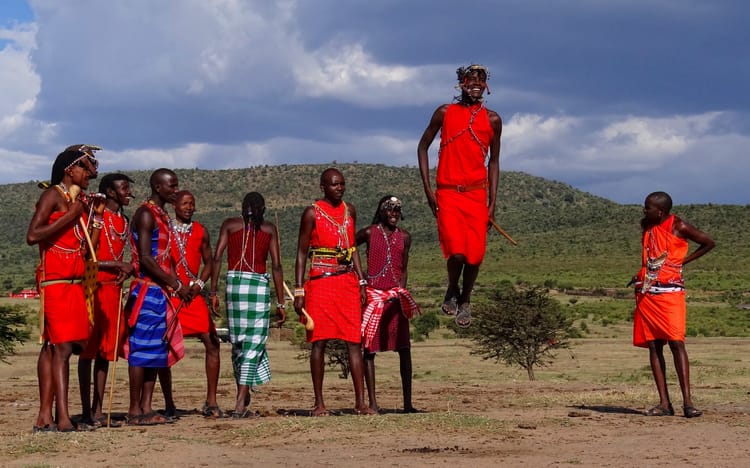
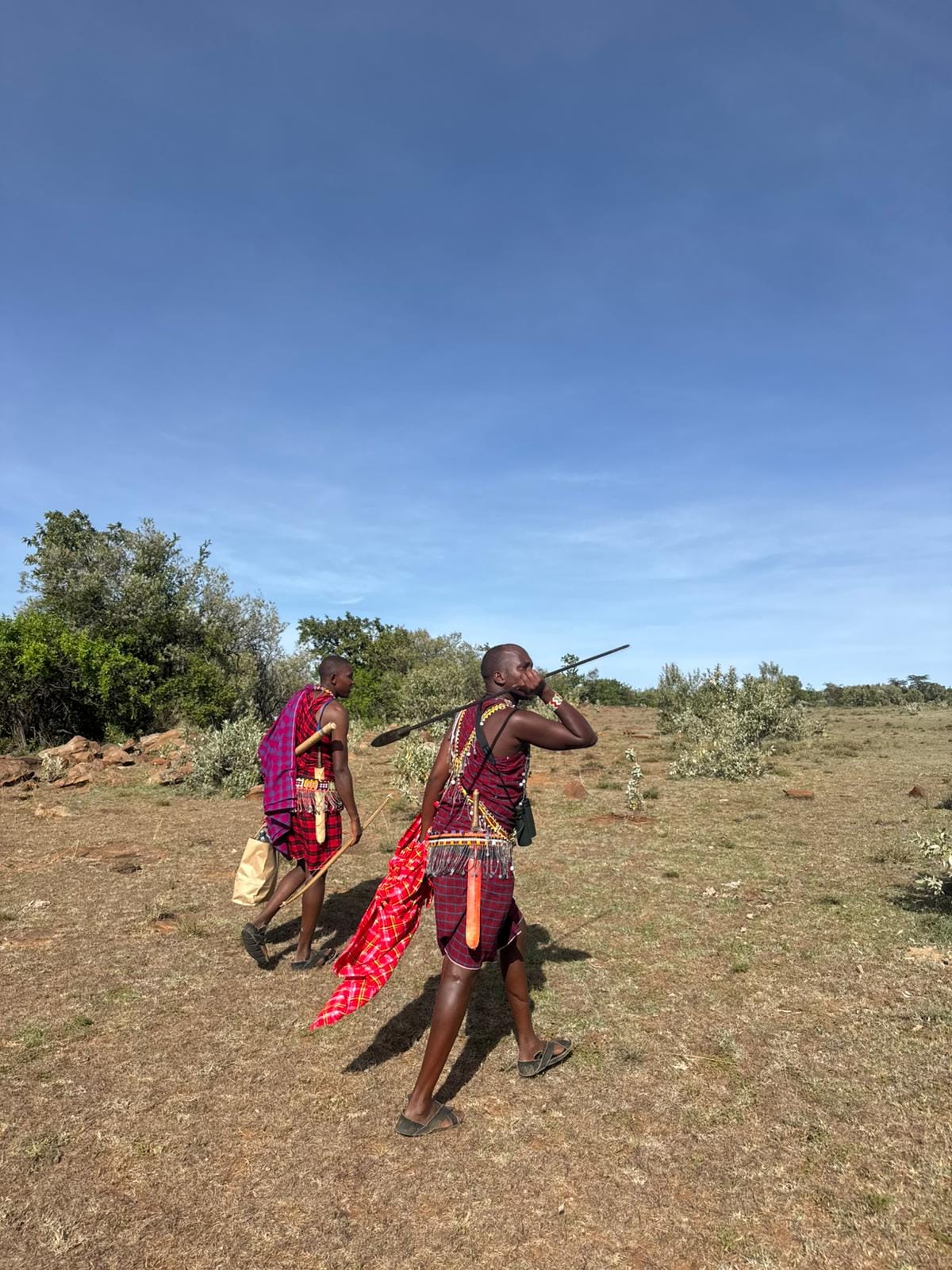
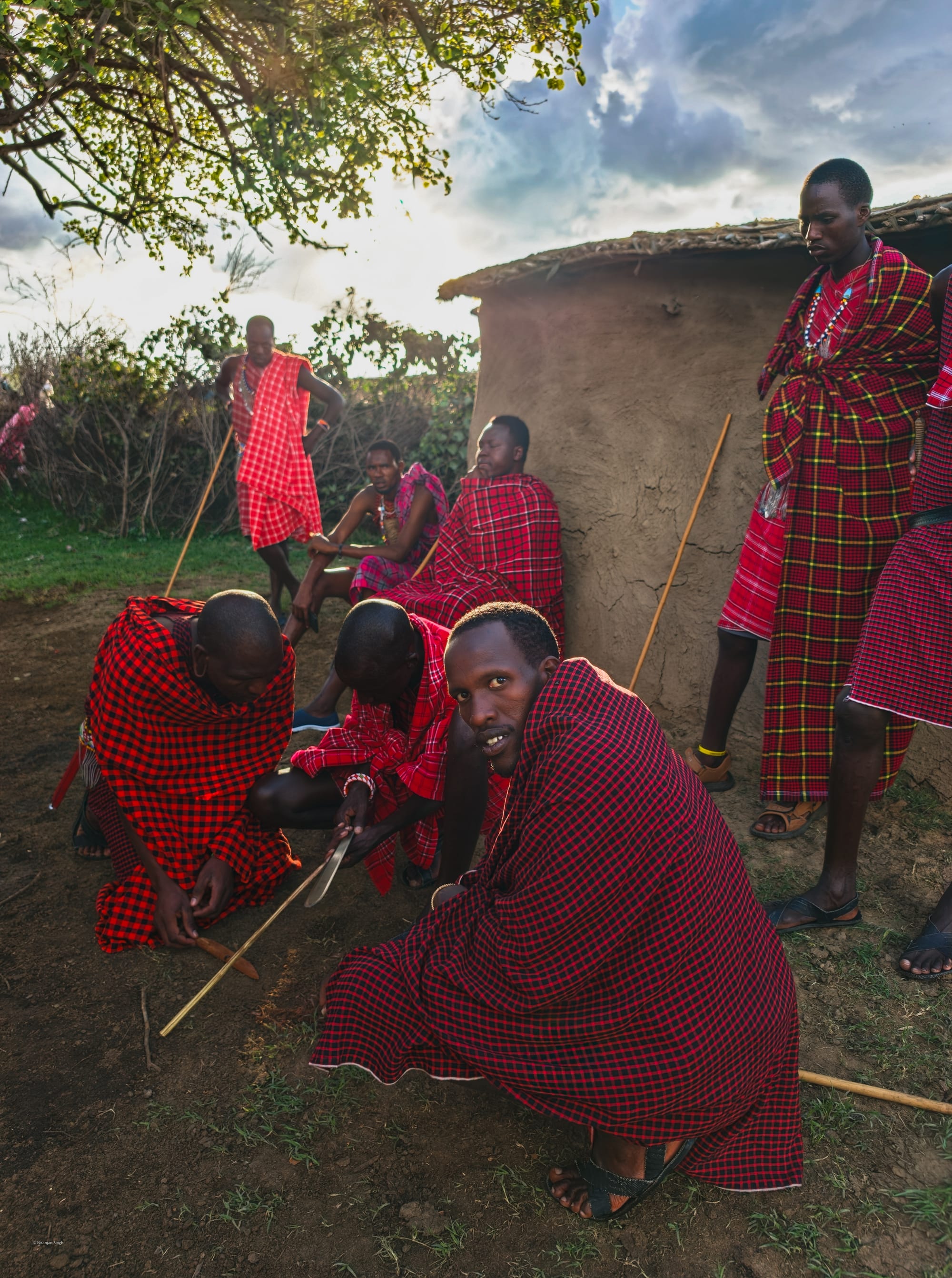
For a Maasai village or homestead visit, ask your camp or tour company. It usually costs $25–50 per person, and it's often included in your package. They'll arrange a guide from the community.
The Mara is Maasai land, and the conservancies around the reserve exist because Maasai families lease their land for wildlife (Maasai Mara Wildlife Conservancies Association).
- Ask your camp where the fee goes. Some villages host many groups a day, and a visit to a single family homestead is smaller and quieter.
- Ask before taking photos of people. Some will say yes, some no, and some will ask for a small payment.
- Expect to be shown crafts. Buying isn't required. If you do buy, ask who made it, since some beadwork is sold by the women's groups who make it.
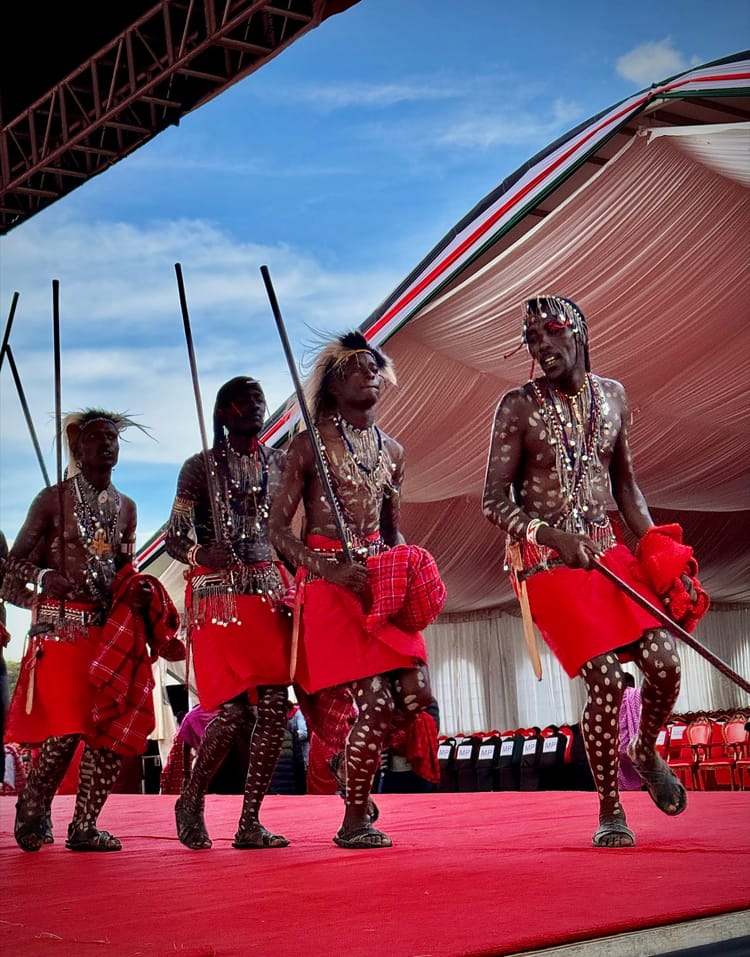
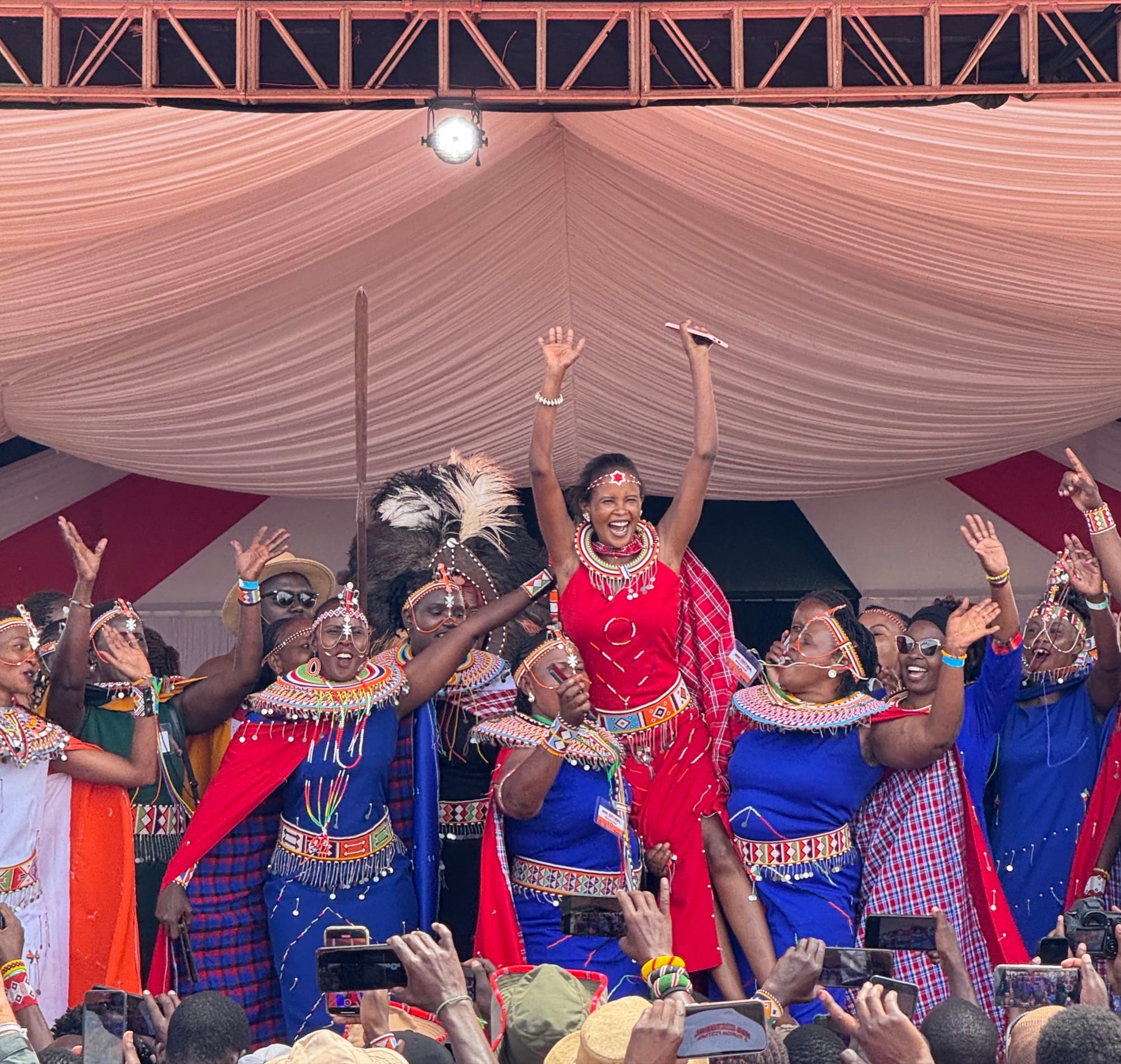
In November 2026 the Maa Cultural Week came to Sekenani Gate, a five-day gathering of Maa communities from across Kenya and Tanzania. We wrote what to expect before it and what it was like.
FAQ
Is it Maasai Mara or Masai Mara?
Both are the same place. "Maasai" is the spelling the Maasai people use and the one in the reserve's official name. "Masai" is an older spelling that many maps and booking sites still show.
How much is the Maasai Mara park fee?
As of November 2026, for non-resident adults, $100 per day from January to June and $200 per day from July to December. Children aged 9 to 17 pay $50, and under-9s are free (Narok County Finance Act 2023).
What is the best month to visit the Maasai Mara?
For the migration and river crossings, July to October. For half the park fee, January to June. January and February can still be busy, and March to May is the quietest but the wettest.
Can I see a river crossing for sure?
No. Herds can wait at the river for hours or days, and no one can schedule a crossing. Two full-day drives to the river between July and October give you the best chance.
How many days do I need?
Three nights, with two full days in the reserve, is a good first trip. More if you want a balloon flight or extra time outside the reserve.
Can I self-drive in the Maasai Mara?
Not on the Narok side, where Sekenani and Talek gates are: game drives there are guided only. Self-drive is allowed only in the Mara Triangle, the western part of the reserve.
Is the Maasai Mara safe?
Yes, for visitors who follow the rules: stay in the vehicle on drives, don't walk around unfenced camps alone at night, and travel by road in daylight.
Do I need malaria tablets?
The CDC lists malaria risk for all of Kenya below 2,500 m, game parks included, which covers the Mara. Ask a travel clinic about tablets.
Can I do the Maasai Mara as a day trip from Nairobi?
You can, but it's 8 to 10 hours on the road for a few hours of game viewing. With one night and scheduled flights (about an hour each way from Wilson Airport), you get a full day in the reserve.
Do I need a visa for Kenya?
Most visitors need an eTA, applied for online at etakenya.go.ke at least two weeks before travel, and since October 2026 the mandatory Kenyan travel health insurance, bought in the same application.
Fees, rules and prices checked 22 November 2026 against the sources linked in each section. If something has changed, tell us at hello@marahilltop.com and we'll fix it.