Nobody can tell you when the Great Migration will reach the Mara
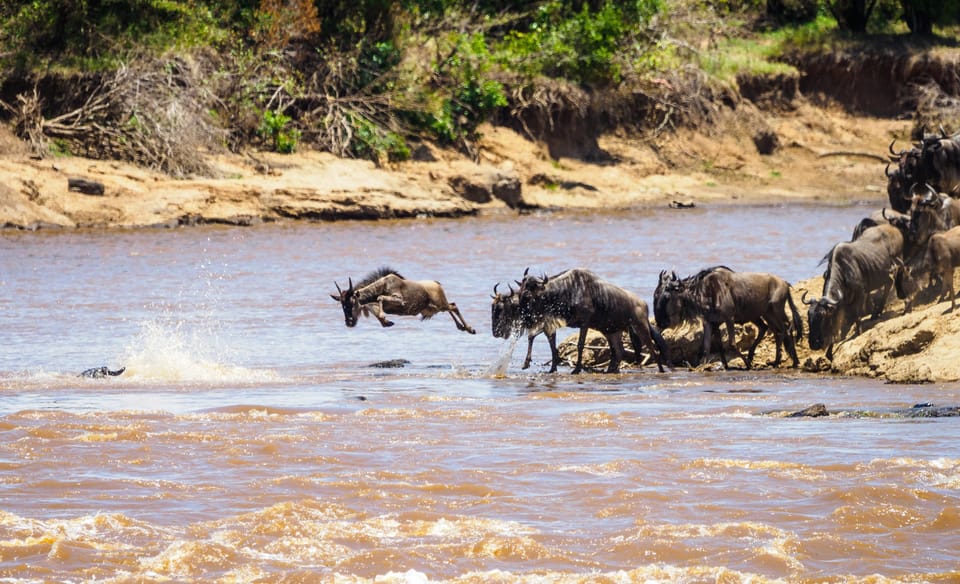
Last year I was halfway up a hike with a few guests when the news came through. Mara Hilltop had just opened, the morning was cool, and we were a lot more interested in the view than in our phones. Then someone's phone buzzed, and then three more, and then everyone's at once. First group's crossed. That's how the news moves here. First a WhatsApp message, then the drivers radioing each other, then the whole valley somehow pointed in the same direction. The herds were in. I've watched a lot of things happen in the Mara over fifteen years and I still wasn't ready for how much that one message lit everyone up. People who'd been happily ambling along a ridge were suddenly asking how fast we could get into the park.
So the first thing I tell anyone planning a trip around the migration: you can't really plan a trip around the migration. Not to the day. Not even to the week, really.
You can't schedule it, and that's the part most people get wrong
Everyone shows up with a date in their head. The migration is July to October, the internet says, so they book the second week of August and assume the herds will be standing there waiting. And they might be. But "July to October" is a window, not an appointment. When the first big groups actually push north across the border depends entirely on the rains, and the rains have never once checked anyone's calendar.
It's also been drifting later. A handful of years ago the first arrivals were often around the middle of June. Lately it's been mid-July, sometimes the very end of July. That crossing I just described was right at the end of the month, which is late. Why it's shifting I can't tell you for certain. Weather patterns, changing rainfall, take your pick. But everyone who's watched this their whole life says it doesn't come as early as it used to.
You only really get a read a few days out. As the herds get closer the chatter starts up, maybe this week, maybe next, and that's about as much notice as anyone gets. So yes, prices across the Mara climb from July, and yes, that's the season to come. Just come knowing you're buying yourself a very good chance, not a ticket to a scheduled show.
It's never just one river crossing
People picture the crossing itself wrong, too. They imagine the migration as a single event: the famous shot, thousands of wildebeest pouring across a river, crocodiles waiting in the brown water. They figure they'll turn up, watch that on the Tuesday, and tick it off the list.
What's actually moving through is a herd of more than a million wildebeest, with a few hundred thousand zebra mixed in among them. A river crossing is one moment inside a process that runs for weeks. And when one does happen it isn't quick. The moment the first animal commits and throws itself in, the rest pour after it in a single ragged line, following the leader, and it can carry on for hours. You just stand there and watch it keep coming.
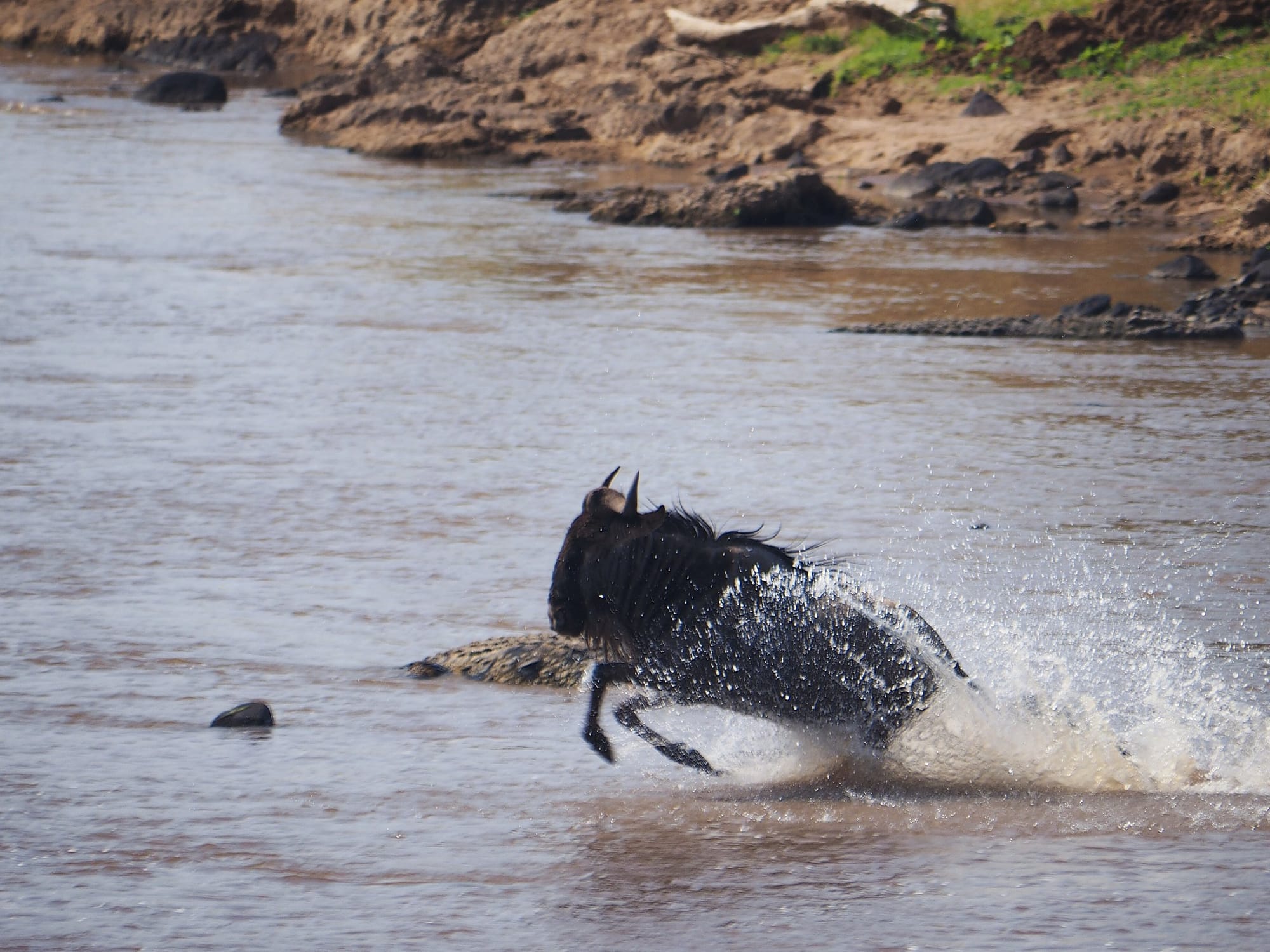
Then it stops. That group is over, and the next one piles up on the bank, and now it's anyone's guess. They might go in two hours. They might sit there for two days, grazing along the water, deciding the moment isn't right, while you wait and quietly will them across. That hesitation is completely normal. It's the whole reason the thing stretches over weeks instead of happening on cue.
Which means you can be in the Mara in the dead centre of the season and not see a crossing, because the group you'd parked next to decided today wasn't the day. I'd rather tell you that up front, because plenty of places won't.
And even then, it's the eighth wonder of the world
Don't read that as a warning, though. The crossing is the highlight reel, not the whole film.
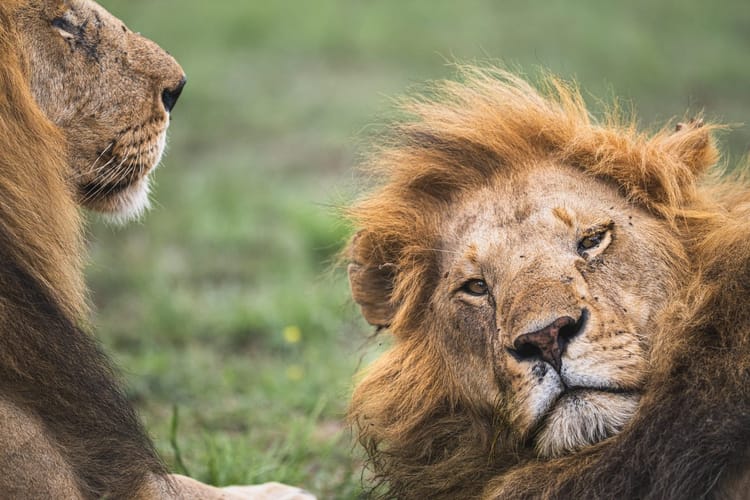
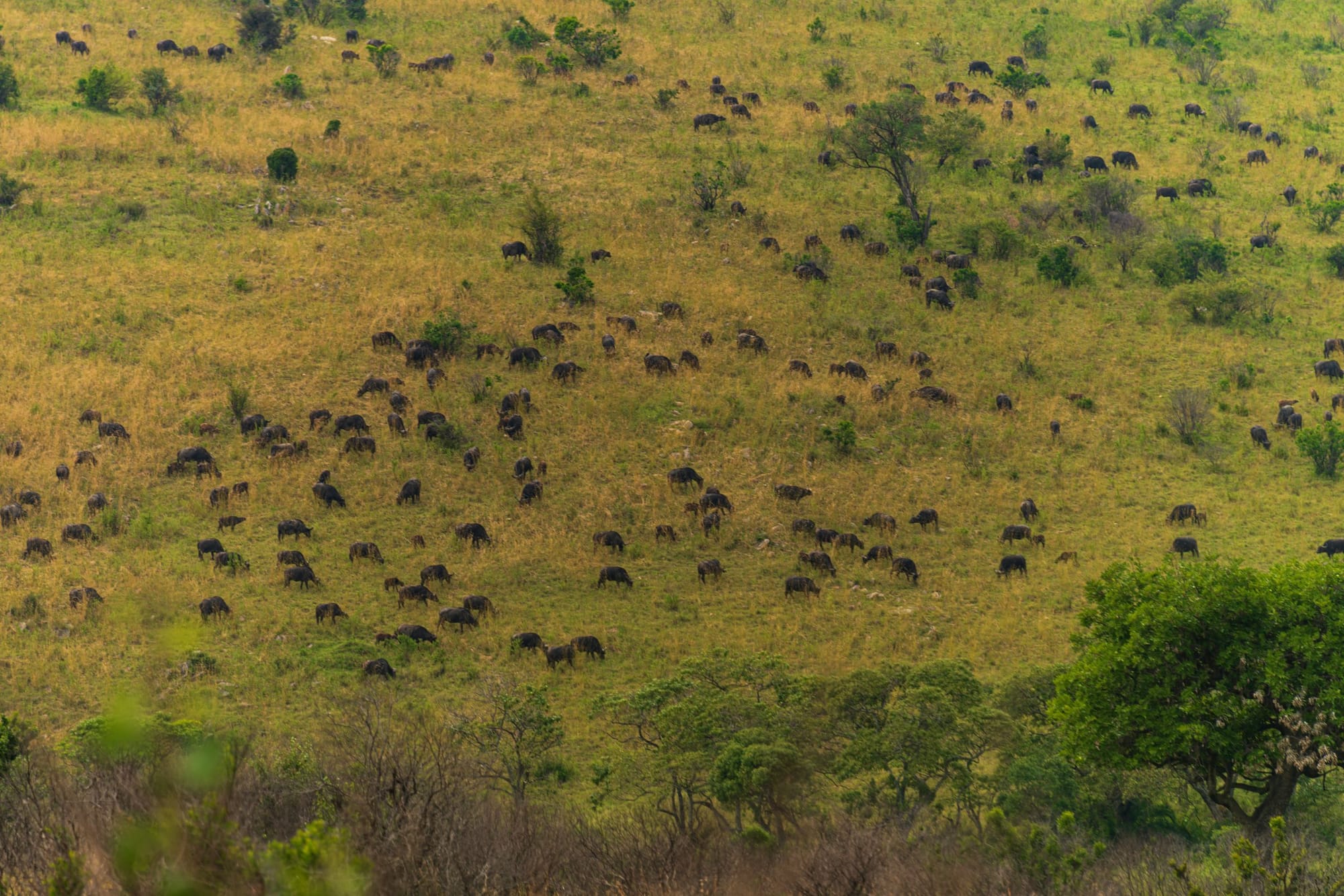
Even on a day when nothing crosses, you're sitting in the middle of well over a million animals. Wildebeest and zebra out to the horizon, and right in behind them everything that eats them: lions too full to bother getting up, hyenas working in the open, leopards and cheetahs cashing in because the buffet just walked into town. People call the migration the eighth wonder of the world and it earns it. Standing in the middle of that much life moving in every direction, a river crossing almost starts to feel like a bonus. Get one and you'll be talking about it for years. Miss it and you've still seen something most people only ever see on a screen.
Why they come, and what the Maasai say
They're chasing the rain. That's the short answer, and most of the long answer too.
The wildebeest spend the early part of the year down on the southern Serengeti plains, on short grass growing out of old volcanic soil, grass that happens to be unusually rich in exactly what a nursing mother needs. That's where they give birth. Then, as the grass dries out, they move, following the green that the rains keep pulling up ahead of them, and that long loop is what eventually carries them north into the Mara and, later in the year, back down into Tanzania to do it all again.
The Maasai I've talked to put it more simply, and I think better: the wildebeest smell the rain coming, and they go to it. Whether they literally catch it on the wind from miles off or just read the sky and the grass better than we ever could, I'll leave to the people who study this for a living. But the people whose land this actually is have been saying "they follow the rain" for a very long time, and the researchers who've tracked the herds landed in pretty much the same place.
The zebra aren't just along for the ride
One small thing I love, and you'll see it the whole time, because the zebra are mixed right in. They travel together on purpose. They don't even eat the same thing: zebra take the taller, coarser grass off the top, and wildebeest crop the short soft stuff underneath, so they're not really fighting over lunch. And they cover for each other in different ways. Zebra have sharp eyes and a good memory for where the water and the old routes are; wildebeest have the better nose. Between the two of them they clock a lion sooner than either would on its own. It isn't sentiment. It's two animals that worked out a long time ago they're simply safer together.
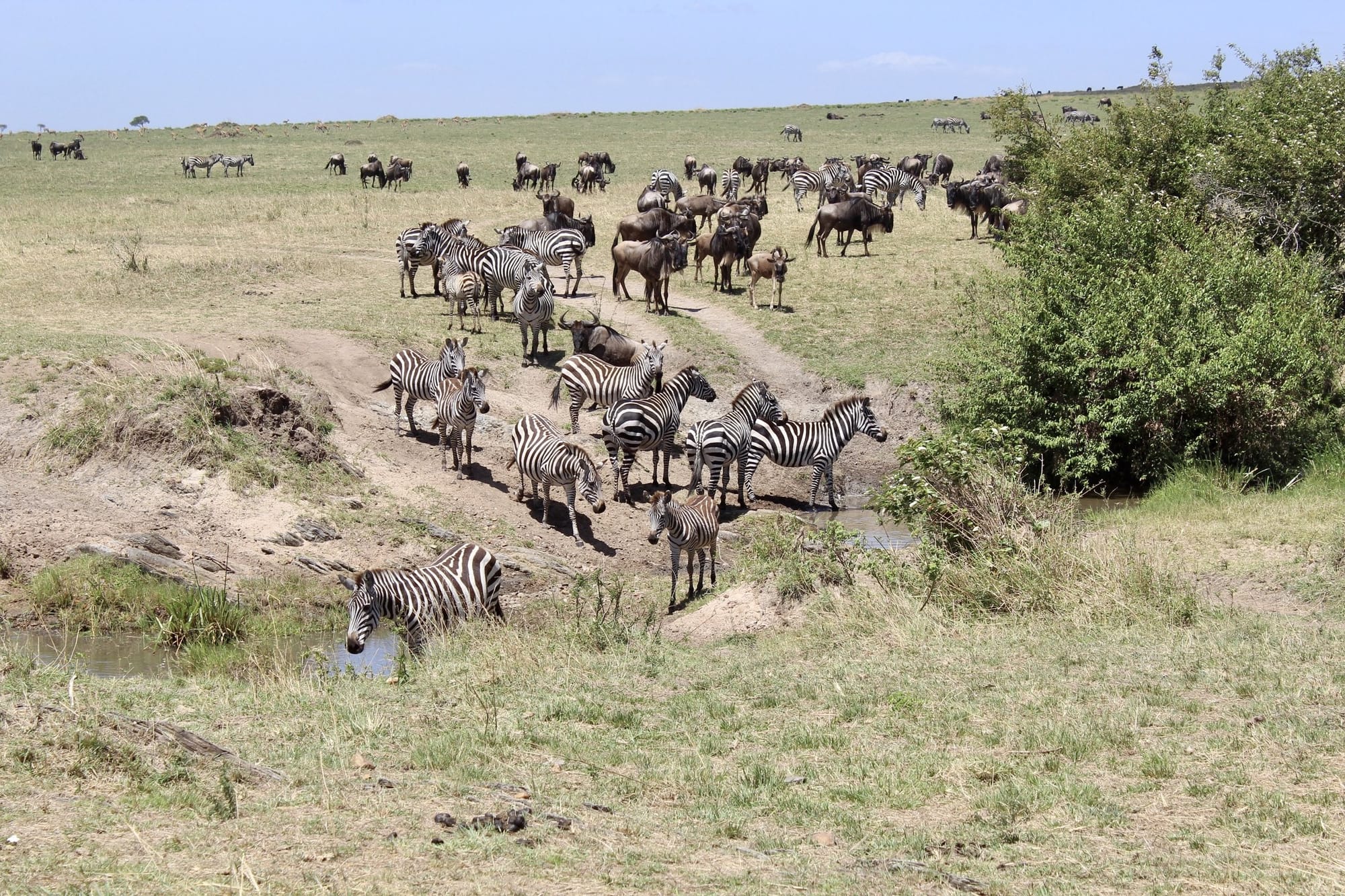
And the calves, while we're on it. The reason the young ones all look about the same age is that nearly all of them were born inside the same two or three weeks back in February, down on those southern plains. By the time they're splashing across a river in front of you they're five, six, seven months old. Born all at once, so that no predator could ever take more than a fraction of them.
This is where a good guide actually matters
Now the practical bit, because this is where your odds are really made or lost.
A crossing doesn't get announced. The guides who know one's about to happen will often keep it inside their own circle on purpose, because the last thing they want is forty vehicles tearing toward the same bend in the river. And there's a real reason for the discretion. The last few years have seen some ugly scenes, crossings where too many eager drivers crowded the bank, physically blocked the herd's path down to the water, and the animals just balked and backed off. A guide with a real network hears where the right spot is, and, just as importantly, has the sense not to wreck it once he's there.
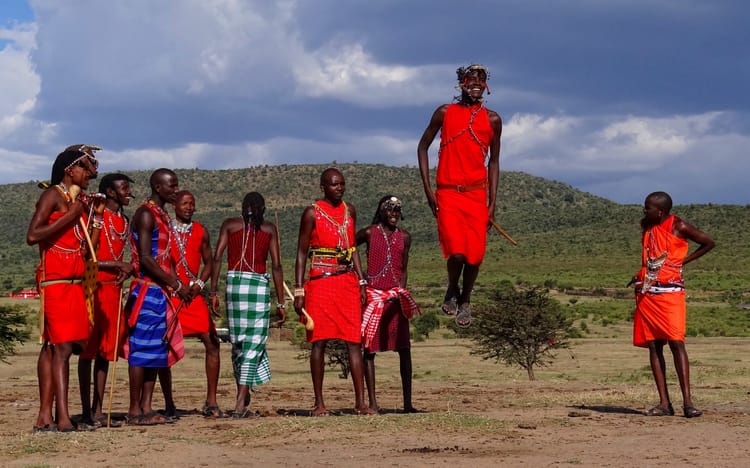
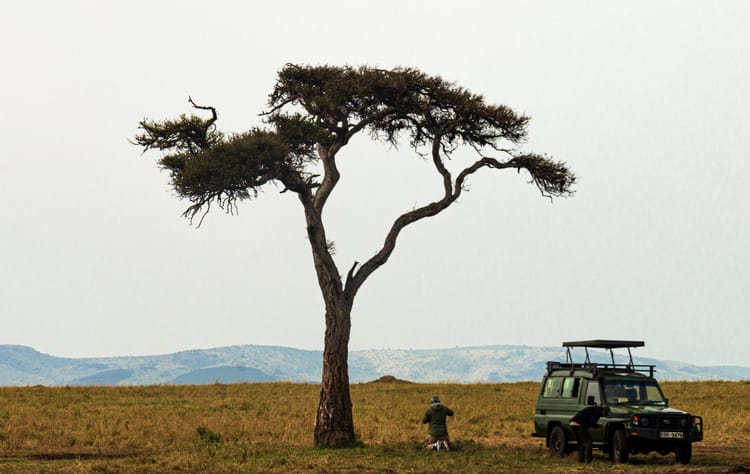
Our drivers at Mara Hilltop are Maasai from right here. This is their family's land, and the guiding network they're plugged into is one we're proud to be part of. On a migration morning they'll work both the Mara River and the Sand River, reading where the herds are queueing up and moving between the two to put you in with the best chance. Where we sit helps too. You'll spot herds out in the distance from the lodge, and once you set off you're inside the park in five to seven minutes and down at the Mara River in about forty-five, with the Sand River not far either way. And on the quiet days, when nothing's crossing, you can still head out on foot with a Maasai guide and get close to the country in a way no vehicle allows.
What the elders remember
The thing that stays with me, though, is something the older Maasai tell me. They remember the wildebeest coming much deeper inland than they do now, through ground that's since become the little town by the main gate, where the villages are today. Fifteen, twenty, thirty years back the herds pushed through places they don't go anymore. The land filled in, the tourism economy grew, people settled, and the animals quietly rerouted around all of it. Every year the crossing points shift a little, and the lines the herds walk move a little with them.
I don't have a neat lesson to hang on that. It's just what it looks like when a lot of people and a lot of animals are still working out how to share the same ground, and for the most part, it's working. The migration still comes. Nobody can tell you exactly when, and nobody can tell you exactly where it'll cross. You come, you wait, and you end up watching the sky the way the wildebeest do. And some morning your phone lights up, and the whole valley turns to look.
— NJ, co-owner of Mara Hilltop. I live in the Mara and build software from here: the lodge runs on KaribuKit, the hotel platform we make at SimbaStack.
Feature photo: Danijel Mihajlovic via Wikimedia Commons, CC BY-SA 4.0.