I've done a few hundred Mara safaris. You can skip most of the packing list.
I've been on a few hundred Mara safaris by now. I've shown up to more than a few of them in flip-flops and shorts. Not my proudest packing decisions. The safaris were fine.
Yes, you do sometimes get out of the car. Yes, sometimes that means walking along the Mara River. No, nobody cared what I was wearing. The hippos definitely did not care. The lion in the distance had no opinion.
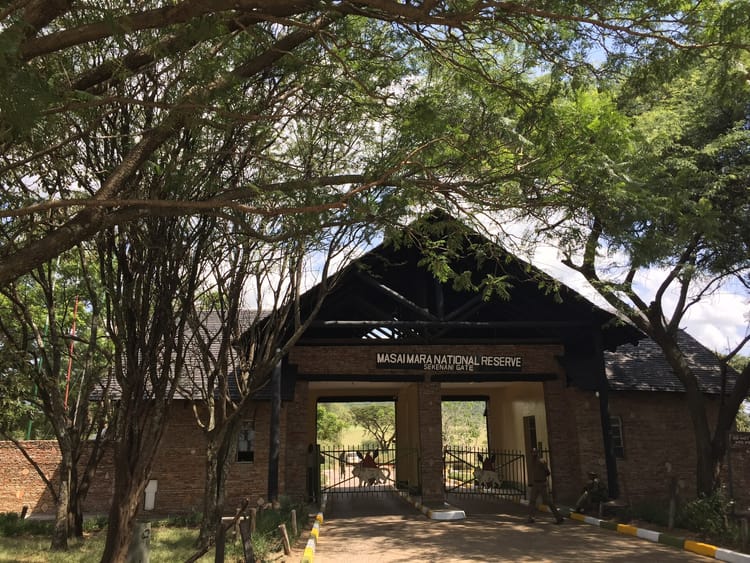
I run a lodge five minutes from the main Sekenani Gate, and the thing I want to tell you, before you read another "13 absolute essentials for your safari" listicle, is that you don't actually need most of it.
A guy showed up here last August with two duffels. One had clothes. The other was pure safari gear — three pairs of boots, technical fast-dry trousers in graduated shades of beige, a mosquito-net hat, two kinds of repellent, a folding water filter, electrolyte tablets, and four flashlights of escalating intensity.
By day three he was wearing the shorts and t-shirt he'd flown in with. The boots stayed under the bed the whole trip. The mosquito hat made exactly one appearance, ironically, at sundowners.
That's not him being silly. That's what happens when you read three safari packing lists in a row and start panicking. You panic-buy at REI, you show up looking like you're surveying a different planet, and then you realise the people who actually live here are in jeans and crocs.
So here's the honest version.
The only constraint that actually matters
If you're flying between camps — which most multi-destination Kenya/Tanzania itineraries involve — your airline is a small charter carrier with a 15kg soft-sided bag limit. Not 15kg in a roller. Not "approximately 15kg." A soft duffel that fits in a small compartment. They will weigh it.
This is the only packing rule I'd actually fight you on. Everything else is preference. But if you turn up at Wilson Airport in Nairobi with a hard-shell suitcase, you're going to have a sad conversation with a man in a high-vis vest.
If you're driving from Nairobi to the Mara, the weight limit doesn't matter. Bring whatever you want, we'll fit it in the car.
What you actually need
Sunscreen. Sunglasses. A hat or cap if you're prone to burning. Anything you'd wear on a normal warm-cool day — t-shirts, shorts, a fleece for the cold mornings, whatever shoes you can walk in. That's the list.
The early-morning game drives in July and August are properly cold, the kind of cold where you'll see your breath. Wear what you'd wear on an autumn morning back home. The middle of the day is hot. The evening might need the fleece again. Layers, not a thick jacket. Not a special "safari coat." Whatever you already own.
If you have binoculars, great, bring them. If you don't, your guide has binoculars. You'll get to look through them.
If you have a real camera, bring it. Your phone is also fine for 90% of safari moments. The leopard at six metres doesn't care about your 600mm lens, and the wide-angle wildebeest crossing shot from your iPhone will be the one you actually look at again.
What the internet will tell you to buy that you don't need
The full neutral wardrobe. Animals are mostly dichromatic, by the way — they can't tell red from green the way you do. The actual reason for neutral colours on safari is dust. Red laterite dust turns a white t-shirt grey in three days, and black absorbs heat in ways that get unpleasant before 10am. So wear neutral if you like. Don't go buy a complete tan/khaki outfit you'll never wear again. Your existing clothes will be fine.
Heavy boots. Game drives are about 95% sitting in a Land Cruiser. You don't need boots. Trail runners, sneakers, even sandals at the lodge — all fine. The Maasai guides, who actually walk the bush, are mostly in worn-in trainers.
Industrial quantities of DEET. Daytime in the Mara just isn't a heavy mosquito environment. You'll want a normal repellent for the evenings sometimes. That's it.
A hairdryer. Most lodges run on limited solar. The hairdryer will trip the inverter and make you very unpopular.
A mosquito-net hat. I have only ever seen these worn in Instagram photos.
Multiple "safari shirts" with twelve pockets and mesh ventilation. A normal long-sleeve linen shirt does exactly the same job. The animals do not know if you bought your shirt at Patagonia or H&M.
A first-aid kit the size of a small dog. Bring your normal medications and a few plasters. The lodge has the rest, and there's a doctor on call.
Add the uncomfortable one to this list: leave the anxiety. Most of the things people stress about before a Mara safari turn out to be non-events. We had a guest call from Heathrow last year almost in tears because the only suitable jacket she owned was black. Her safari was great. The animals did not look at her jacket.
About the malaria thing
This is the question I get the most pre-arrival anxious emails about, so let's do the honest version.
The daytime mosquito situation in the Mara is much milder than people expect. You can do an entire morning game drive without seeing a single one. The places mosquitoes actually show up are wetter spots, around still water, after sunset.
At Mara Hilltop every tent has mosquito netting on the windows and over the bed, and we spray when a guest asks. We've also got a doctor we can call out who'll do a blood test on the spot for about $25 — we've used him a couple of times when guests wanted peace of mind after a fever. For somewhere this remote, the medical access is surprisingly good.
The altitude thing is real but oversold on travel forums. The Mara sits at about 1,500–1,800 metres. Anopheles mosquitoes, the malaria carriers, are much rarer above 2,000m but they do exist below it. So altitude reduces risk, it doesn't eliminate it. Don't let any blog — mine included — convince you the Mara is malaria-free. It isn't.
On the prophylaxis question: the CDC, NHS, WHO, and every other major public health body recommends antimalarials for travel here. They're not wrong to. Plasmodium falciparum, the regional strain, is the dangerous one if it goes untreated, and most travellers have zero acquired immunity. So the medical advice is: talk to your doctor, and if your doctor recommends the pills, take them properly. That's a medical conversation, not a packing one.
What I'll say, having watched a few hundred guests come through, is that the lived experience of a Mara safari is a lot calmer than the CDC page makes it sound. Most guests take the pills, see almost no mosquitoes, and never think about it again. The thing I'd push back on is the level of dread people bring to the question. The Mara isn't a malaria hotzone. It's a regulated reserve with lodges that have nets and doctors on call. If you do feel feverish — at the lodge, or weeks later back home — get a blood test fast. That's the actually-useful instruction. The rest is between you and your doctor.
(If you're researching, the CDC Kenya page and the NHS Fitfortravel Kenya page are the two I'd send anyone to.)
The toilet question
People don't usually ask this on the booking call, but it's the most-Googled "first time safari" question on the internet, so let's just answer it.
In camp: normal flushing toilets, like any hotel. On a game drive: most Mara drives are full-day, twelve hours in the park, you're not heading back to the lodge until evening. The reserve has two or three proper toilet stops though — actual built, clean, flushing toilets — that the drivers know and route around. So your day comes with bathroom breaks baked in.
For the rare between-stops emergency, the Maasai guide checks for animals, picks a safe patch of bush, and stands watch. Honestly it's kind of fun — open sky, no walls, the same patch of land the elephants use. People tend to talk about that one more than the lion sightings.
You don't need to bring anything special for it. It's not the production the internet implies.
So what would I actually pack
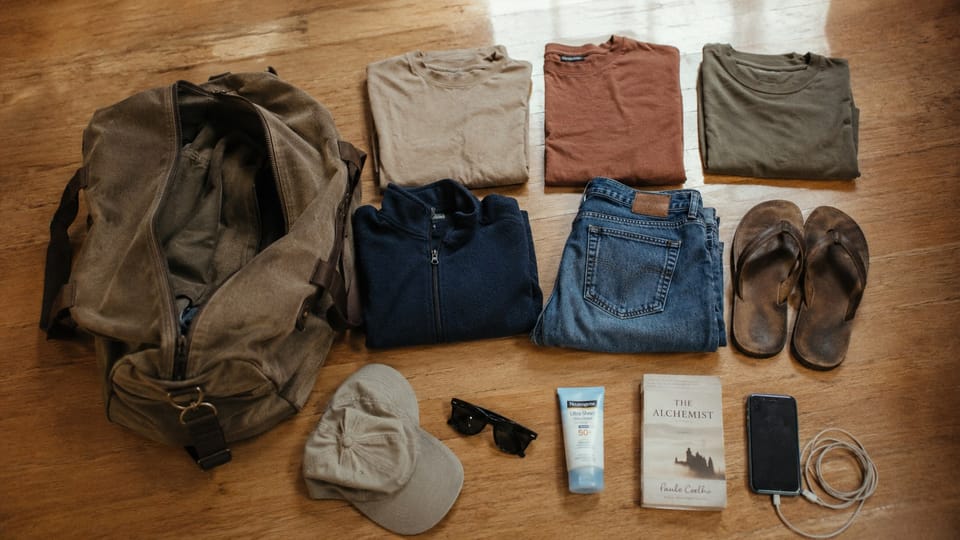
If I were packing for a five-day Mara trip tomorrow, I'd bring: a pair of jeans, one pair of shorts, three t-shirts, a fleece, a long-sleeve linen shirt for evenings, sneakers, flip-flops, sunscreen, sunglasses, a cap, my phone, a charger, a book, and whatever toiletries I use at home. That's it. That fits in one duffel with room to spare.
If you want to bring binoculars, a real camera, your malaria pills, and a small daypack for the drive vehicle — all great. But every additional item is one you'll probably leave at the lodge.
The Mara is a more chill place than the packing lists suggest. The people who actually run lodges out here wear jeans and a t-shirt to work. You don't need to dress for an expedition. You need to dress for "outside for a few hours, then a lodge for the rest of the day."
So bring less. Bring your sunscreen, your sunglasses, and your sense of humour. The rest you can figure out when you get here.
— NJ, co-owner of Mara Hilltop. I live in the Mara and build software from here: the lodge runs on KaribuKit, the hotel platform we make at SimbaStack.