Maa Cultural Week 2026: five days just inside Sekenani Gate
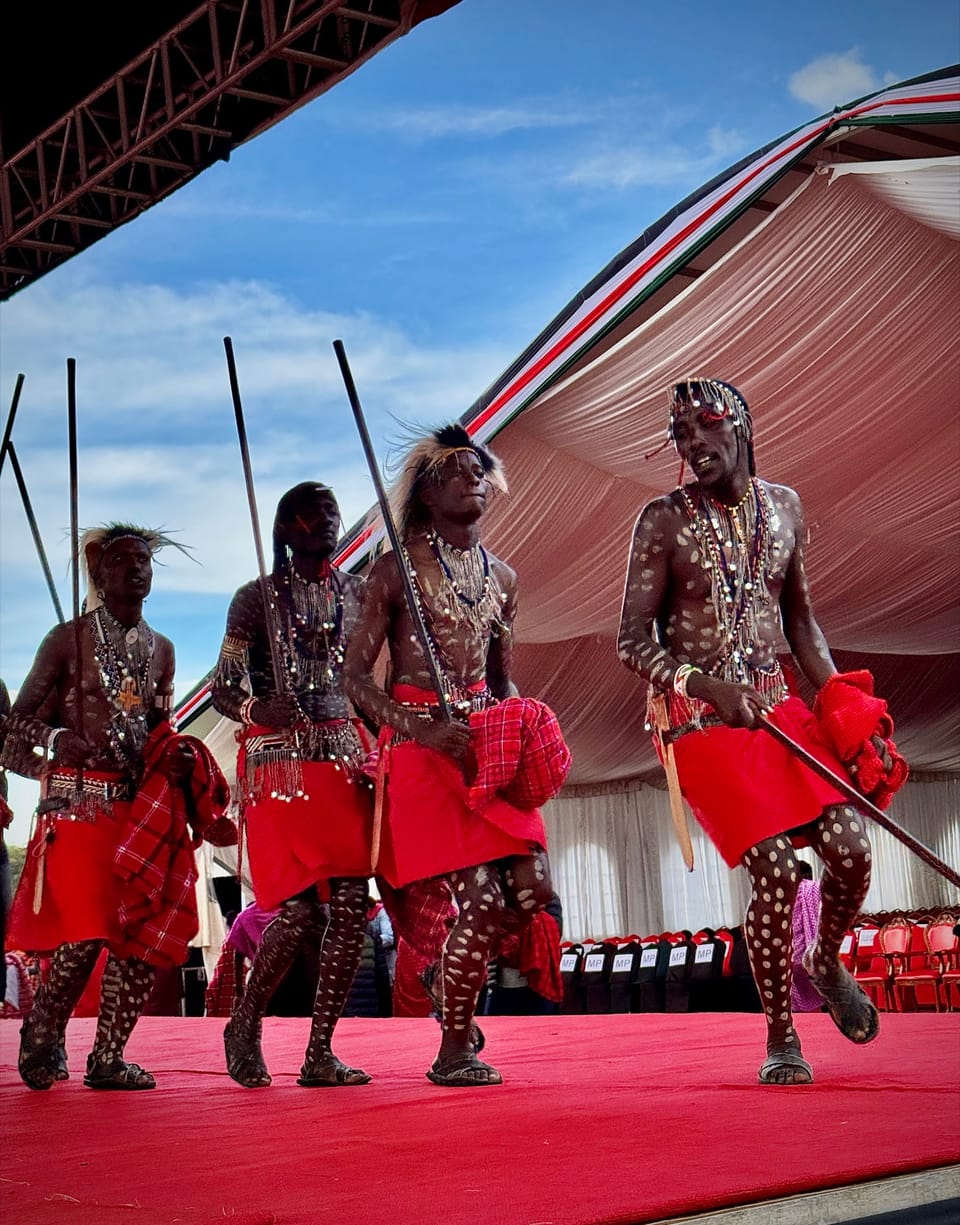
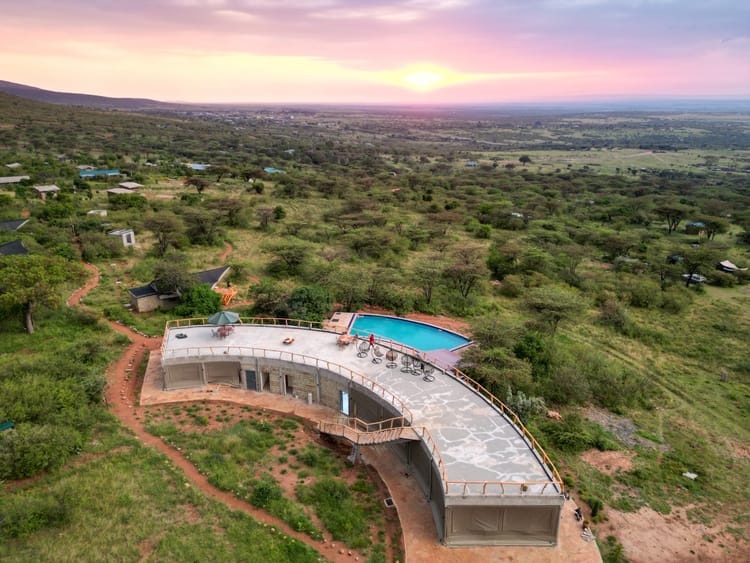
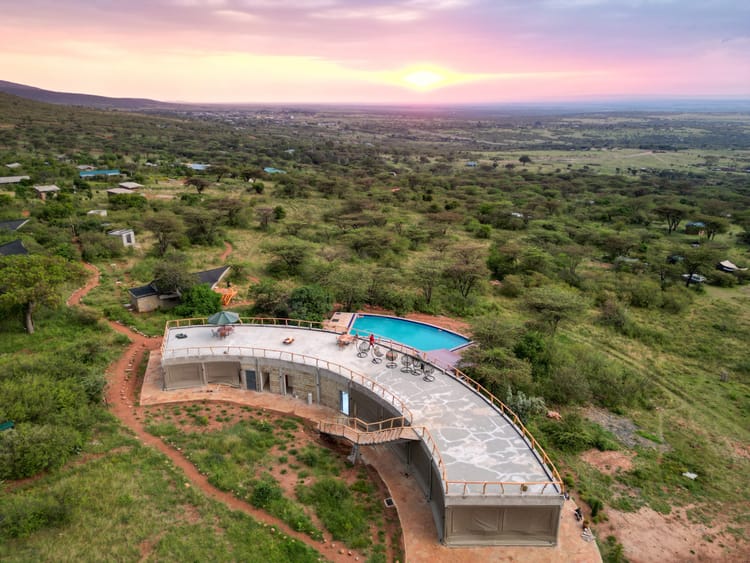
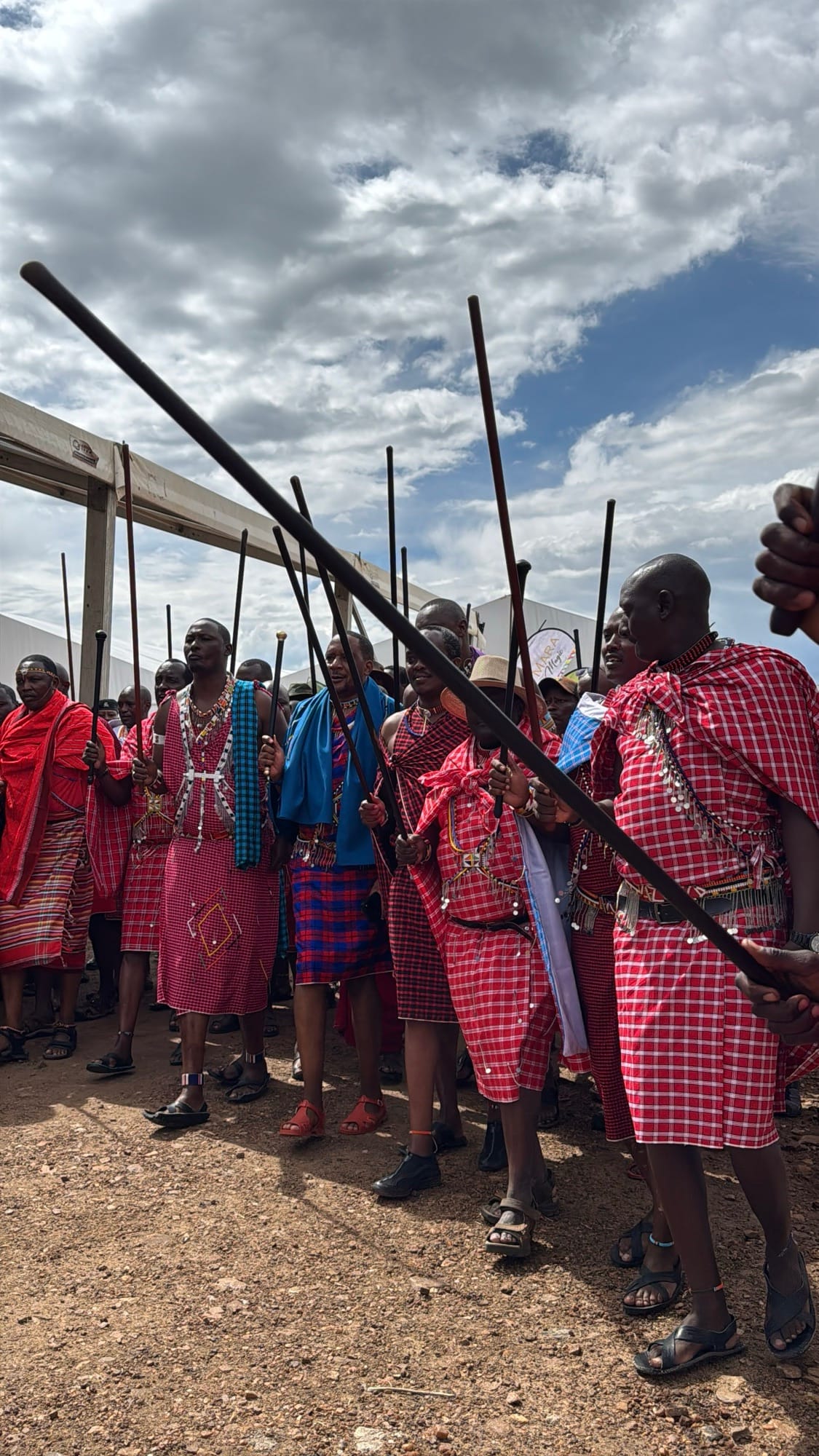
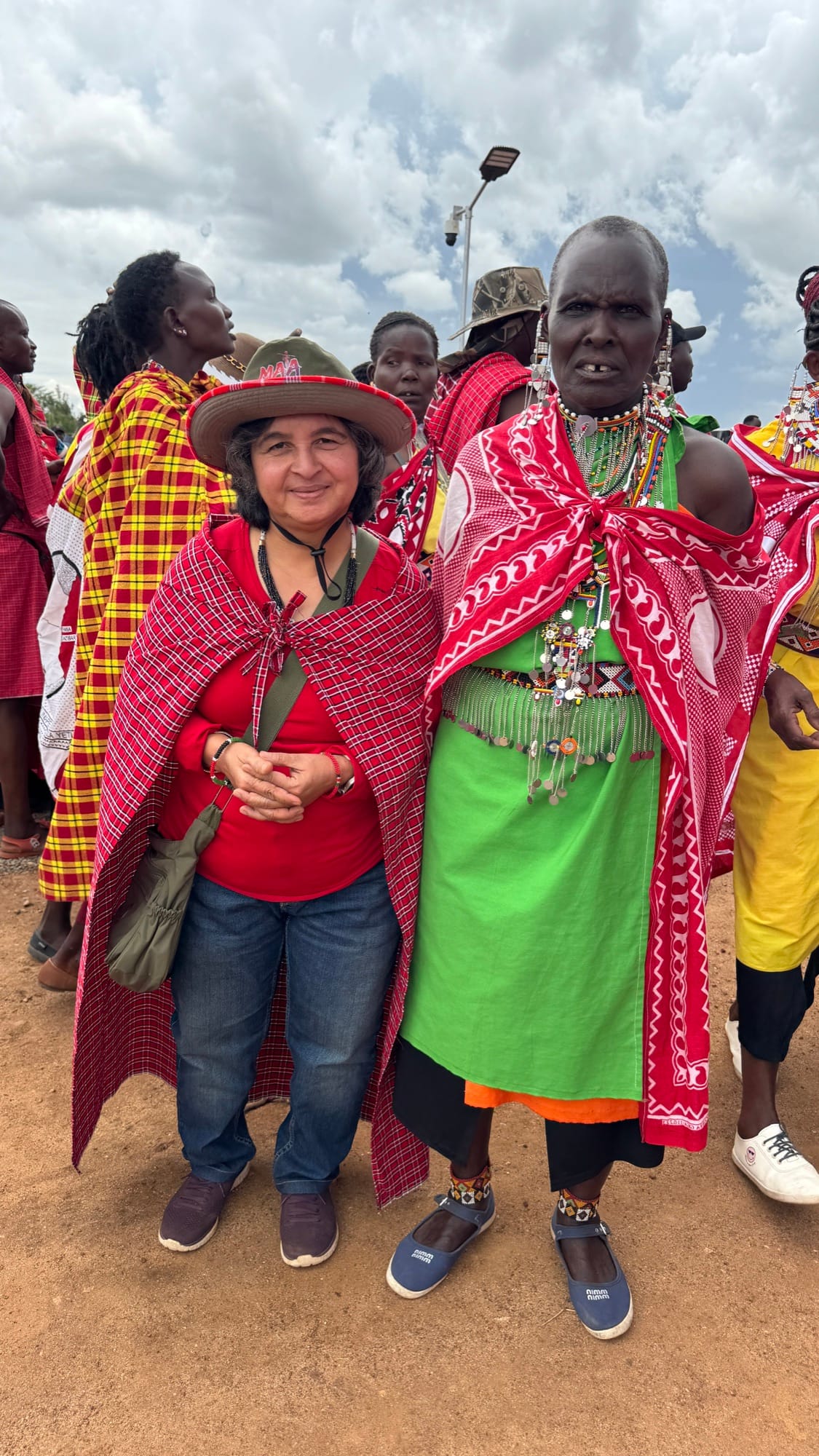
For five days in November, the Maa Cultural and Tourism Festival took over the open ground just inside Sekenani Gate, about five minutes down the road from our lodge, Mara Hilltop. My mom and I went pretty much every day, with a few of our Maasai staff who grew up in this area, so we had people explaining things to us the whole time. Maa communities came in from all over Kenya, and some even from Tanzania. The first day was actually quite empty, but from the second day the crowds started coming.
On the opening day the governor of Narok, Patrick Ole Ntutu, told everyone to come in Maasai dress (no hats, no long trousers) and said there should be no politics at the festival (The Standard). He was around every day of the festival too.
The festival in short
| Maa Cultural Week 2026 | |
|---|---|
| Official name | Maa Cultural and Tourism Festival, also called Maa Cultural Week or the Maasai Cultural Festival |
| Edition | Fourth (the first was in 2023) |
| Dates | 10 to 14 November 2026 |
| Where | Just inside Sekenani Gate, Maasai Mara National Reserve, Narok County |
| Hosts | Narok County, with Kajiado and Samburu counties and the Maa Economic Bloc |
| Theme | "Promoting Maa Cultural Expressions for Socio-Economic Development" |
| Who came | Maa-speaking communities from eight Kenyan counties, plus delegates from Tanzania |
| Crowd | About 100,000 expected, up from roughly 12,000 in 2023 (The Standard) |
| Chief guest | President William Ruto, at the closing ceremony on Saturday 14 November |
| Next | It rotates between the three Maa counties, so Samburu in 2027 and back at Sekenani in 2029 |
Five days, five themes
Each day had its own theme, which I only knew because our staff kept telling us what today's theme was and what tomorrow's would be. Otherwise you'd think every day is kind of the same, there's one central stage with someone emceeing and groups dancing, and everyone is either crowded around it or sitting in their own little corners. So it helps a lot to have someone local with you, or you'll be asking around like I was.
This is what each day was about, as Solomon from our team and I wrote it down afterwards:
| Day | Date | Theme |
|---|---|---|
| 1 | Tue 10 Nov | Welcoming the communities arriving from Narok, Kajiado and Samburu |
| 2 | Wed 11 Nov | The youth, and keeping the culture alive in the next generation |
| 3 | Thu 12 Nov | Women's empowerment within Maa traditions |
| 4 | Fri 13 Nov | Seeking blessings and wisdom from the elders |
| 5 | Sat 14 Nov | The closing day, with President Ruto as chief guest |
A boma with three kinds of houses
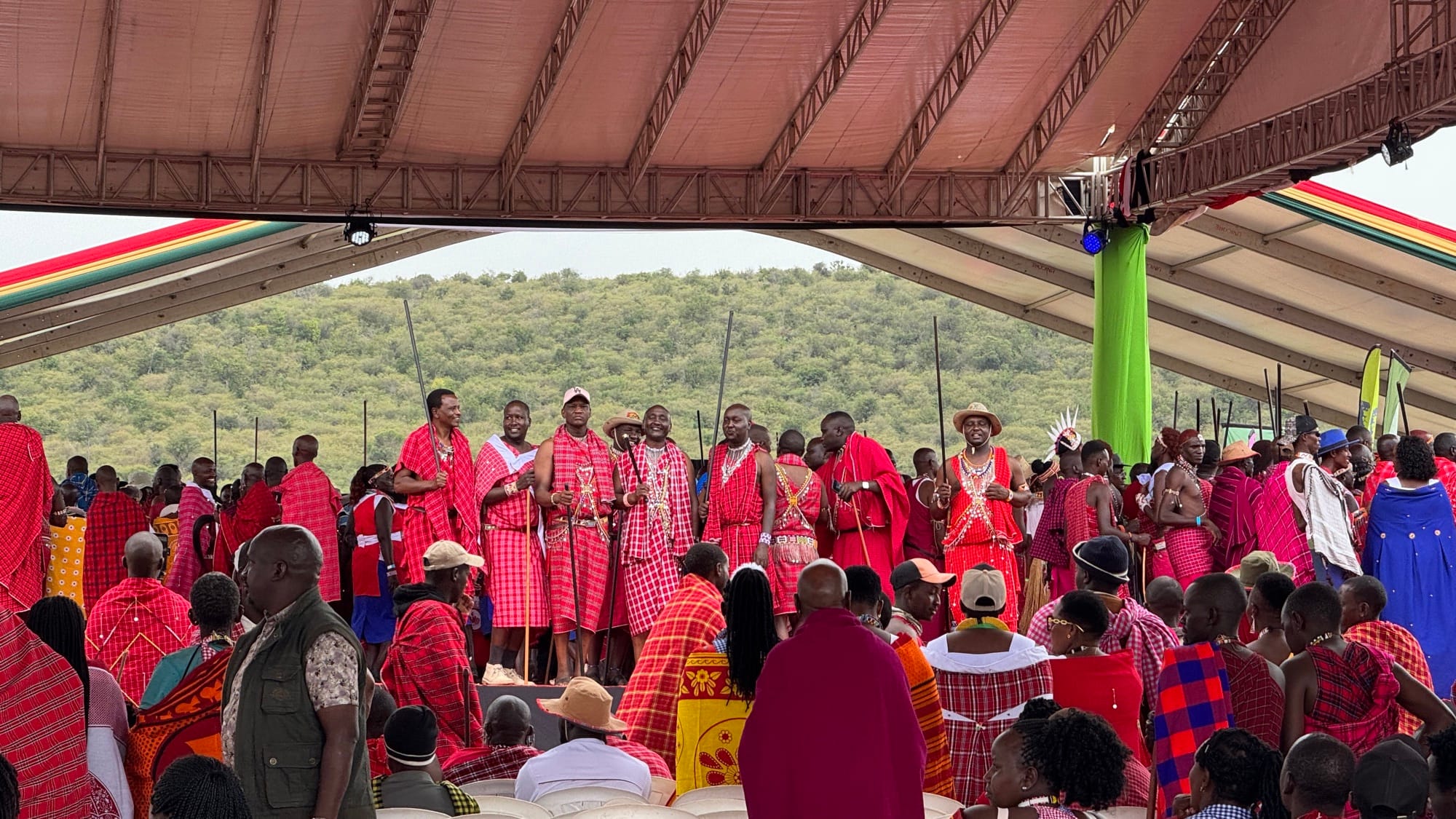
One of the coolest things on the ground was a boma built just for the festival, where every house was made differently. One was in the Maasai Mara style. Another was covered in sheep and cow hide stretched over sticks, which is how they build on the Kajiado side, around Amboseli. The Samburu one looked quite similar to the Mara houses. Even though all of them were brand new, each had people sitting inside to show you around and explain it, and they'd offer you a cup of traditional chai right there in the manyatta. Something I didn't know before: a Maasai house is traditionally built by the women, a frame of branches plastered with mud and cow dung, and the dung is what keeps the rain out (Google Arts & Culture).
Everyone we know was there
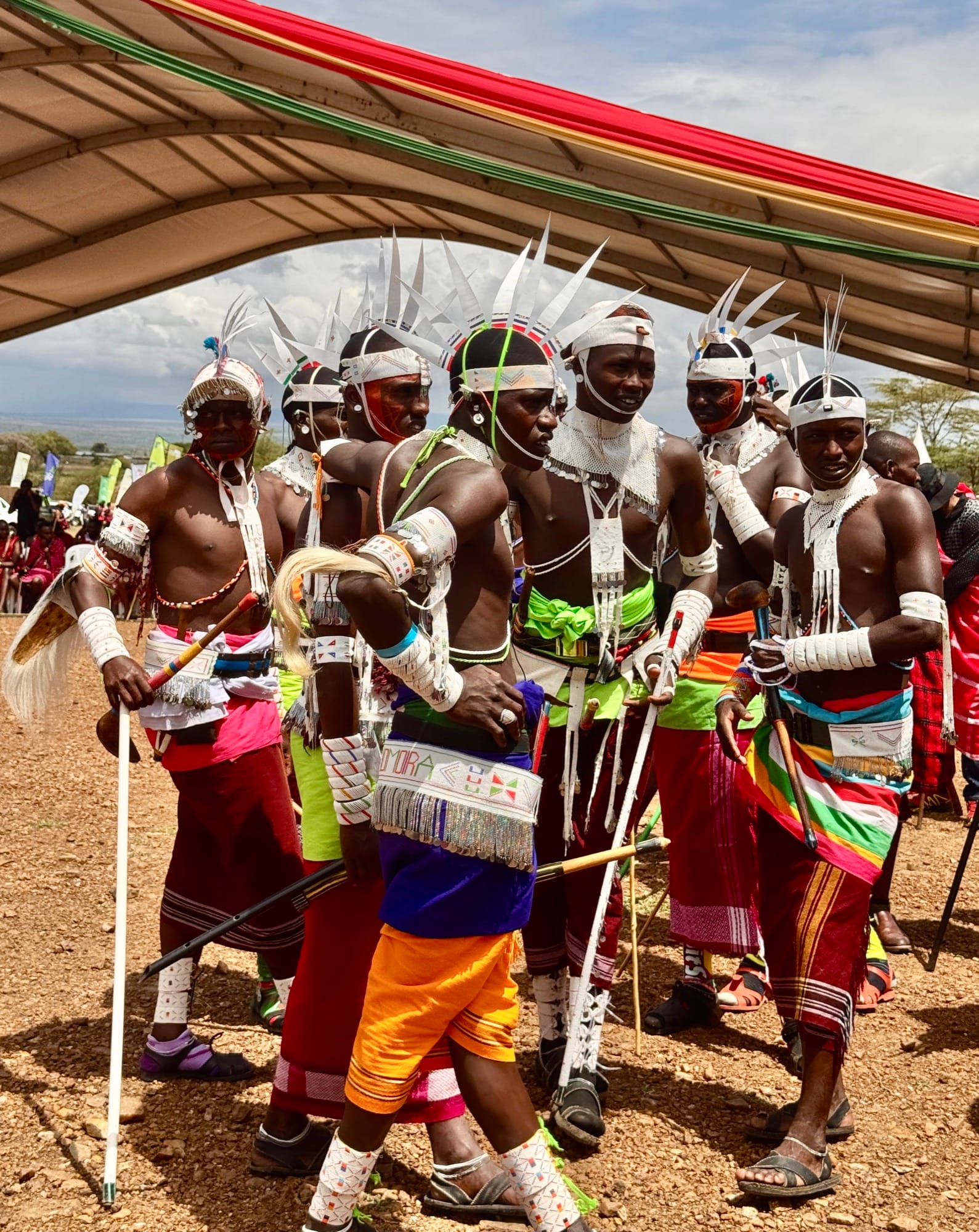
It was also really fun to bump into so many people we know. We've been out here two years now, and there were safari drivers we work with, managers and staff from other hotels, our own team with their families, even people we usually only see at the supermarket or at the Sekenani market.
And for outsiders the hospitality was something else. We obviously don't look Maasai, but people were so curious and happy to meet us, and kind of proud that their festival was bringing in people from outside, hotel people, vendors, a few tourists who were visiting the Mara. Everyone wanted to tell us about their culture and introduce us to their friends and family.
On the main stage
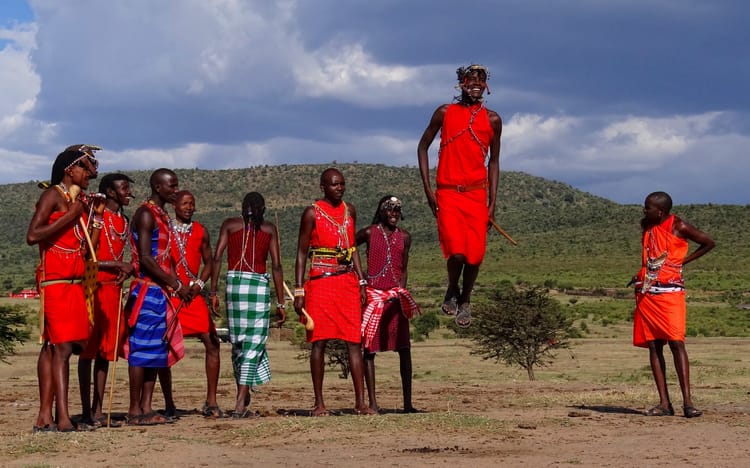
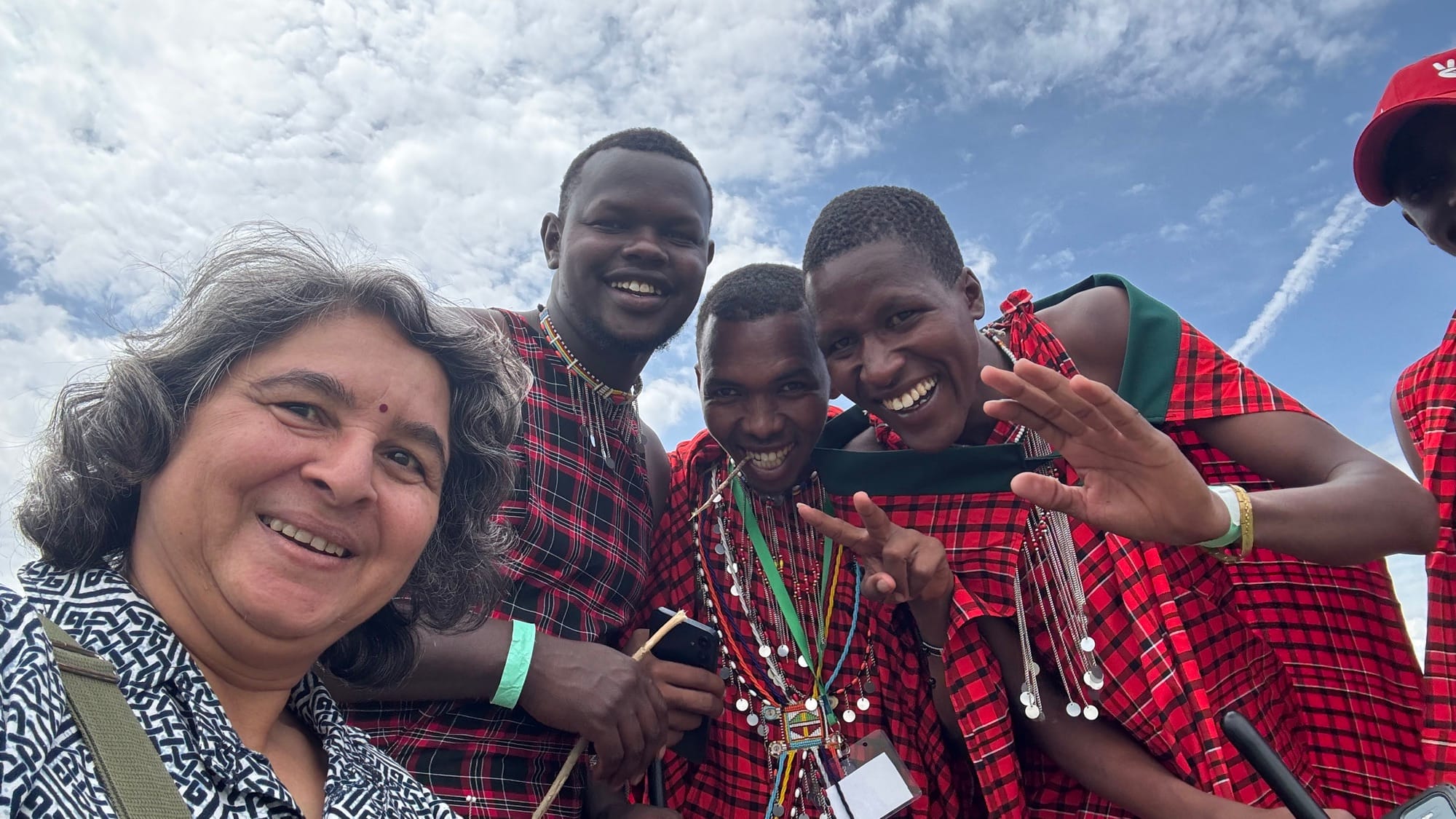
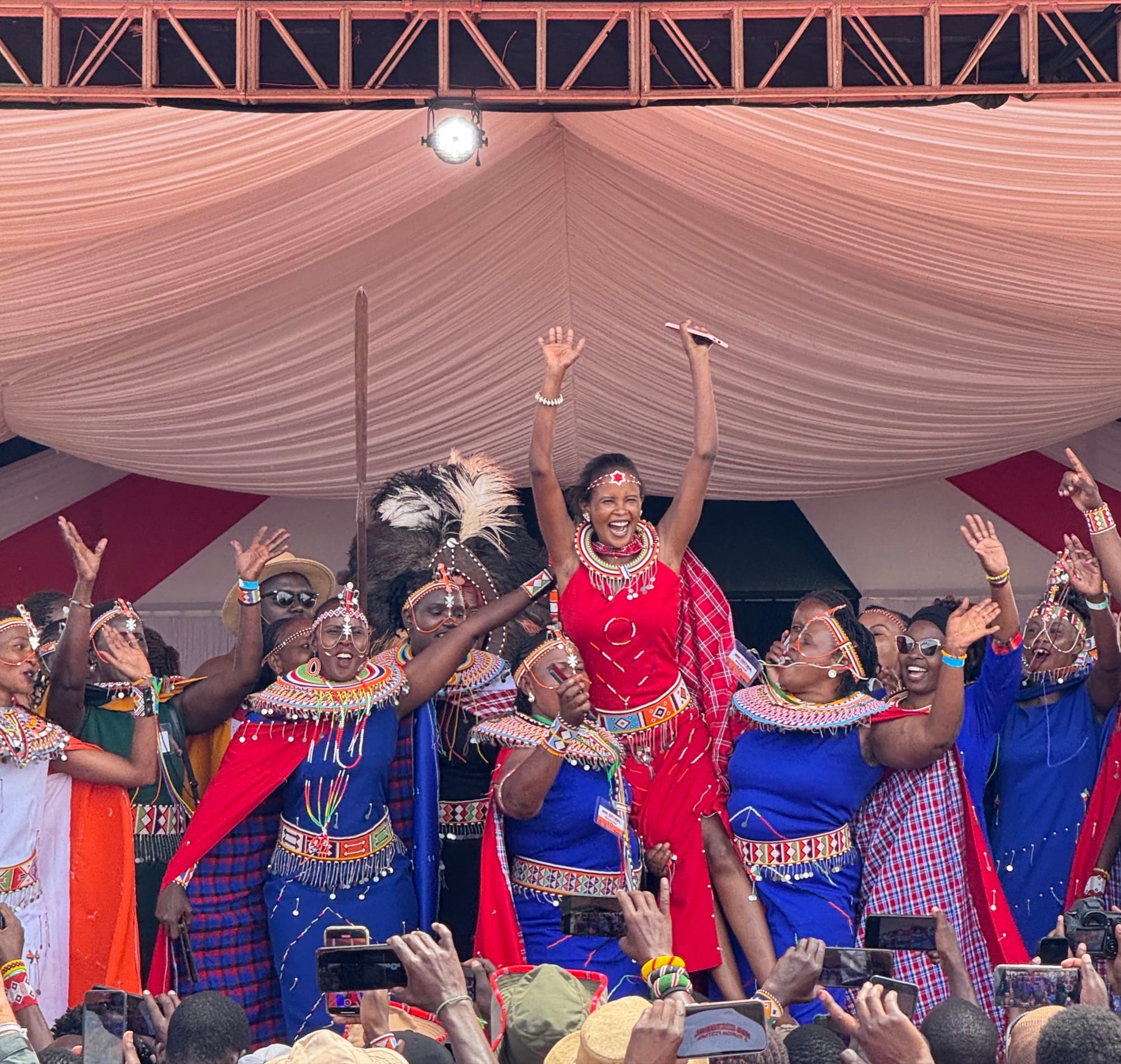
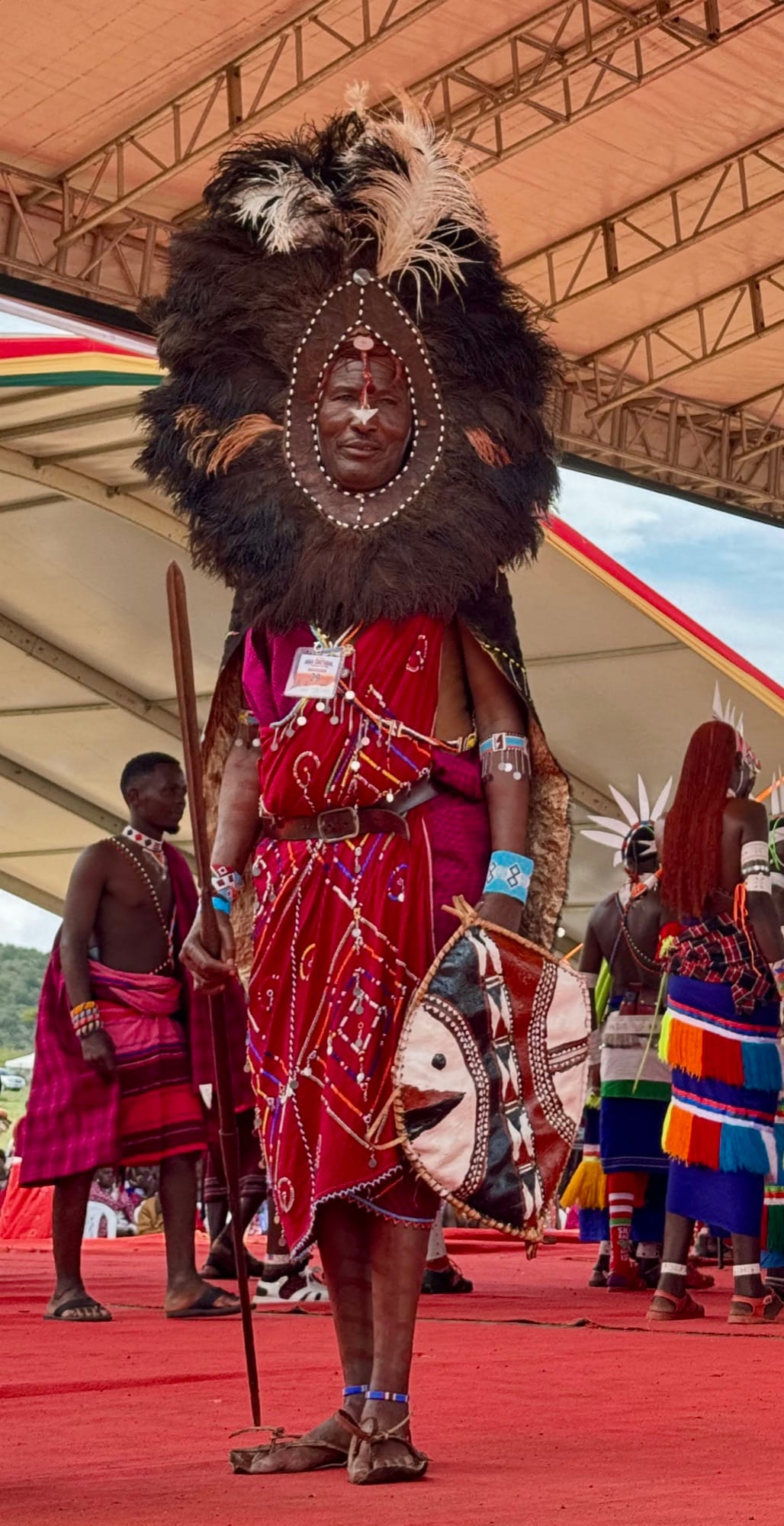
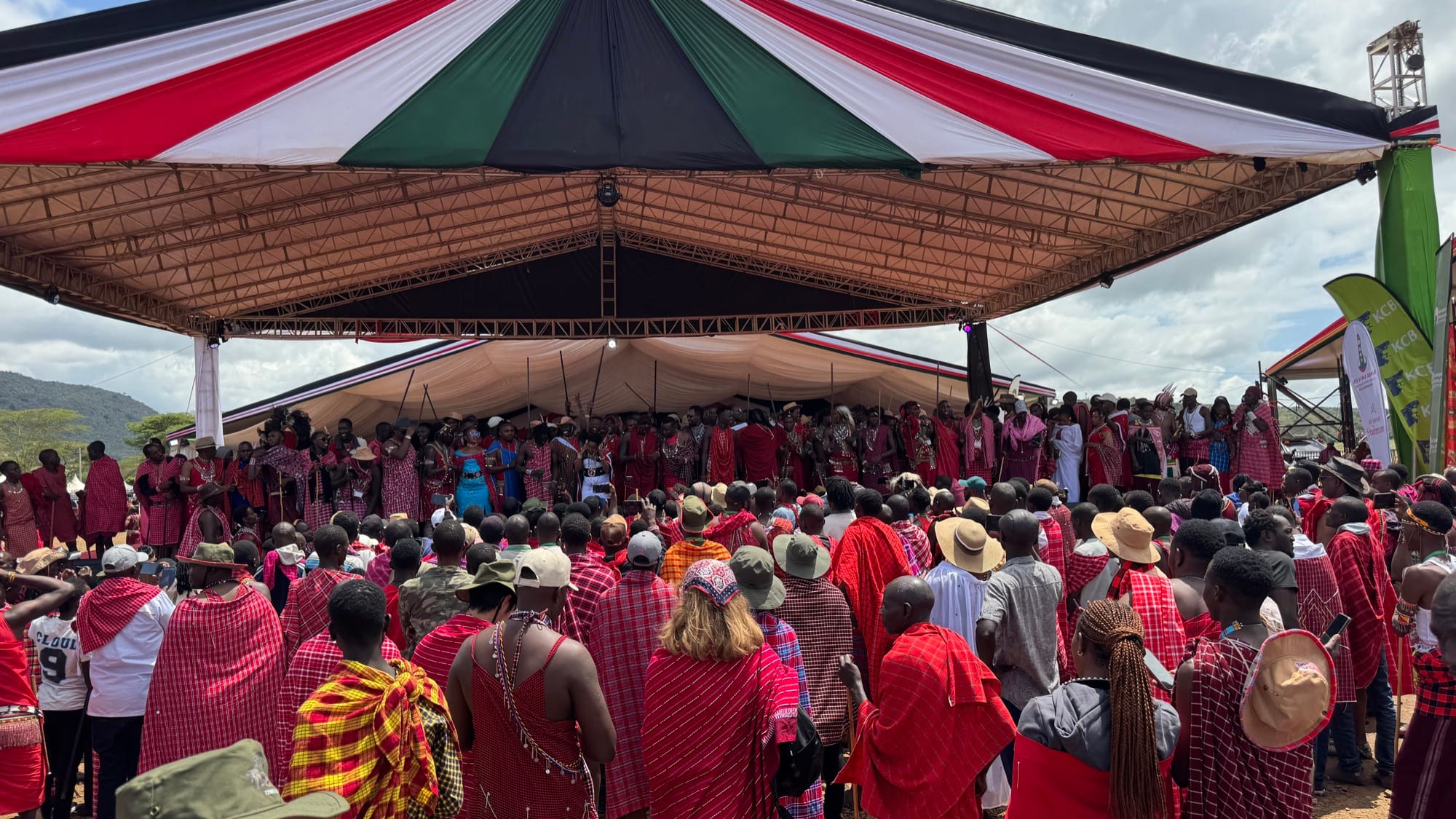
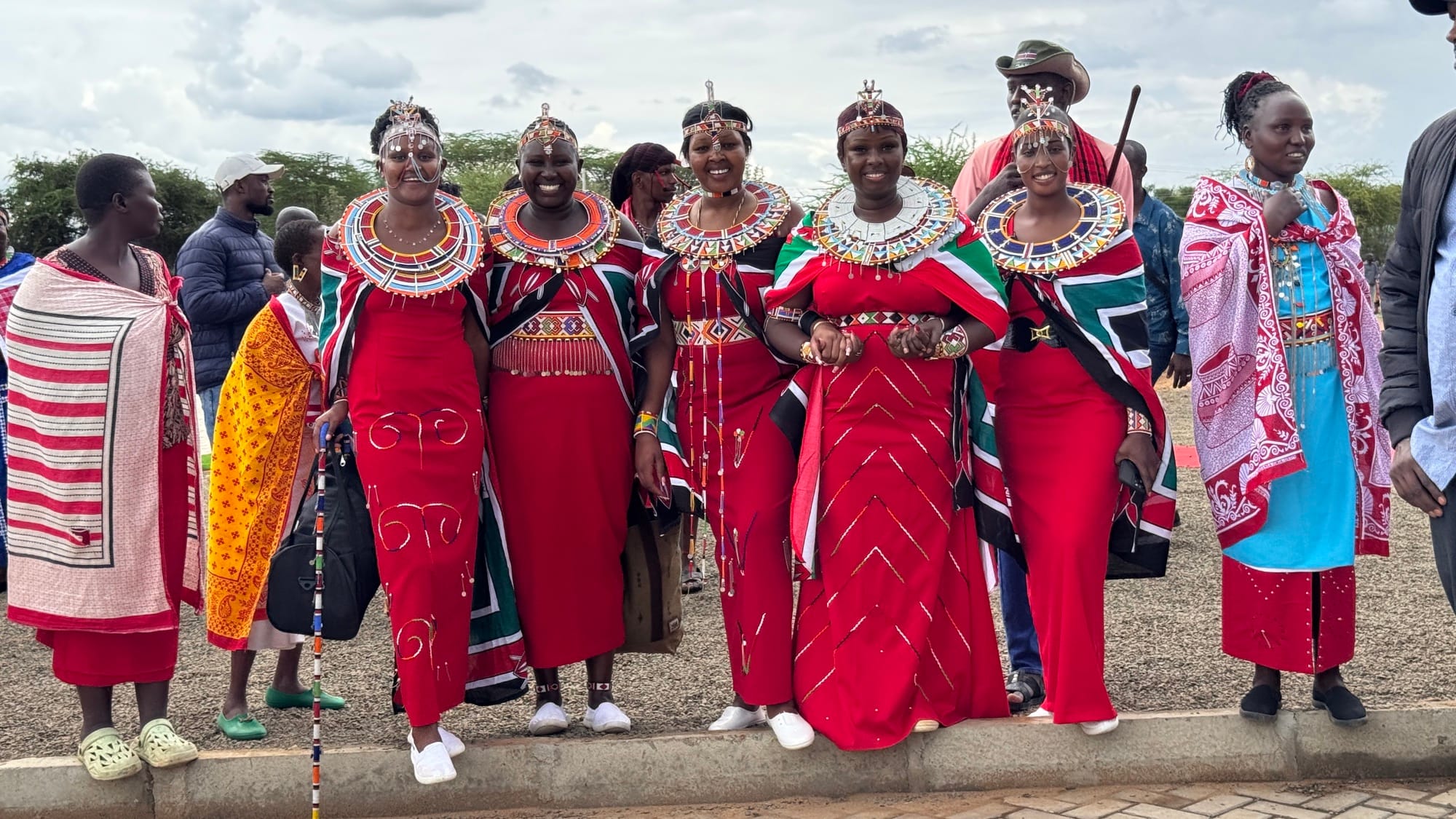
Day three was the women's day, and the stage was packed with women in all their beadwork, dancing with their hands up while the whole crowd filmed them on their phones. The first day had dancers in body paint, and there were some amazing headdresses all week, like the big dark one below.
Sandals made from old tyres
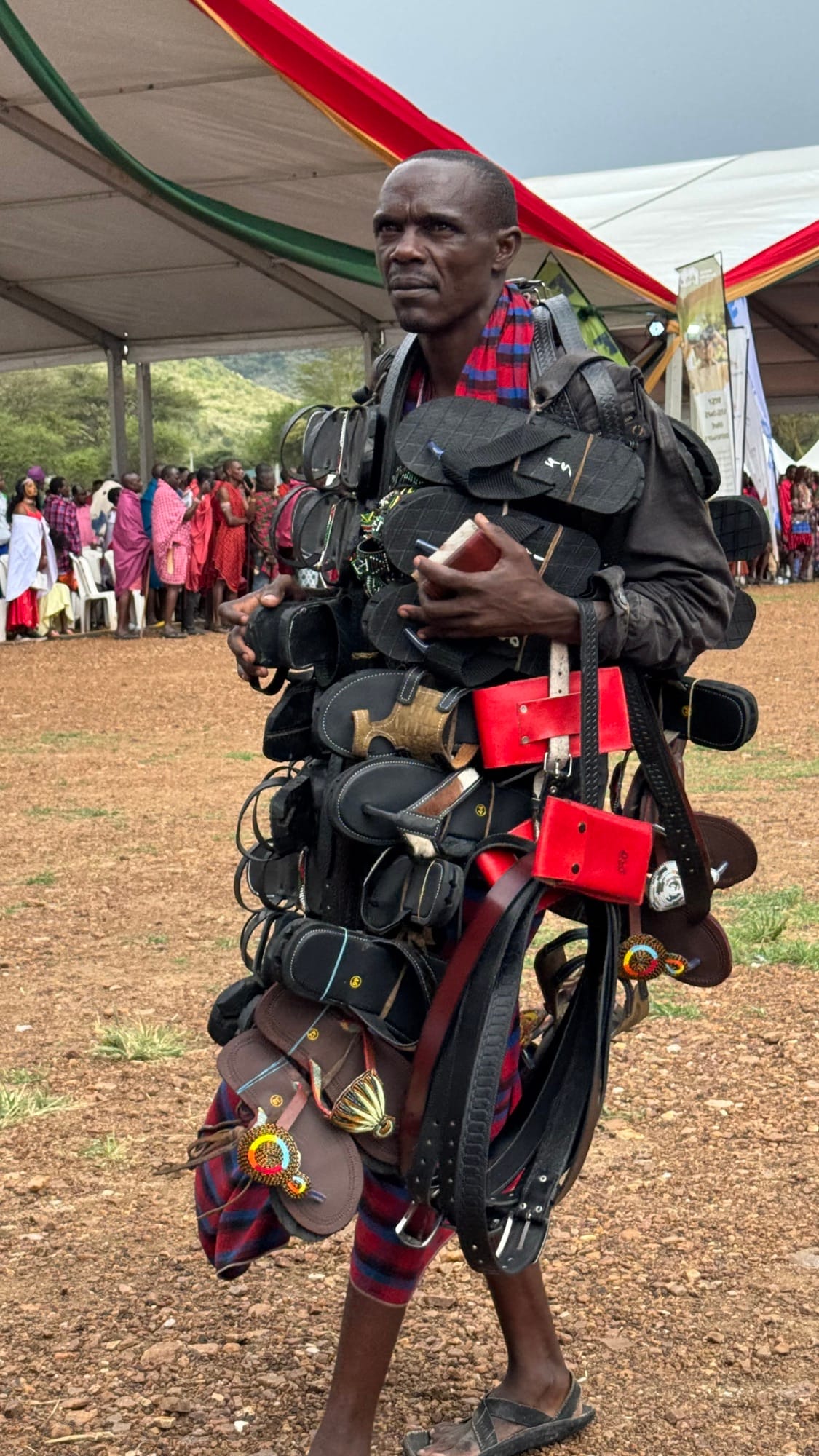
There were sellers everywhere, walking around with beadwork, jewellery, armbands, wood carvings, pendants made from cow bone, and colourful pieces to hang on your wall. They come up politely and show you what they have. And if you're not buying, they don't hassle you, they just leave with a smile.
The thing I'd never seen anywhere else was the sandals. They take old car tyres and cut their own slippers out of them, then do beadwork on top. It's a really nice way to reuse them, and in Kenya they're called akala.
Forty cows a day
The governor said they'd slaughter 40 cows every day of the festival to feed everyone. One of the traditional dishes was munono, which is meat mixed with blood, and there were herbal soups made from local plants as well (The Standard).
The rain didn't stop anyone
November is meant to be the short rains, but this year it rained a lot more than usual (people here put it down to El Niño), so most days were grey with heavy bursts of rain in between. The organisers had planned for bad weather with weather-resistant tents, but the rain didn't dampen anyone's spirits at all. People just stayed out in it and carried on.
The closing day
The last day was the biggest by far. President William Ruto came as the chief guest in a red-and-white checked shuka and a safari hat (The Star), along with Supreme Court judges, MPs and MCAs, and thousands of people filled the ground. He also opened the new Ushanga–Sekenani Curio Mall by the gate, a proper market for the women who do beadwork, with an online platform so they can sell their pieces abroad (KBC).
The only things I'd hope get better next year are small ones. A lot of the packaged water bottles ended up on the ground, and the speakers were really loud for a place that's technically inside the reserve (we didn't spot a single animal or even a bird around there on any of the days).
Where it goes next
This is a travelling festival. When Narok, Kajiado and Samburu counties set it up in 2023, they agreed to take turns hosting (State Department for Culture), so it moves between the big Maa areas of Kenya and comes back to the same place every three years:
| Year | Where |
|---|---|
| 2023 | Sekenani Gate, Maasai Mara (Narok) |
| 2024 | Samburu National Reserve (Samburu) |
| 2025 | Amboseli (Kajiado) |
| 2026 | Sekenani Gate, Maasai Mara (Narok) |
| 2027 | Samburu, if the rotation holds |
| 2028 | Amboseli, if the rotation holds |
| 2029 | Back at Sekenani Gate |
Nobody has officially announced 2027 yet, but Samburu is next in line, and that's what our team here has heard too. The organisers also want to keep it around the first week of November every year (The Standard). NJ's preview post has more on the earlier editions.
When it's back here in 2029, we're five minutes from the gate, so WhatsApp us if you want to plan a trip around it.
— Nikhil, co-founder of Mara Hilltop. I also plan Mara and Kenya safaris for our guests through RafikiGo.