The Nairobi most tourists miss — an honest guide from someone who keeps coming back
There's a thing that happens on travel forums where someone posts "I went to Nairobi and didn't love it," and a chorus of replies pile on with "yeah, skip it, just fly through on your way to the Mara." I see this all the time. And almost every single time, when you dig into where they stayed and what they did, the same picture emerges — a hotel near the CBD, a city tour of the parliament buildings, one night out in a packed Westlands club. That's not Nairobi. That's the airport-to-safari tourist corridor, and yeah, it's underwhelming.
Nairobi's the kind of city that rewards you enormously if someone shows you the right doors. It has the best weather of any capital I've ever lived in — 20 degrees in the shade, year round, with a light breeze. It's green in a way that surprises people. It's also the UN's African HQ, which means it's been quietly building an expat and international-traveler ecosystem for decades. So here's what I'd actually tell a friend who's coming.
A little bit of who's writing this
I grew up in Tanzania, and my parents moved to Kenya almost 17 years ago; I visited them here constantly through all of those years, and more recently I became a resident myself. These days I split my time between Nairobi and the Masai Mara, where we run a little safari lodge.
I'm not a tour guide and this isn't a comprehensive listicle. This is just what I'd tell you over a coffee.
The neighborhood thing is everything
If you take one thing from this post, let it be this: where you stay in Nairobi will determine 80% of your experience of the city.
The CBD — the downtown, parliament-area part — is rough. It's the loud, congested, matatu-horn-honking part of town that most cities have. You wouldn't tell a friend visiting Rio to base themselves downtown, and you wouldn't tell a friend visiting London to stay in a dodgy part of Croydon. Same deal here. Don't stay near the CBD. You can visit it for a specific reason, but there's no real reason to.
Westlands and Parklands are the ones most hotels push you toward. They're fine. Lots of restaurants, plenty of bars, a bunch of coworking spaces. The tradeoff is density — it's where the city packs in, and it has that busy urban feel. Good for young travelers who want to walk out and find a bar. Less good if you're the kind of person who wants Nairobi's real charm, which is the green and open part.
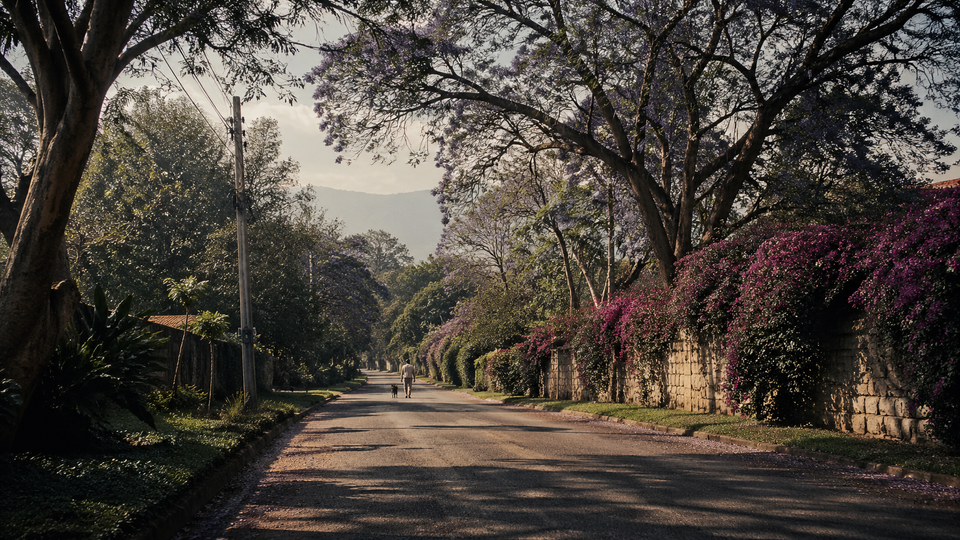
Karen is where I'd steer almost any first-time visitor. Named after Karen Blixen (yes, the Out of Africa one), it's a leafy suburb on the west side, close to the Ngong Hills, with the Giraffe Centre and the Sheldrick Elephant Orphanage minutes away. It feels like you're in a different country from the CBD. Big houses, jacarandas, horses occasionally clopping by, coffee gardens tucked behind walls.
Riverside Drive and the area around Karura Forest (think Gigiri, Runda) are the other sweet spots. Gigiri is where a lot of UN folks live, so you get wide tree-lined avenues, international markets, and a cafe scene that's spilled out from the diplomatic community. Staying near Karura means you can walk into a 1,000-hectare forest five minutes from your hotel, which is the single most underrated thing about Nairobi to me.
If you want a hotel with a view rather than a neighborhood, my two favorites are Ole Sereni and its bigger sibling Emara. Both overlook the Nairobi National Park — the only national park inside a capital city on Earth — so you can have breakfast watching zebras and giraffes. They're also well-positioned between Karen and Westlands, so you can pivot easily. Emara especially has nailed the balance of calm-but-connected.
The classic Nairobi day
This is the itinerary I've suggested dozens of times, and I've never had anyone come back disappointed.
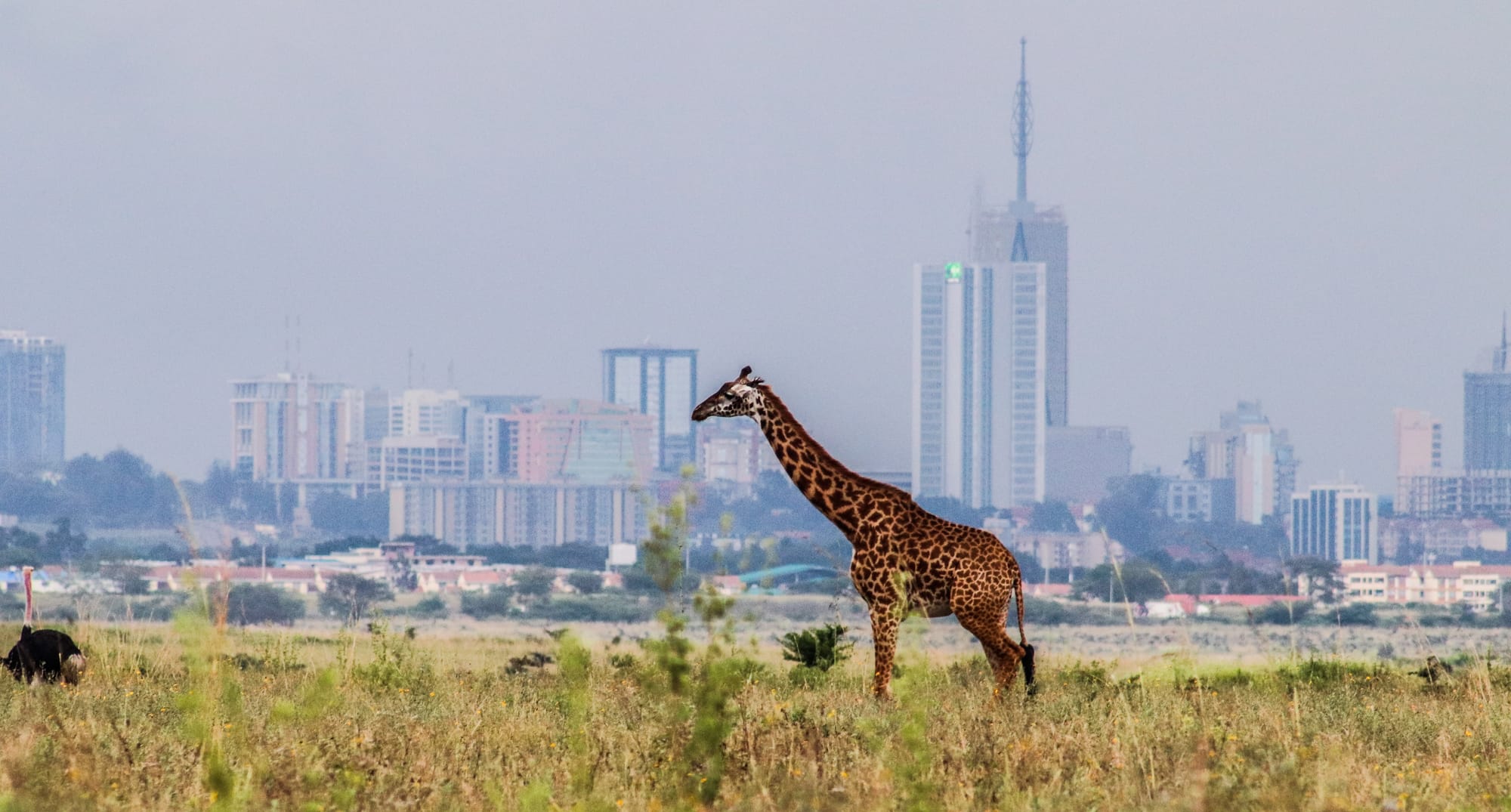
Wake up early — like 5:30am early — and do a half-day safari in Nairobi National Park. I know, it sounds like a tourist trick. "A safari in the city?" It isn't. It's a proper 117-square-kilometer park with lions, rhinos, giraffes, zebras, hundreds of bird species, and the Nairobi skyline as your backdrop. It's surreal. You'll be back at your hotel by 10.
Shower, then head to the David Sheldrick Wildlife Trust for the 11am-to-noon public visit. This is the elephant orphanage you've seen on Instagram. What you haven't seen is how it actually feels — the little orphaned elephants come running in, mud-caked, wrestling each other, and a keeper tells you each one's story. Which mother was poached, which baby fell down a well. It's gutting and wonderful. It happens every day at the same time (except Christmas). Pre-book — it fills up.
From Sheldrick, you're 10 minutes from the Giraffe Centre. This is where you stand on an elevated platform and the Rothschild giraffes walk up and take food pellets off your palm with those long prehensile tongues. Some people kiss them. I don't, but I don't judge.
Then — and this is the meal — lunch at Cultiva Farm in Karen. It's an actual working organic farm with a restaurant that serves what the farm grew that week. Pizzas from a wood oven, giant shared salads, long tables under trees, kids running around. Whenever I have friends in town and they ask me for one single Nairobi experience, I send them to Cultiva. It's the kind of place where you'll find yourself sitting for four hours.
That whole day is maybe a 10-minute drive between each stop. It'll reframe your sense of what Nairobi is.
The escape days
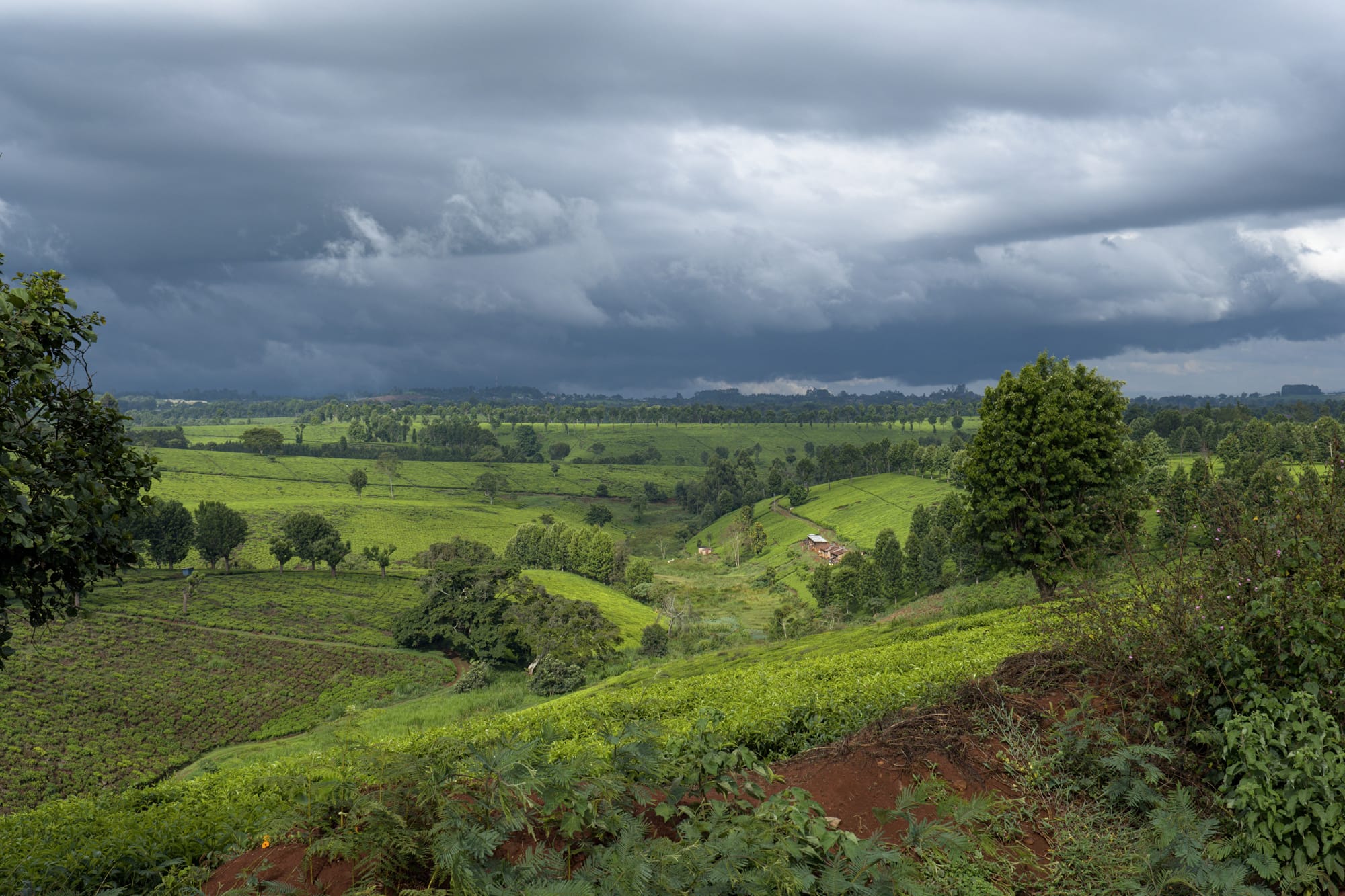
Tigoni, about 45 minutes northwest of Nairobi, is a stretch of rolling green tea plantations that feels like you teleported to the Scottish highlands except it's warmer and there are bananas. You can do a guided walk through the tea farms and down to the Tigoni waterfalls — a pretty, 18-meter drop tucked into a forest gorge. It's a light hike, nothing strenuous, and it's the kind of day that makes you forget you were in a city that morning. There are lodges you can have lunch at overlooking the tea, which I cannot recommend enough on a sunny afternoon.
Karura Forest, if you don't have the time for Tigoni, gives you a similar feeling inside the city. Fifty kilometers of trails, a small waterfall, colobus monkeys in the trees, a cave where the Mau Mau used to hide. There's a great cafe — the River Café — right by the main entrance for a lunch after your walk.
Both of these are cheap. Both are magical in the green season after the rains, which is when the tea glows that almost-neon color.
Where to eat (this is the fun part)
If I had to name five restaurants for a visitor, it'd go:
Carnivore is a rite of passage. It's a huge open-air nyama-choma place where they bring whole skewers of meat to your table — beef, lamb, chicken, ostrich, crocodile — and carve slices onto your plate until you literally lower a white flag on the table to surrender. Is it touristy? Yes. Is it also genuinely a great time and a very specific Kenyan experience? Also yes.
Cultiva I already covered — go for lunch under the trees.
Red Ginger for when you want something a bit fancier and a bit quieter. Pan-Asian, beautifully plated, excellent cocktails.
Hashmi's BBQ is my personal favorite, and it's the one I'll fight for. The ambiance is not going to win any awards — it's fluorescent-lit and plastic-tabled — but the mutton seekh and the tikka have been the same for decades and they're perfect. This is the place I go when I get back from a long stretch at the lodge and I want to feel back home.
Garden cafes are a whole category of their own in Nairobi. Tin Roof Café in Karen is the one I'd send you to first — outdoor seating, great coffee, excellent food. Karen Blixen Coffee Garden is the grand one, set on the original estate, with cottages and a restaurant under 100-year-old trees. Zen Garden in Spring Valley is another gem, big and serene. About Thyme near Westlands is smaller, woodsy, lovely for a dinner date. If you're working remotely for a few days, rotate between these — every single one has strong wifi and the kind of setting that makes you forget you're working.
Nightlife that doesn't suck
Here's where Nairobi really shines and almost no one writes honestly about it.
The Alchemist, on Parklands Road, is the institution. It's a big open-air creative hub with food trucks, a main stage, a dance floor, a DJ booth on most weekend nights, and an atmosphere that feels like a Berlin warehouse party mashed with a South African braai. On a good Saturday it's got the most exciting afrobeats and Amapiano sets I've heard anywhere in Africa. The crowd is mixed — Kenyans, expats, diaspora kids home for the holidays, tourists in the know. It's unpretentious and it stays that way.
Brew Bistro has a few locations but the Ngong Road one is the best. They brew their own beer (surprisingly good craft IPAs for Nairobi), and they have live bands most weekends. It's more of a pub-into-club progression as the night goes on. Solid choice earlier in the evening.
Beyond those two, the afrobeats scene in Nairobi is having a real moment. There are pop-up events most weekends — on Instagram, look up the usual club accounts and you'll see what's happening that week. Kenyan artists like Sauti Sol, Nviiri, and the wave of newer Gengetone and Bongo kids coming through from Tanzania are regularly playing live somewhere in the city.
One small note: cover charges at most places are reasonable, drinks are cheap by any Western standard, and Ubers home after are also cheap. You won't spend $200 on a night out unless you're actively trying.
Shopping worth doing
Spinners Web in Karen is where I send people for Kenyan crafts that aren't the airport-tourist kind. It's a massive space full of small local artisan brands — textiles, ceramics, woodwork, jewelry. Could easily spend two hours there.
The Maasai Market rotates between malls on different days — Junction Mall on some days, Village Market or Capital Centre on others. Check before you go. This is where you haggle for beaded jewelry, wooden carvings, and the usual safari souvenirs. It's fun if you're into the negotiation part. If you're not, Spinners Web is the relaxed version.
The National Museum is worth an hour if you're interested in Kenya's history and especially the early hominid discoveries — Lucy's cousins, basically. Not a full day, but a good rainy-afternoon move.
Is Nairobi safe? an honest 15-year take
This is the question I get most, and I'll give you my honest answer.
Nairobi is a big African city of about five million people. It has the same crime profile as any big city of that size — pickpockets in crowded areas, the occasional opportunistic grab, very rare but real violent crime that's almost always in specific areas you shouldn't be in anyway. You hear the occasional story. So do people in São Paulo, Johannesburg, Mexico City, parts of New York.
In 15 years of going back and forth, I have personally never had a single bad incident. Not once. I've walked through Karen, Westlands, Gigiri, Riverside at all hours. I've taken hundreds of Ubers. I've had friends visit from all over the world and none of them has had an issue either.
Nairobi has genuinely gotten safer over the past decade. A big part of that is the UN HQ effect — the city has been quietly building expat-friendly infrastructure, security, and services for years. It's become a hub for tourists, digital nomads, NGO workers, and the return-home East African diaspora in a way that would surprise you if you last heard about Nairobi in the 2000s news cycle.
The rules are the same as any city:
Don't walk around the CBD after dark. Don't walk on any road at night, period — Ubers are cheap and everywhere, even at 3am, use them. Don't flash expensive camera gear in crowded markets. Don't go into Kibera or the other informal settlements without a guide (and even then, think about why you're going). If you're driving yourself, keep windows up and bags out of sight at traffic lights. That's pretty much it.
Kenyan people, in my experience, are genuinely among the warmest I've met anywhere. If you get lost or need help, nine times out of ten someone will walk you to where you're trying to go. English is the official language along with Swahili — basically everyone you'll interact with speaks it fluently, often better than a lot of native English speakers.
One practical tip: when you land at JKIA, there's a Safaricom store in the arrivals area. Get a SIM card there — they'll set it up for you in five minutes, activate M-Pesa (the mobile money system that's used for literally everything in Kenya, from paying taxis to tipping the guy who helps with your bags), and you'll walk out of the airport connected. Data is cheap. M-Pesa is magic once you have it.
The casino thing, briefly
For the gamblers — and you know who you are — Nairobi has a handful of legit casinos. Casino Flamingo at the Inter-Continental is the old-guard classic. Safari Park Hotel Casino is bigger and has a showier vibe with nightly African dance performances. The Mayfair Casino in Westlands is the younger, louder option. Stakes are reasonable, the crowds are a mix of locals and visitors, and it's a fine way to kill an evening if that's your thing. Don't bet the safari budget.
So — come to Nairobi with the right base
If you land in Nairobi expecting it to be a stopover, it will be. If you land treating it like its own destination and you stay in Karen or near Karura, you'll find a city that quietly earns its way into your year-after-year list. It's certainly done that for me.
Most of our lodge guests come to Nairobi first, do a night or two, and then head out to the Mara. If you're one of them — and if you've read this far you possibly are — we're happy to help sort your Nairobi night and your transfer out. Come stay at the lodge on the way through. And if you've been to the city before and disagreed with me on any of this, I'd love to hear your list.
— NJ, co-owner of Mara Hilltop. I live in the Mara and build software from here: the lodge runs on KaribuKit, the hotel platform we make at SimbaStack.