On safari, the animals are the only celebrities
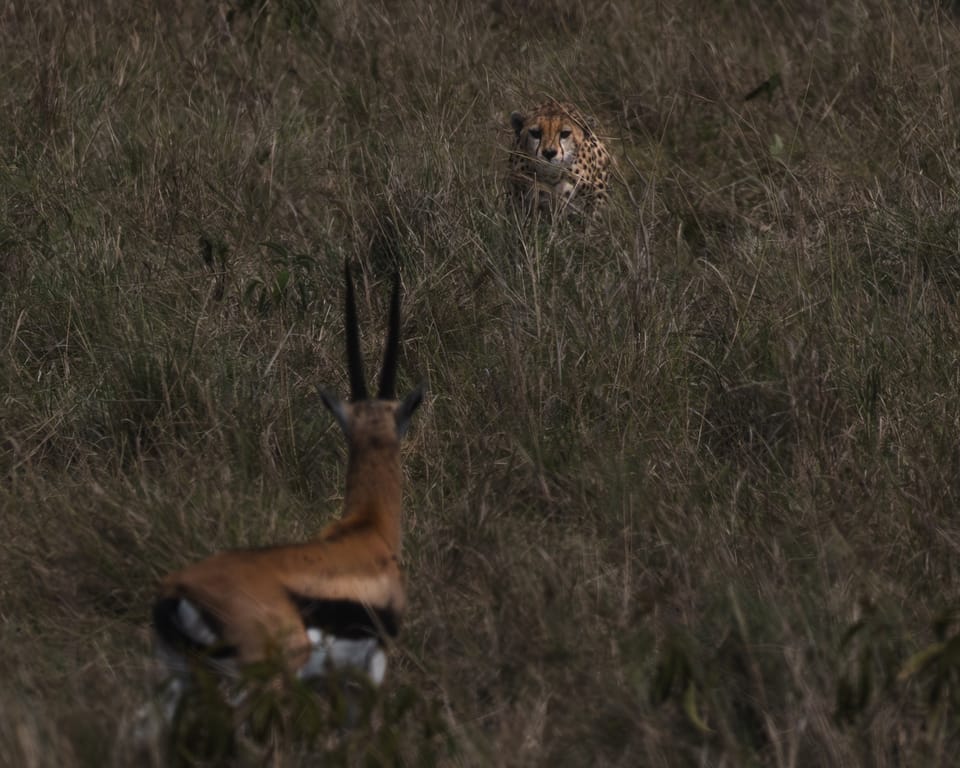
I've been on hundreds of game drives in the Maasai Mara over the last fifteen years, and the moment I keep coming back to in my head isn't the kill or the river crossing. It's the wait before.
You're parked on a dirt road. A cheetah has spotted a gazelle in the tall grass, maybe eighty meters out, and she's gone low — just the tips of her ears showing. The gazelle hasn't seen her yet. Two other safari vehicles have pulled up alongside yours, and now there are three of you sitting in a loose semicircle, nobody talking, watching her watch the gazelle. Six or seven minutes go by like this. She shifts her weight, settles back into the grass, and you'd almost swear she's given up.
And then she moves.
You don't get to decide which way she moves. The road is on one side, and your driver picked your spot ten minutes ago based on twenty years of guessing where this kind of thing tends to break — but the gazelle picked its grazing line with no idea any of you were involved, and now everything plays out on its own clock. Maybe the cheetah comes left and the kill happens fifteen feet from your bonnet. Maybe she goes right and the gazelle is gone before any vehicle can reposition. Or maybe a wind shifts and the whole thing falls apart, and she just lies back down in the grass like nothing happened. You can sit there for an hour and leave with photos that put a friend's stomach in knots, or you can sit there for an hour and leave with absolutely nothing.
That's the part of safari that nobody really tells you about. The wildlife runs on its own logic, and there's nothing in your bank account that changes it.
The moment it clicked for me
The first time I really noticed this was about six or seven years ago. We'd stopped at a sighting near the river — a mother cheetah with two cubs, three vehicles parked in a loose semicircle. One of the cars was from a lodge that runs at about five thousand dollars a night. One had budget travelers in matching safari shirts, dorm guests on a shared drive that I'd seen at breakfast that morning. Ours was somewhere in between. And we all sat there for the same forty-five minutes, watching the same cheetahs, breathing the same dust, waiting for the same maybe.
It just clicked. The wildlife doesn't know what your room rate is. The cheetah isn't going to come closer because you flew in by helicopter, and the leopard isn't coming down out of the tree because your tent has a private plunge pool.
Plenty of famous people have done the Mara. The Obamas have been here. Prince William and Kate spent time in Kenya — he proposed to her on that trip. Alia Bhatt and Ranbir Kapoor got engaged in the Mara, and there's a whole genre of Indian wedding-content riffing on it now. Sara Ali Khan, Madonna, Ellen, Branson — they've all been through. Every once in a while you'll be parked at a sighting and recognise a face in the next car. Sometimes you don't, and you find out later because somebody at dinner mentions it. I'm not going to tell you who.
The point is, it doesn't really matter who they are. The cheetah is the cheetah for all of us.
What money actually buys you on safari
I don't want to be glib about this. Money does buy you things on safari, and it's worth being honest about which.
It buys you a bigger bed, better shower pressure, a pillow menu, wine pairings, and the kind of butler service where someone unpacks your suitcase before you arrive. It buys you a private vehicle so you're not sharing with three other guests who keep wanting to stop for the dik-diks, helicopter transfers between camps, and sometimes a guide who's been at one specific lodge for fifteen years.
Some of that genuinely matters. The guide thing especially — a great guide reads the difference between a cat about to hunt and a cat just yawning, and that's real value to your day in the bush. But the "fifteen years in the bush" guide isn't only at the five-thousand-dollar camp. Half the senior guides across the Mara have been doing this for two decades. Mine has, and the mid-tier camps have them, and even some of the budget operators have them too — because they trained at the high-end places years ago and now run their own outfits.
Conservancies are the one real structural advantage that money buys. Private conservancies allow off-roading, night drives, and walking safaris — things the reserve doesn't permit by law. So if you stay at a conservancy lodge, you can get closer to certain things in certain ways, and that's worth knowing.
But the moment I described in the lede doesn't change. The cheetah still goes left or right, the gazelle still bolts or freezes, and you still wait. Waiting is half the experience.
Guides raise your odds, not the outcome
I'll fight for the Mara guides. They're not just driving — they're reading. They know the territories of specific lions by name, which kopjes the cheetahs are using, which rivers the migration is queueing at, which lodges on the radio are calling in real sightings versus tourist excitement. When my driver says "fifteen minutes, hold on," it's because he's done the math.
Our four senior guides at Mara Hilltop are all Maasai who grew up on this land — John, Ken, Tim, and Jacob. I've watched them call sightings out loud before they happen more times than I can count. One of them will say something like "she'll come down from those rocks" — and twenty minutes later, sure enough, she does, exactly where he pointed. Guests are usually stunned the first time it happens. I still am, even after hundreds of drives with these guys. Some of it is the radio chatter and pattern recognition. Some of it is being from this land and reading it the way the rest of us read a city.
But the math isn't deterministic. He's playing percentages. Sometimes he gets it perfectly right and we park exactly where the cheetah breaks cover, and the whole hunt unfolds twenty meters from us. And sometimes he gets it perfectly right and the cheetah doesn't break cover at all, and we sit there in the grass until the light dies and drive home in the dark.
The guide raises your odds. The guide doesn't change the wildlife. That's the great equalizer of safari — not money, not a fancier vehicle. The animals run on their own clock and their own logic, and there's no buying your way into a better seat once they've decided what they're doing.
Why this is part of the appeal, actually
I think this is part of why the Mara stays in your head years later when other vacations don't.
Most premium experiences in the world are stratified. Better restaurant, better seats at the show, faster security line — you spend more, you get more. Safari has a layer underneath that, where the spending stops mattering. The cheetah doesn't perform for the bigger tippers, and the crocodile doesn't time the river crossing for the better-dressed cars.
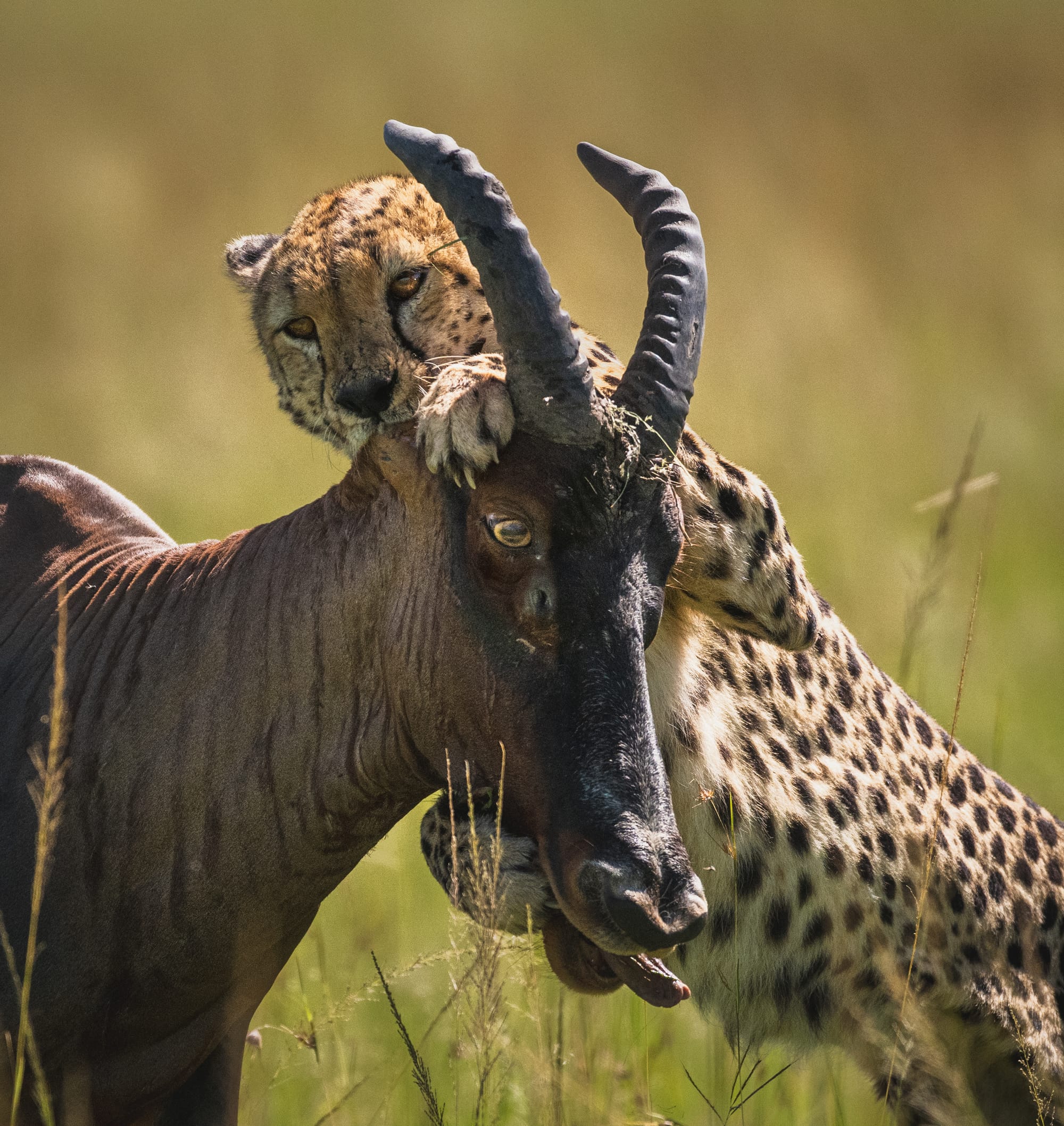
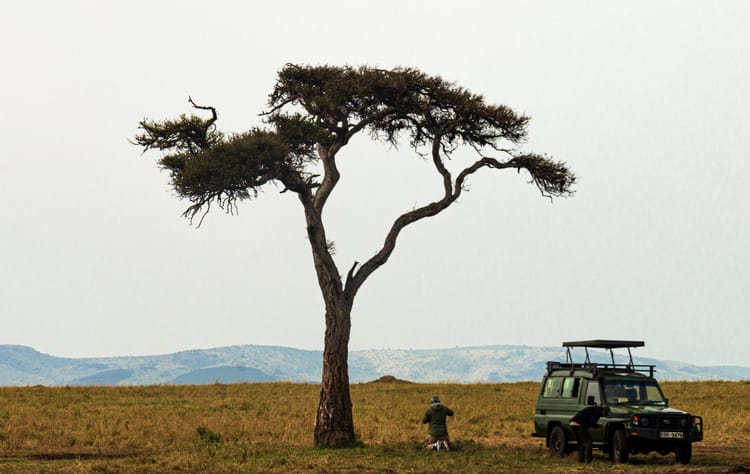
So you're sitting there — billionaire or backpacker, doesn't really matter — in a Land Cruiser with the roof popped, watching a thing decide whether it's going to happen or not. You either got lucky or you didn't, and tomorrow you'll come back and try again.
There's something honest about that.
---
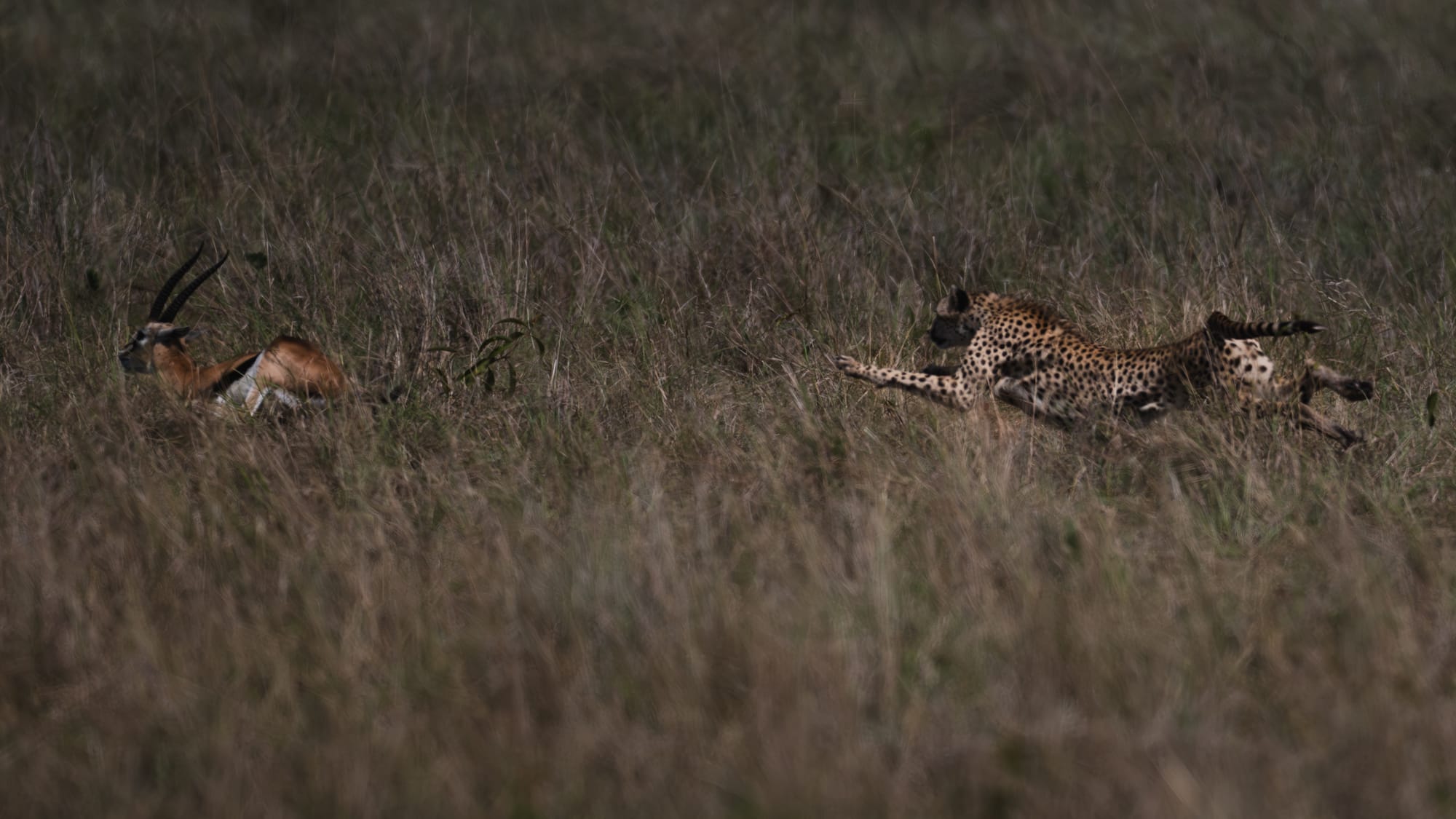
The cheetah from the lede did go left, in the end. She came toward the road, the gazelle saw her at about thirty meters and ran, and she chased for maybe four seconds before giving up, sitting down, and starting to clean her face like the whole thing had just been a thought she'd had.
Three vehicles drove away in three different directions. I don't know which guests were in the other two. It didn't really matter then, and it doesn't really matter now.
— NJ