The migration's here, and our guests caught the first crossing
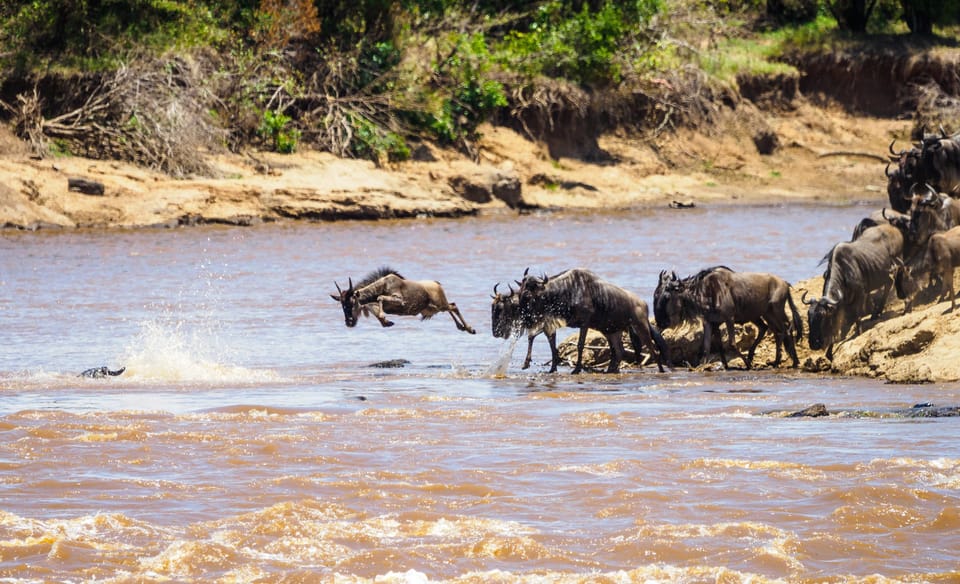
Yes, the great migration has reached the Maasai Mara. The first herds came over the Sand River into Kenya this past Sunday, the 28th of June, and some of our guests at Mara Hilltop happened to be out on a drive when it started. It's early, earlier than the books tell you to expect. So if you're coming any time between now and October, you haven't missed anything. The herds arrive in waves and stay for months.
We weren't expecting it yet either. We'd told these guests over breakfast not to get their hopes up, that it was still early and the big herds usually don't show until well into July. Then they were out on a morning drive and it happened anyway. They came back and couldn't sit still. They'd watched wildebeest going over the Sand River in one long line, the first crossing of the year, right in front of them.
I should be upfront: we're still new to this. We've only been open since last year, so this is one of our first migration seasons, and I'm not going to pretend I can read the herds yet. The early start caught us out as much as anyone. But it's started, and that's the news.
So has the migration actually started?
Yes. The first animals came over the Sand River on Sunday, which is earlier than most people plan around. The Sand River is where the herds come up out of the Serengeti and cross the border into Kenya, and it's the first crossing of the season. Most of the 2026 forecasts had the first scouts arriving late in June and the main herds building through July, so this is right at the early edge of that, maybe a touch ahead. Nobody can call it to the day.
What's the difference between the Sand River and the Mara River?
If you've seen the famous photos, wildebeest pouring down a steep bank into brown water with crocodiles waiting, that's the Mara River, and it tends to come later. The Sand River, which is what started on Sunday, is the gentler one. Shallower water, easier banks, far fewer crocodiles. Less dramatic to photograph, but it's the real start of the season, and it means the herds are here.
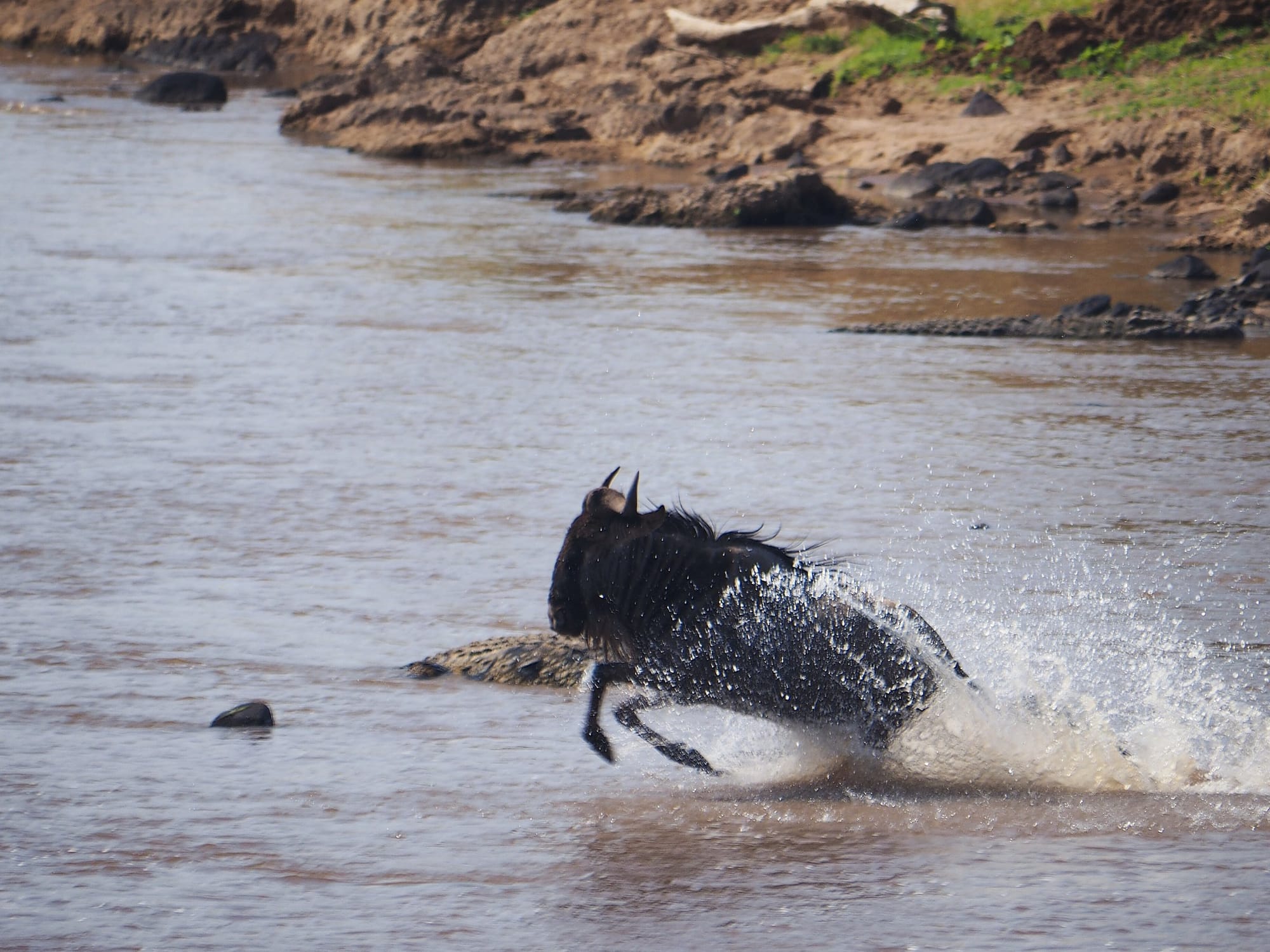
From the Sand River, the wildebeest move slowly north toward the Mara River over the following weeks. This year it's looking like the Mara River crossings pick up from around mid-July and build through August and September. I can't give you an exact date, and neither can anyone else. It moves with the rain and the grass, not with a calendar.
If you want the longer version, I wrote a piece a while back on why the wildebeest do this at all, and why no one can ever tell you the exact date. This post is just the news: they're here, and they came early.
If you're visiting in July, August or September, have you missed it?
Not even close. The migration isn't a single event on one day. The herds arrive in waves and stay in the Mara for months, roughly through October, grazing across the plains and crossing back and forth as they follow the grass. July, August and September are good months to be in the Mara, and August and September are usually when the Mara River crossings are at their most active.
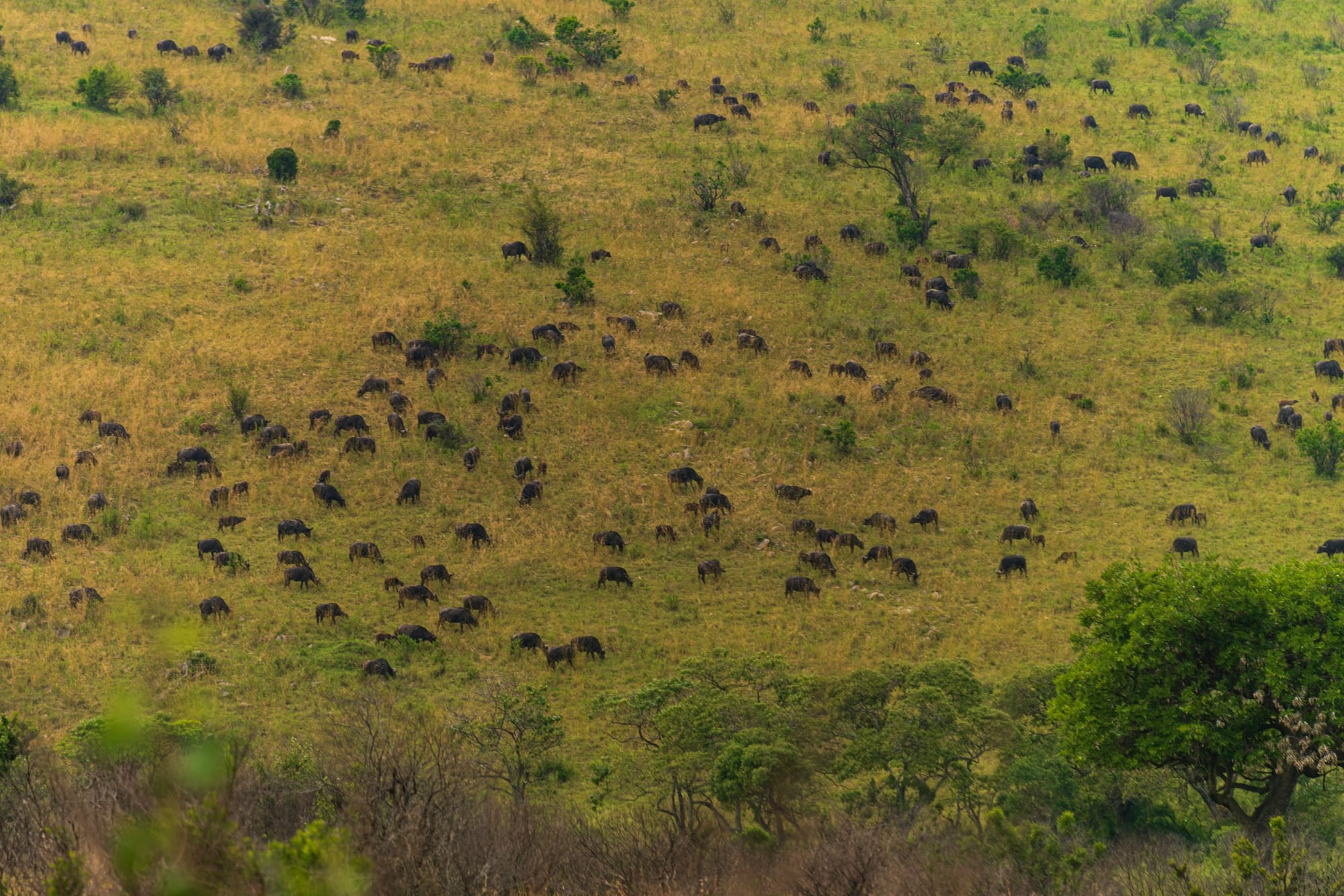
So whether you're arriving next week or in two months, your chances are good. If I had one piece of advice, it'd be to give yourself a few days out on safari rather than one, if you can. The crossings happen on their own schedule. A group will sit on the bank for two days and then go the moment you've stopped watching, so a single game drive is a bit of a gamble. A few days, and the odds tilt your way.
Roughly what to expect, month by month
| Month | What's happening | River crossings |
|---|---|---|
| Late June | First Sand River arrivals, the early scouts | Sand River begins |
| July | Herds build and push north | Sand River; Mara River can start late in the month |
| August | Peak numbers in the Mara | Mara River, peak crossings |
| September | Herds graze and move back and forth | Mara River, still frequent |
| October | Quieter, herds begin heading back south | Occasional crossings |
What about the crowding at the crossings?
This one comes up a lot, and it's worth saying. At a popular crossing you'll sometimes get too many vehicles crowding the bank, and when that happens the herd can get blocked, or panicked into going in at a bad spot, and animals get hurt. It's a real problem. You usually can't tell from the outside which operators are careful and which aren't, so the most useful things you can do are simple: ask your guide to hang back and leave the animals room, don't push for the closest spot, and if you see a vehicle behaving badly, say something or report it. Most of the drivers out here are good about it. It's a few that aren't. And a crossing watched from a bit further back is usually the better view anyway, you take in more of what's actually going on.
We'll post more here as the season goes on and the herds work their way toward the Mara River. There's also an ongoing thread over on r/safaris where people have been asking timing questions and I've been answering what I can, if you'd rather see the real back-and-forth. For now it's a good feeling watching them come over, and an even better one watching people see it for the first time.
If you're trying to time a trip around the herds, feel free to message us and we're happy to talk through dates. Beyond that, I'd just say come when you can. The migration will be here either way.
A few common questions
How many days do I need to catch a river crossing?
The crossings can't be scheduled, so the more time you give yourself, the better your odds. If a crossing is the one thing you really want to see, plan for a few days of game drives rather than a single one.
Is August or September better?
Both are good. August usually has the most animals in the Mara, and September keeps the crossings going as the herds move back and forth. You won't go wrong with either.
Do the wildebeest only cross once?
No. They cross in waves, and often back and forth over the same rivers as they follow the grass. That's why the season lasts for months rather than a single afternoon.
Will the herds reach where I'm staying?
The river crossings happen along the Sand and Mara rivers inside the reserve, so that's where you want to be on a crossing morning. If you're staying in one of the conservancies around the edge of the Mara, you'll often see herds passing through, but for the crossings themselves you'll want to get into the reserve. A bit of flexibility on where you drive each day helps.
Where's a good place to stay for the migration?
The ideal is to stay inside the reserve, near the river, somewhere like Ashnil Mara Camp. You wake up already in the middle of it, close to the crossing points. The catch is that the in-park camps get very expensive during the migration, and for a lot of people that puts them out of reach.
The next best thing, and the one I'd actually recommend, is to stay right by one of the gates. You give up sleeping inside the park, but you're only a few minutes from the entrance and down at the river within about forty-five minutes of setting off in the morning. That's the whole reason we started Mara Hilltop, a few minutes from the Sekenani gate, so take it with a pinch of salt coming from me. But it's the sensible middle: most of the access, for a fraction of the in-park price.
— NJ, co-owner of Mara Hilltop. I live in the Mara and build software from here: the lodge runs on KaribuKit, the hotel platform we make at SimbaStack.
Feature photo: Danijel Mihajlovic via Wikimedia Commons, CC BY-SA 4.0.