Motorcycle Safari to Loita Forest: The Maasai Way to Experience Kenya
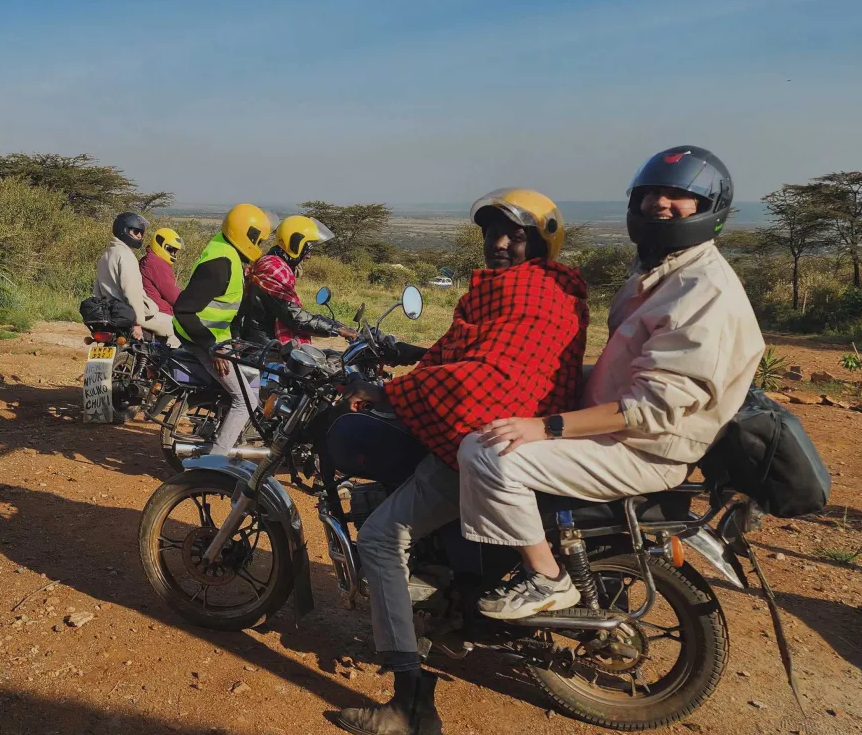
Why sitting on the back of a motorcycle might be the best thing you do in Maasai Mara
Let me tell you about something we do at Mara Hilltop that I genuinely don't think anyone else in the Mara is offering.
It's a motorcycle adventure. And before you click away thinking "I don't know how to ride a motorcycle"—you don't need to. You sit on the back, behind an experienced Maasai rider, hold on, and take in the scenery. That's it.
I'll be honest: when guests first hear about this, they're skeptical. They came to the Mara for safaris. Lions. Elephants. The Great Migration. A motorcycle trip sounds like... something else entirely.
Then they do it. And I keep hearing the same thing.
One guest put it this way: "Although that safari yesterday was amazing, I can't believe I'm saying this but this motorcycle thing is probably my favorite thing I've done in Kenya—and I've done a lot here."
That's a big statement. But after running these trips for a while now, I understand why people say it.
Why Choose a Motorcycle Safari Over Traditional Game Drives?
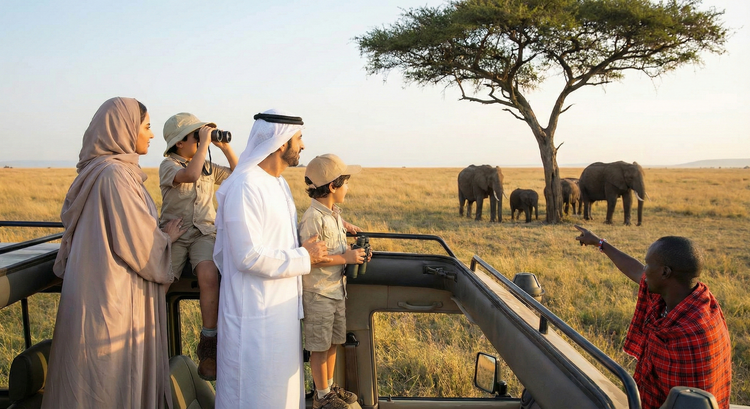
Look, I love game drives. We arrange them all the time, and the wildlife sightings in the Mara are genuinely world-class. But here's the thing about game drives: you're in a vehicle. Windows up or down, you're still separated from the landscape. You're watching.
On a motorcycle, you're in it.
The wind. The dust. The smell of the savanna after rain. Animals grazing twenty meters away as you pass. The sound of your tires on dirt paths that aren't really roads at all—just cow trails through the grasslands that the Maasai have been using for generations.
It's a completely different way to experience this place. Not better than a safari, necessarily—but different in a way that stays with you.
And here's something practical: because we have arrangements with the local conservancy, you don't pay any Mara park entrance fees for this experience. The motorcycle routes go through conservancy land, not the national reserve. Same wildlife (the animals don't care about boundaries), different rules, no extra fees.
Two Ways to Do It: Full-Day or the Epic Loita Adventure
We offer two versions of this trip.
The Full-Day Motorcycle Adventure ($120 per person) gets you out in the morning and back by evening. You'll ride through the Mara conservancy, see wildlife, pass through local villages, have lunch in a small town, and return to Mara Hilltop before sunset. It's a complete experience in itself.
The 2-Day Loita Hills Adventure ($200 per person) takes everything from the full-day trip and extends it into something bigger. You keep going—deeper into the remote Loita Hills, staying overnight at a Maasai elder's homestead, hiking through an ancient cloud forest the next morning, and returning to the Mara in the afternoon.
Both are incredible. The full-day is perfect if you're short on time or want to test the waters. The Loita trip is for people who want something they'll genuinely never forget.
Let me walk you through what each one actually looks like.
The Full-Day Adventure: Conservancy, Villages, and Back by Sunset
You'll leave Mara Hilltop after breakfast, typically around 7:30 or 8am when it's still cool. The bikes are ready, helmets provided, and your backpack gets secured on the motorcycle. One of our Mara Hilltop guides rides along with the group, and depending on how many guests we have, we'll have two, three, or four Maasai riders.
The first few minutes are on the main road near Sekenani. Then you turn into the conservancy, and this is where it gets good.
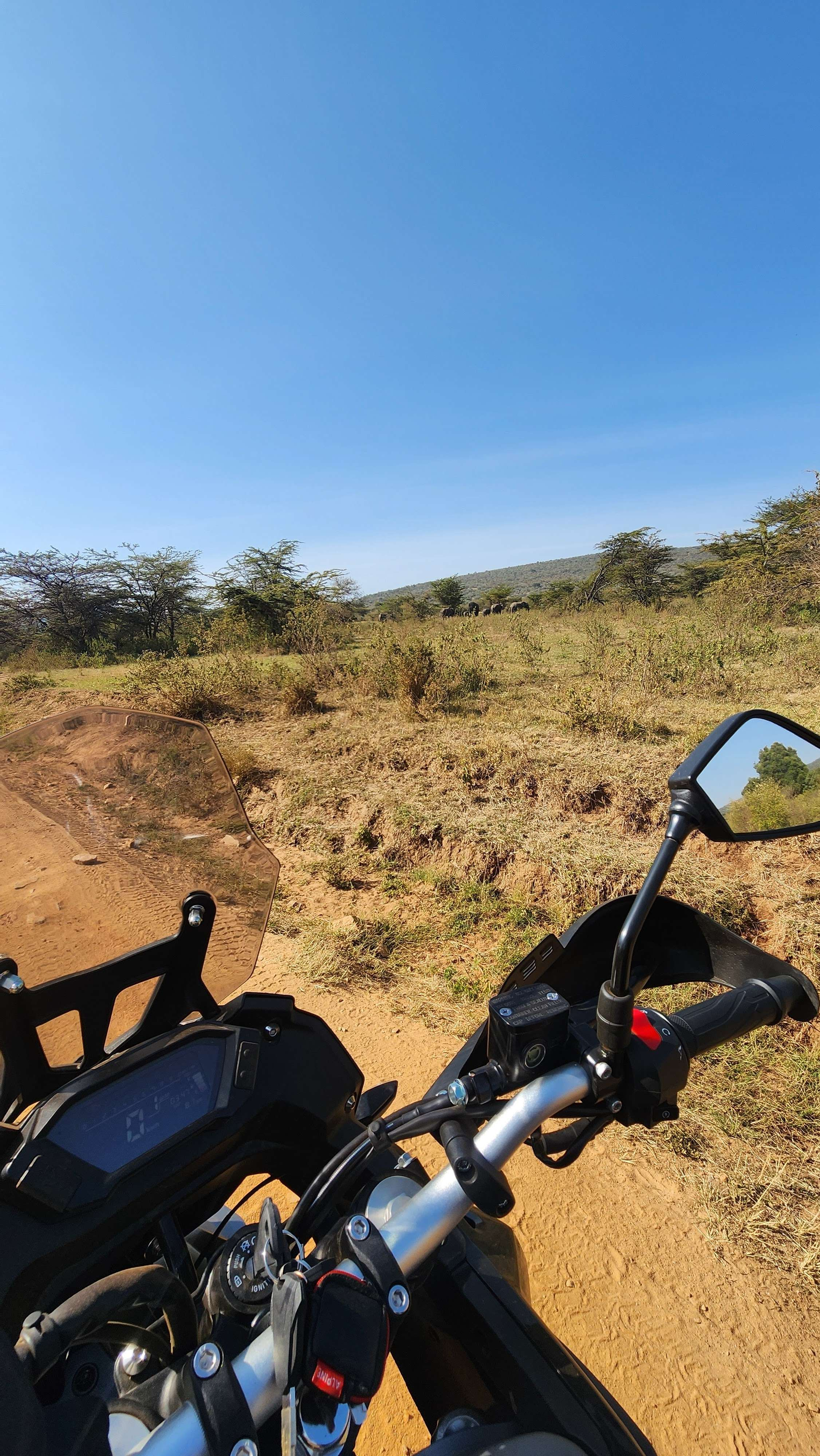
For the next 45 minutes to an hour, you're riding through classic Mara landscape—acacia trees, open grasslands, bushes scattered across the savanna. In the open areas, you'll see impalas, zebras, wildebeest, giraffes. The animals are used to movement in the conservancy; they don't scatter when the bikes pass. You'll find yourself riding within close range of zebra herds, watching giraffes watch you back.
Some parts of the route have almost no roads. You're following cow paths through the grass, climbing small rises, dropping into shallow valleys. The Maasai riders know every inch of this terrain.
After crossing through the conservancy, you take a break, then continue on back roads toward Naikara. This stretch is different—you're leaving the Mara ecosystem behind and heading into drier, rockier country. The landscape opens up into vast valleys and hilly terrain. You'll climb ridges and suddenly the whole world spreads out below you.
Along the way, you pass through villages. Kids playing football on their day off from school. Families going about their lives. Sometimes you stop—the riders know people everywhere. You might share a soda at a random church in the middle of nowhere, chatting with locals who are curious where you've come from.
You'll cross some dry riverbeds. And some not-so-dry ones—actual streams where you might get splashed.
Lunch is in Naikara, at a local restaurant. I'll be honest: it's a very local place. A bit dark, basic, you order whatever's available that day—usually some nyama choma (roasted meat), spinach, rice and beans. It's not fancy. It's real.
After lunch, you head back toward Mara Hilltop, potentially spotting more wildlife as you re-enter the conservancy. By evening, you're back—dusty, a little tired, and probably already telling the other guests they need to do this.
The 2-Day Loita Adventure: Into the Maasai Heartland
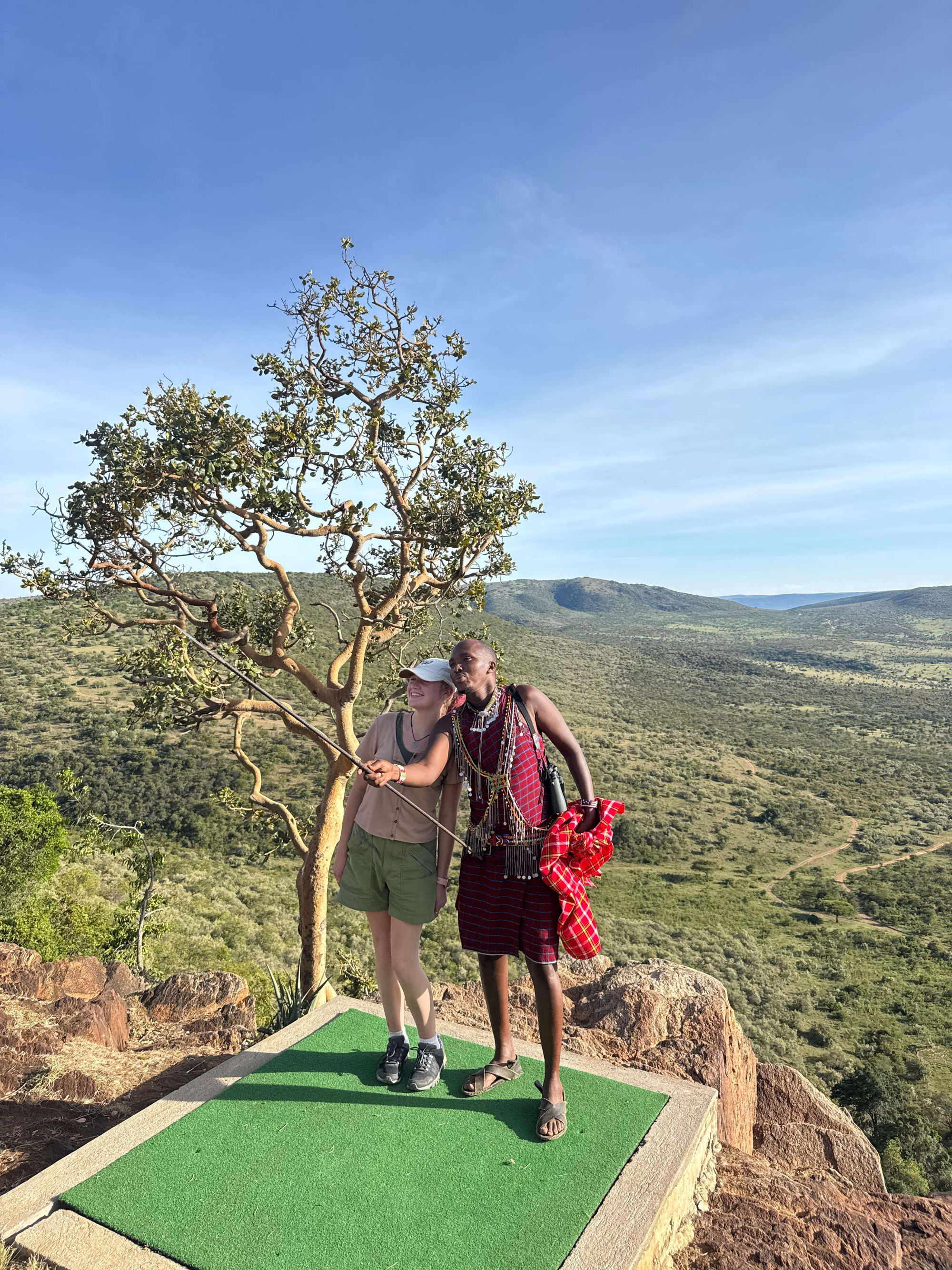
If you want the full experience, this is it.
The first half of Day 1 follows the same route as the full-day trip—through the conservancy, past the villages, lunch in Naikara. But instead of turning back, you keep going.
From Naikara, it's another two to two-and-a-half hours of riding toward Morijo. The terrain gets more remote. Some stretches are dusty and rocky; the riders navigate it with ease, but you'll feel the adventure in your bones. Then the landscape shifts again—depending on the season, you might hit lush green grasslands or dry golden plains. Both are beautiful in different ways.
You'll pass through Morijo, a small village with a local bar where you can stop for a drink and meet people. And if you're lucky enough to be traveling on a Monday, you'll hit the weekly Maasai market—one of the most authentic things you can witness in this region.
The Morijo Market (Mondays Only)
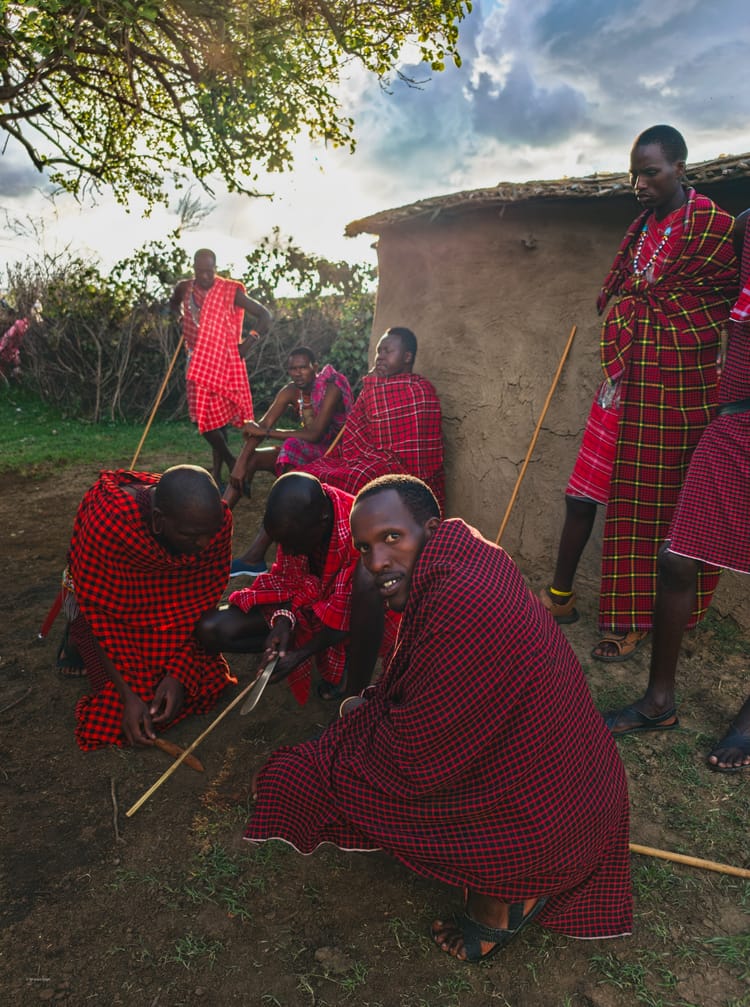
We stumbled into this once by accident, and it was one of the highlights of the entire trip. Maasai from villages all around the region come with their cattle—sheep, goats, cows—to trade and sell. The women sell ornaments, beadwork, everyday items that people actually use in village life. There's food, there's chaos, there's negotiating and laughter and animals everywhere.
It's not a tourist market. It's the real thing. If your trip happens to land on a Monday, you'll see a side of Maasai life that almost no visitors ever witness.
Arriving at Robert's Place
From Morijo, the final stretch is about 20-25 minutes through open grassland. It looks like the middle of nowhere—because it is. The riders know exactly where they're going, and eventually you arrive at a house surrounded by fencing, cattle wandering around, kids playing if they're not at school.
This is Robert's homestead.
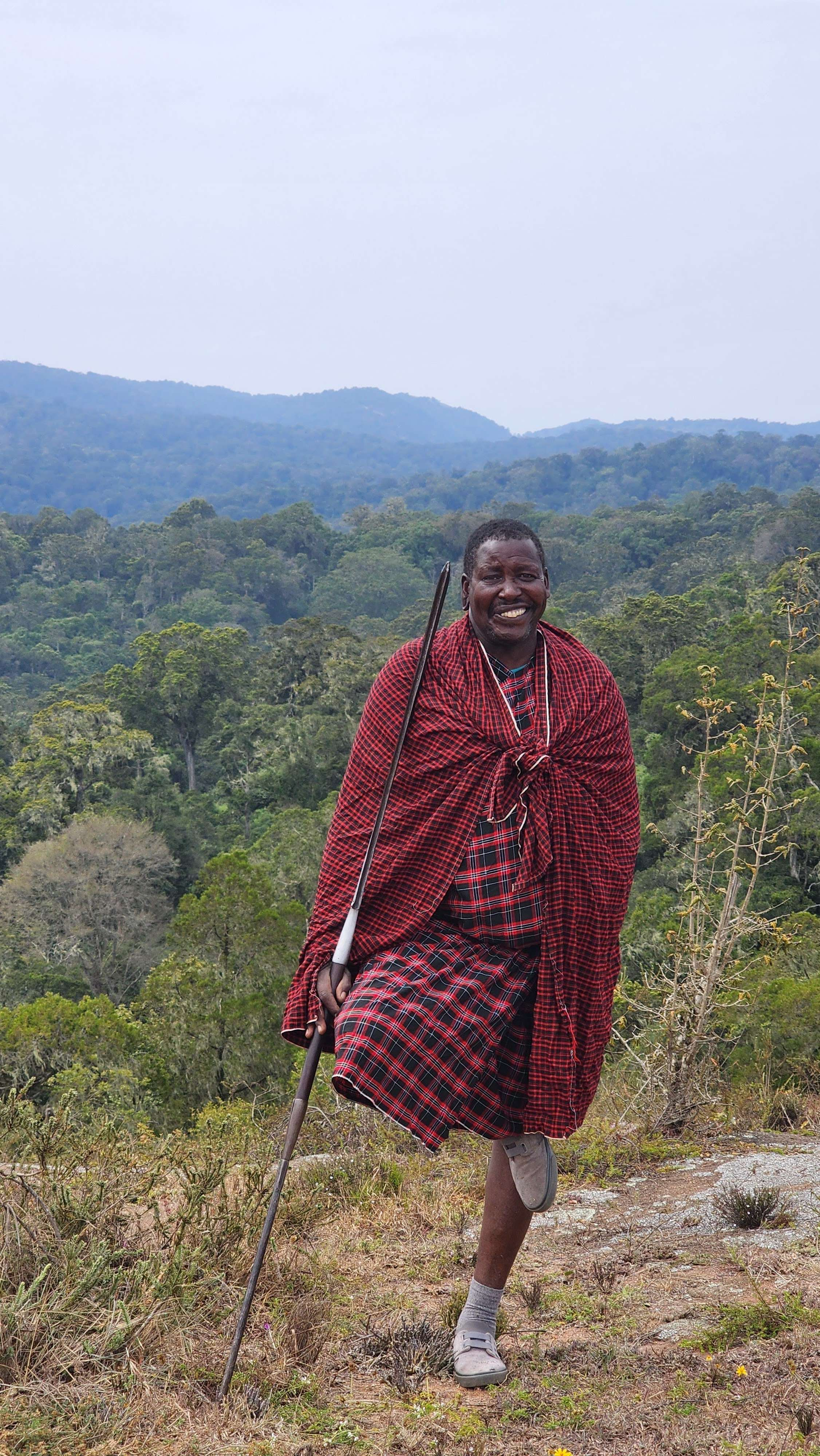
Robert is a muzee—a respected Maasai elder—and we've been partnering with him for about a year now. He's proud of Loita, proud of his home, and genuinely loves sharing it with visitors. His family is there too: kids, grandkids, the whole extended household. They welcome you warmly.
Robert's house isn't a traditional Maasai manyata (the mud-and-dung structures you might picture). It's a simple stone house, basic but comfortable. You'll have a proper room with bedding, pillows, blankets.
A note on expectations: This is an adventure trip. Toilet facilities are basic. Shower facilities are essentially non-existent—you can request hot water in a bucket, or just embrace being a bit dusty for a night. Everyone who's done this trip has loved it, but I want you to know what you're signing up for.
As evening falls, they set up a bonfire outside under the stars. Joshua, the chef, makes dinner—spaghetti, vegetables, beef, surprisingly good food for the middle of nowhere. (Vegetarian options available too.) You eat around the fire, Robert tells stories about Maasai culture, how things used to be, how they're changing. The stars out there are unreal—no light pollution for miles in any direction.
Day 2: The Loita Forest Hike
The next morning, Robert drives you to the starting point of a hike in the Loita Forest.
This forest—called Naimina Enkiyio in Maasai, meaning "Forest of the Lost Child"—is a high-altitude indigenous cloud forest unlike anything else in Kenya. Ancient cedar and podocarpus trees, some of them centuries old, mossy and towering. Bamboo patches. Dense undergrowth giving way to clearings and glades. Small streams cutting through. It's cool, green, often misty, with dappled light filtering through the canopy.
The wildlife here is different from the savanna. Elephants and buffalo are present but shy. You might see bushbuck, definitely primates—black-and-white colobus monkeys, baboons, vervets. The birdlife is exceptional: turacos, rare apalis species, forest specialists you won't find in the open Mara.
The hike goes at your own pace. There's no fitness requirement, and you don't need to complete the whole thing if you don't want to. Even a shorter walk through this landscape is worth it.
After the hike, you have lunch, and then a Mara Hilltop vehicle picks you up for the drive back. You can return to Mara Hilltop, or if you're heading toward Nairobi, we can drop you in Narok town instead—it's roughly the same distance.
What About the Animals? Is It Safe?
This is one of the most common questions we get.
Yes, it's safe. The animals in the conservancy are used to movement and activity—they don't react to the motorcycles the way they might to something unfamiliar. And the riders know what they're doing. You don't stop close to elephants or any dangerous animals. You observe from a respectful distance, same as you would on a game drive, just from a different vantage point.
The other common concern: "I don't know how to ride a motorcycle."
You don't need to. The Maasai riders are experts. You sit on the back, hold on, enjoy the ride. If you're confident in your riding skills and have a license, you can opt to ride yourself—but most guests are perfectly happy as passengers.
The Maasai Riders
I should mention the riders themselves, because they're a big part of what makes this experience special.
These guys are always excited to take guests to Loita. Partly because it's a fun ride—you can tell they genuinely enjoy the journey. But also because they know that visitors from Germany, the US, Canada, India, wherever—they don't often get to see the true heartland of Maasai land. Loita is it. The riders take pride in showing it off.
Some don't speak much English, but there's usually at least one—Jonathan is great—who can communicate well with guests. And one of our Mara Hilltop guides always accompanies the group.
What to Bring
- Closed shoes (essential—not sandals)
- Long pants (dust and sun protection)
- Sunscreen
- Camera (the riders will secure your bag on the bike)
- Rain jacket or poncho (rains are usually brief, but good to have)
- Sense of adventure (the unofficial requirement)
Practical Details
- Departure: Flexible, but we recommend after breakfast around 7:30-8am
- Group size: No minimum or maximum—we arrange bikes based on your group
- Year-round: These trips run in all seasons. Heavy rain might cause brief stops, but they pass quickly
- Park fees: None required—the route goes through conservancy land
Want to See What It Looks Like?
We've posted videos and photos from past trips:
Take a look. It'll give you a much better sense of what you're signing up for than anything I can write here.
Can It Be Extended?
Yes. We can customize the Loita trip into a 3 or 4-day adventure that continues deeper into the forest, with camping and potentially hiking toward the Magadi area. If that interests you, let us know and we'll work out the details.
The Honest Take
I'll be direct: this isn't for everyone.
If you want a polished, luxury experience with hot showers and turndown service, the Loita overnight isn't that. The full-day trip is more accessible, but even that involves dust, bumpy trails, and very local lunch spots.
But if you want something real—something that takes you into landscapes and communities that 99% of Mara visitors never see—this might be the highlight of your trip.
The guests who've done it keep telling us it was their favorite thing in Kenya. I used to think they were exaggerating. After joining a few of these trips myself, I get it.
There's something about being on the back of a motorcycle, wind in your face, passing through villages where kids wave and elders nod, climbing ridges that open onto valleys that stretch forever, eating dinner under stars you've never seen before, in a place so remote it doesn't show up on most maps.
It's not a safari. It's something else entirely. And it might be exactly what you didn't know you were looking for.
Ready to book? Message us at hello@marahilltop.com or WhatsApp +254 114505977. We'll sort out the details.
Mara Hilltop is located 5 minutes from Sekenani Gate, Masai Mara. We offer luxury tented suites, budget-friendly dorm accommodation, and experiences you won't find anywhere else—including nature walks, our famous hillside viewpoint hike, and these motorcycle adventures with Maasai riders.
How's this? I tried to match the voice of your other blog—honest, conversational, specific stories rather than generic descriptions. Let me know if you want me to adjust anything: tone, length, add/remove sections, punch up certain parts.